

Author:Wall Street CN
The countdown to the largest IPO in history has officially begun.
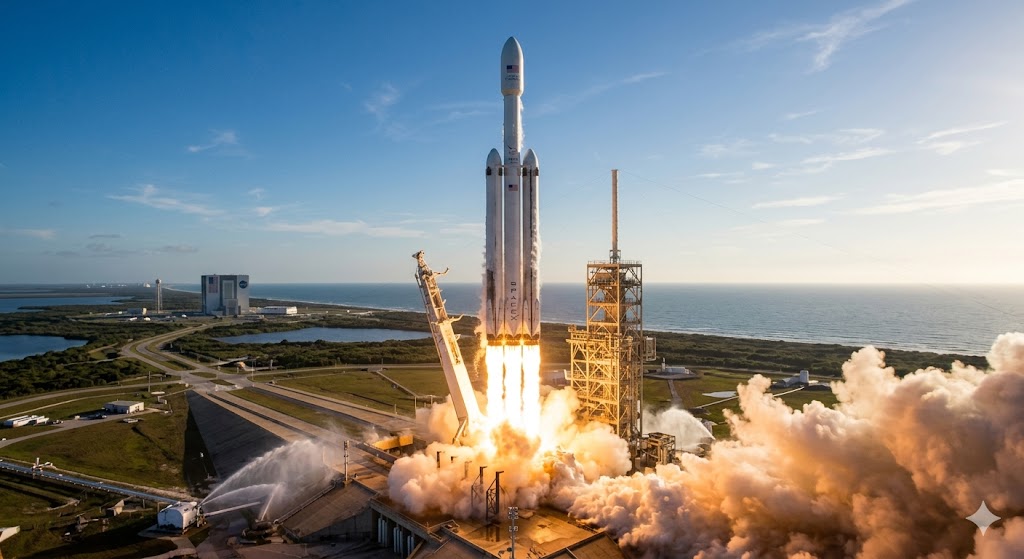
According to a Reuters report on April 7, SpaceX convened its underwriting team on Monday evening to formally disclose key details of its IPO: the roadshow is scheduled to begin the week of June 8, with a target of raising $75 billion and a valuation of up to $1.75 trillion.
The most notable aspect is the arrangement for retail investors. CFO Bret Johnsen stated explicitly at the virtual meeting, "Retail will be key to this IPO, accounting for a larger share than in any previous IPO." He explained the logic behind this design: "These people have long been incredibly supportive of us and Elon (Musk), and we want to ensure that this is acknowledged."
Sources revealed that one of the lead underwriters among the 21 underwriters told the entire banking team that retail demand and the size of the allocation would be "unprecedented".
Roadshow schedule: Three sessions over three days, progressing in stages.
According to information obtained by the media, the IPO process will proceed according to the following schedule:
-
June 7Approximately 125 financial analysts from 21 underwriting banks met with SpaceX management.
-
The week of June 8The roadshow officially kicked off, with executives and bankers pitching to institutional investors.
-
June 11Hosting a special event for 1,500 retail investors.
Retail participation is not limited to the United States; ordinary investors in the United Kingdom, the European Union, Australia, Canada, Japan, and South Korea are also eligible to participate in the subscription.
The prospectus is expected to be released in late May. The transaction structure and the specific allocation ratio for retail investors will be finalized before the IPO begins.
Valuation surges: from 800 billion to 1.75 trillion
The target valuation of $1.75 trillion represents a significant jump compared to SpaceX's previous pricing benchmarks.
In December 2025, SpaceX's most recent employee stock offer valued the company at $800 billion. In February of this year, after SpaceX merged with Musk's AI startup xAI, the combined entity was valued at $1.25 trillion.
The IPO targets a valuation of $1.75 trillion, an increase of approximately 40% over the combined valuation.
The underwriting team is equally impressive: Morgan Stanley, Bank of America, Citigroup, JPMorgan Chase, and Goldman Sachs serve as active bookrunners, while 16 other banks are responsible for institutional, retail, and international channels, respectively.
The race for AI unicorn IPOs heats up.
As SpaceX races to go public, the IPO race among Silicon Valley AI unicorns is also accelerating.
According to reports, OpenAI CEO Sam Altman has privately expressed his desire to complete the IPO as early as the fourth quarter of this year, and specifically hopes to list earlier than competitor Anthropic, which is also currently discussing plans to list within the year. OpenAI has hired a law firm and has made informal contacts with the underwriting teams of Goldman Sachs and Morgan Stanley.
However, OpenAI's path to an IPO is not smooth. According to financial documents obtained by the Wall Street Journal, the company expects its computing power expenditure to reach $121 billion by 2028. Even if revenue nearly doubles by then, its losses will still reach $85 billion that year, and it is not expected to achieve overall break-even until 2030.
Anthropic's financial situation is relatively optimistic. According to Bloomberg, its annualized revenue has exceeded $30 billion, more than double the $9 billion at the end of 2025, and it has more than 1,000 enterprise customers with annual spending exceeding one million US dollars.
If both companies' IPOs go ahead, they are expected to be among the largest in history. To this end, Wall Street bankers are lobbying major index providers to relax inclusion criteria; Nasdaq recently announced that it will allow newly listed companies to be included in its indices more quickly.