


Author:Wall Street CN
The behavior of US retail investors is undergoing its most alarming shift since 2020—they are no longer buying on dips, but instead using rebounds to continuously reduce their positions.
According to JPMorgan Chase's latest report, total retail buying in US stocks in March fell by nearly 50% from the record high in January. While retail inflows were generally acceptable after the market's rebound last Wednesday, the structure clearly favored fixed-income ETFs over equity assets – indicating that retail investors' risk appetite is continuing to shrink, rather than recovering as the market recovers.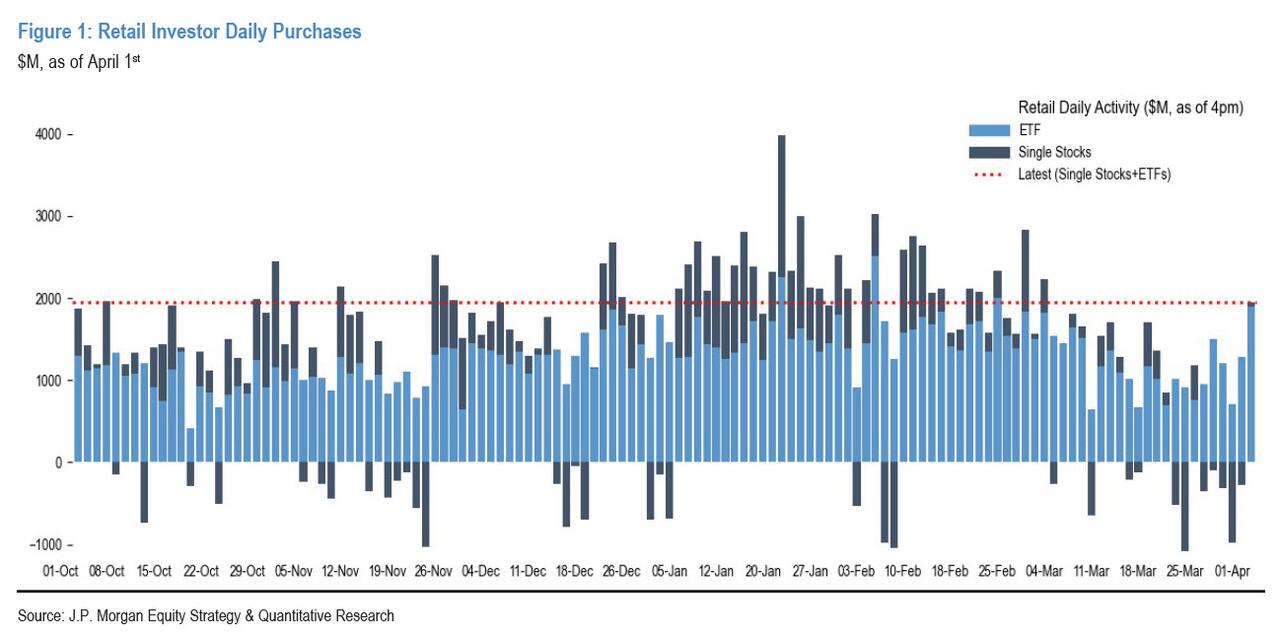
The potential impact of this shift in behavior on the market should not be underestimated. Retail investors have historically been a significant marginal buying force during US stock market declines, and their "buying on dips" tendency has a natural stabilizing effect on the market. Now that this support is faltering, and at the same time, institutional investors have not shown any significant entry into the market, the funding vacuum between the bulls and bears is increasing the market's vulnerability.
A historic reversal: "Momentum congestion" surpasses "bottom-fishing congestion".
JPMorgan analyst Arun Jain stated that retail investors have been consistently pursuing momentum strategies since the end of 2023, and since 2024 have gradually realized profits on long-term winners while seeking opportunities in underperforming stocks. Historical patterns show that...Retail investors typically tend to buy on dips, focusing their positions on stocks that have lagged behind in the downtrend within the past three months—this "left-tail buying" strategy has yielded positive returns on average since 2020.
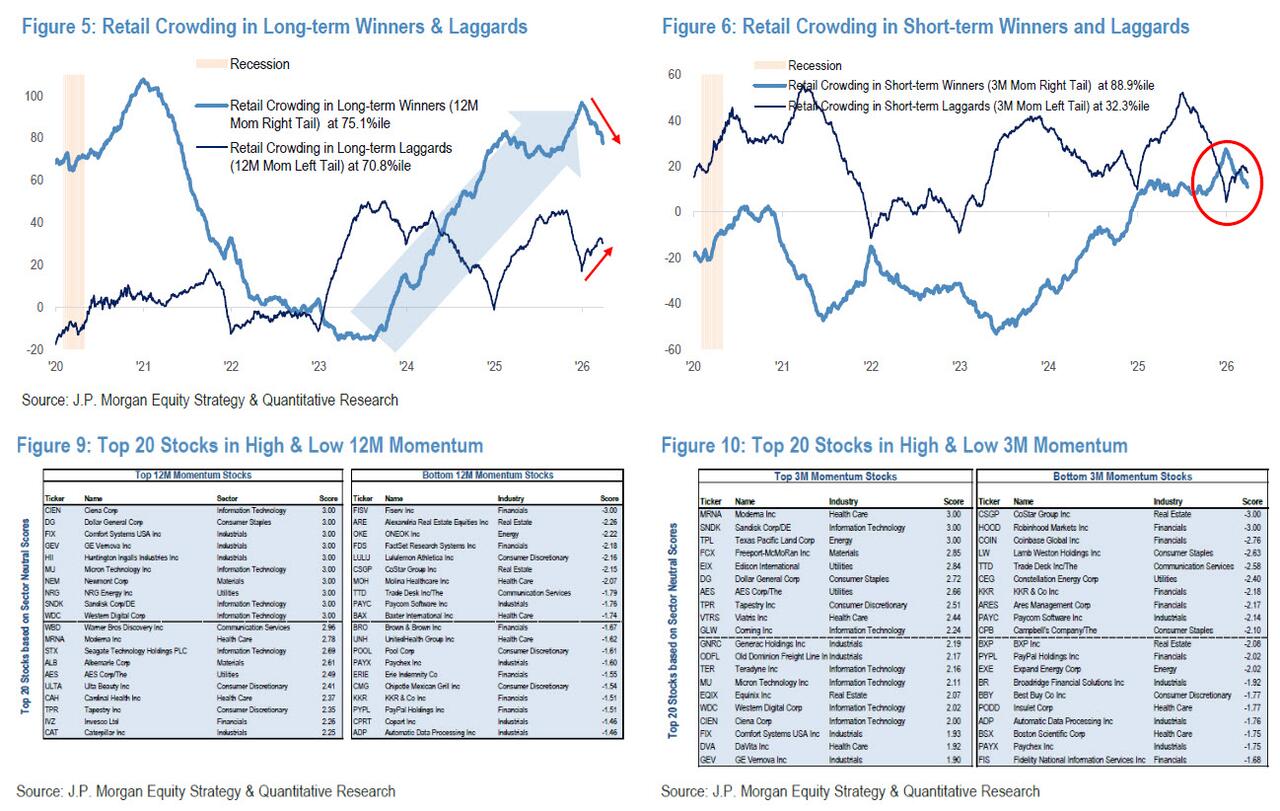
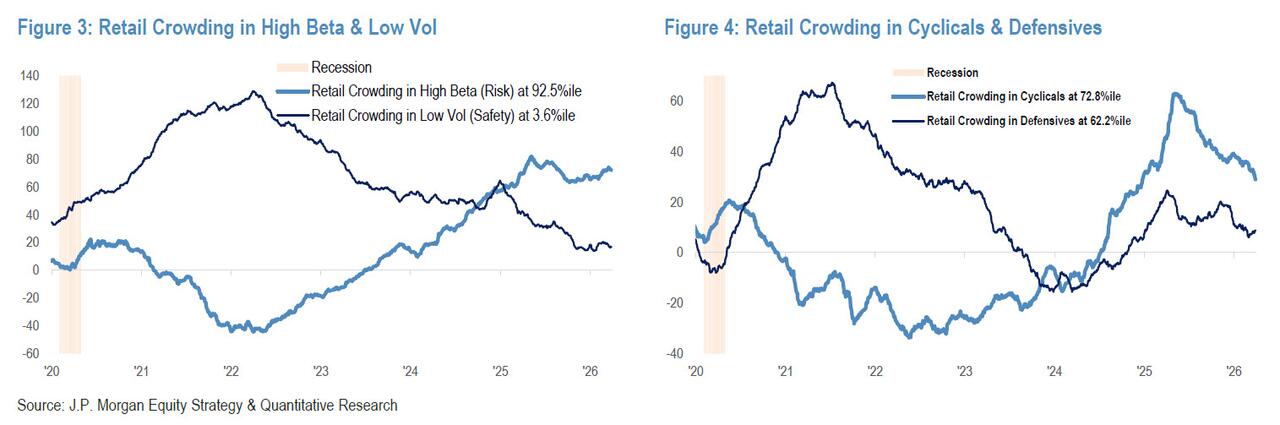
However, this behavior has recently undergone a historic reversal: for the first time, retail investors are crowding into short-term momentum stocks more than they are crowding into lagging stocks.This means that retail investors are currently still holding high-beta assets (crowding at the 92.5 percentile, highly consistent with short-term momentum) and are no longer adding to their positions in low-volatility (i.e., currently lagging) assets. At the same time, retail investors are also continuing to reduce their exposure to cyclical assets.
This fundamental shift in behavioral logic signifies a change in retail investors' role from acting as market "stabilizers" to a more defensive, even short-term risk-averse, posture—a structural warning that warrants continued attention for the US stock market, which relies on retail investor funds for bottom support.
Purchases plummeted, with March data showing a nearly 50% drop from the January peak.
From a data perspective, the decline in overall retail purchasing power in March exceeded expectations.
According to a JPMorgan report, as of last Tuesday, while retail investors continued to see moderate net inflows into ETFs, they continued to show net selling in individual stocks, even though the market had rebounded somewhat during this period.
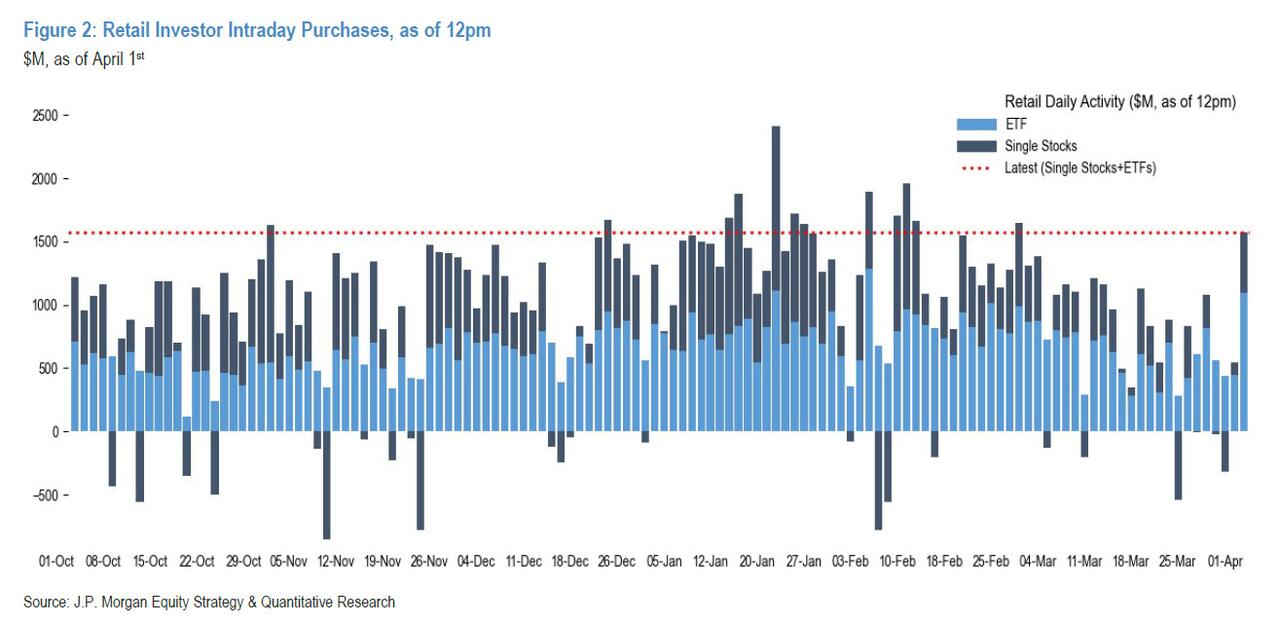
The market rallied last Wednesday, with retail investor inflows ranking at the 76.6th percentile, which appears healthy on the surface, but was mainly driven by ETFs (ranked at the 96.4th percentile).
More importantly, the increased buying in ETFs was concentrated in fixed-income ETFs (98th percentile), dominated by short-duration instruments such as SGOV, rather than risky assets like stocks. In terms of individual stocks, retail investors recorded some inflows in the afternoon (64.7th percentile), but subsequently reduced their positions throughout the day, resulting in a near-flat close (38.1st percentile) – a typical "sell on rallies" pattern.
Energy sees record weekly net outflow
At the individual stock level, excluding the "Mag 7" (the seven tech giants), retail investors were net sellers in almost all sectors in the week ending April 1, with the exception of consumer staples (Staples).
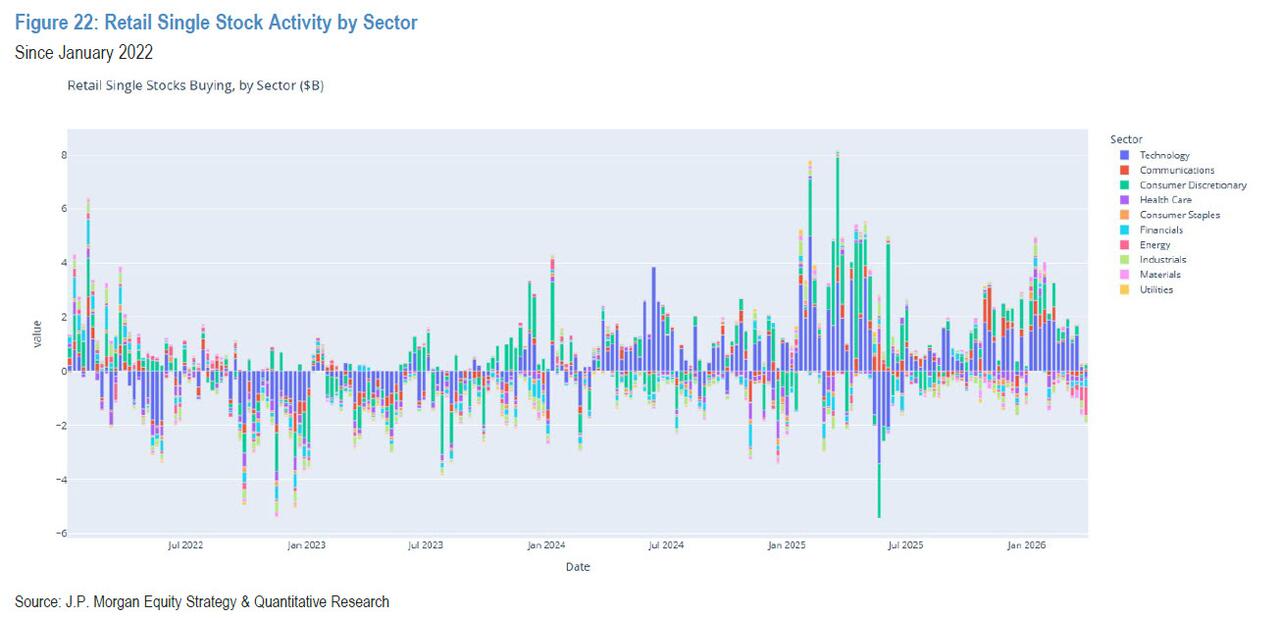
The sell-off in the energy sector was particularly severe.
Retail investors have been net sellers of energy stocks since February, but the selling pressure intensified sharply last week, peaking on Wednesday with the largest weekly net outflow on record, far exceeding historical extremes. ExxonMobil (XOM), Chevron (CVX), and Occidental (OXY) were the main drags, with z-scores reaching -6.9, -6.6, and -5.6 respectively on Wednesday.
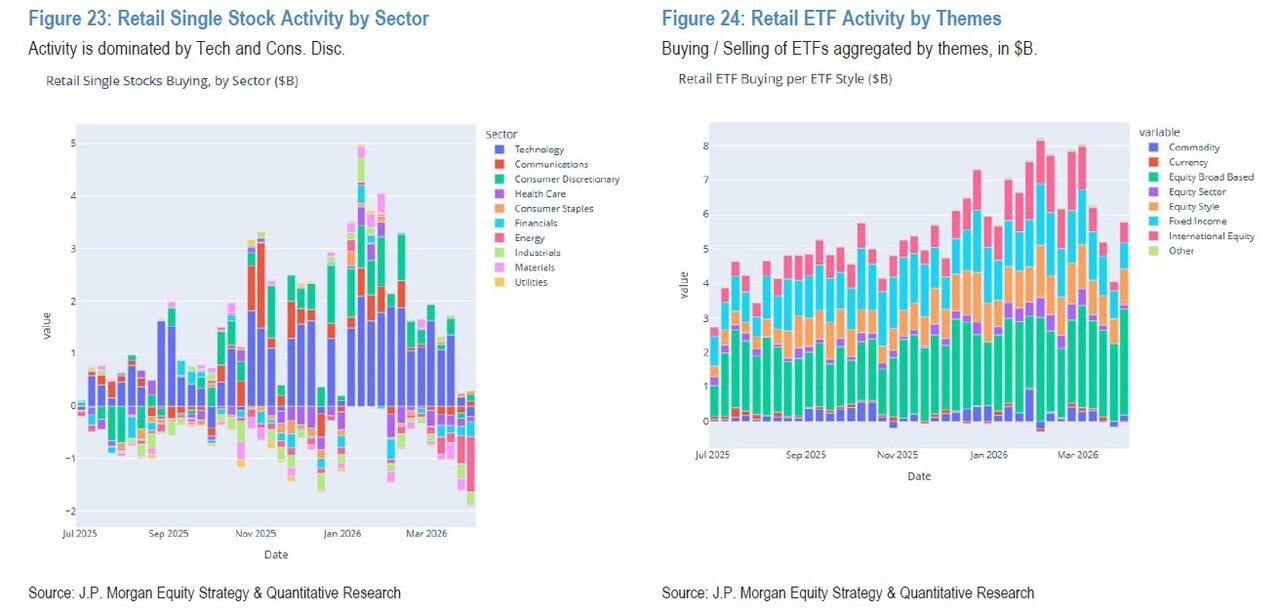
The memory chip sector also came under pressure. After Google released a new compression technology that could reduce the memory requirements of AI models, Micron (MU) and SanDisk (SNDK) became the most sold memory stocks that week, with z-scores of -2.3 and -3.0, respectively.
The technology sector as a whole was not spared either. While retail investors continued to buy retail darlings such as TSLA, MSFT and NVDA, they continued to net sell technology stocks outside the "Mag 7", causing the overall position in the technology sector to fall to its lowest level in nearly six months.