

Author:Encryption Tracker
The digital asset market is entering a new phase with more institutional investors preparing to expand their exposure to XRP.
This shift comes as regulation improves, technology advances, and more capital flows into the space. In a recent statement, Evernorth CEO Asheesh Birla said that progress in Washington, along with rising on-chain activity, could drive a change in how traditional financial markets engage with blockchain assets.
Key Points
Regulatory Breakthrough as Turning Point
According to Birla, two key developments in March could mark the end of a long-standing regulatory stalemate.
On March 17, the U.S. SEC and CFTC issued their first joint guidance classifying certain digital assets, including XRP, as commodities under federal law. This distinction reinforces XRP’s existing legal clarity following its court outcome with Ripple.
Just days later, lawmakers introduced a bipartisan compromise on a key provision of the proposed CLARITY Act, with a committee review expected later this month.
Birla noted that while each development is significant on its own, together they represent something the industry has long lacked: regulatory definition and legislative momentum.
Institutional Capital Begins Flowing Into XRP
Beyond regulation, capital inflows are beginning to reflect institutional confidence. Birla highlighted that spot XRP ETFs in the United States have already attracted over $1 billion in net inflows since launching last year.
At the same time, a joint survey by Coinbase and Ernst & Young found that the proportion of institutional investors planning to gain exposure to XRP could rise to 25% in 2026, up from 18% currently.
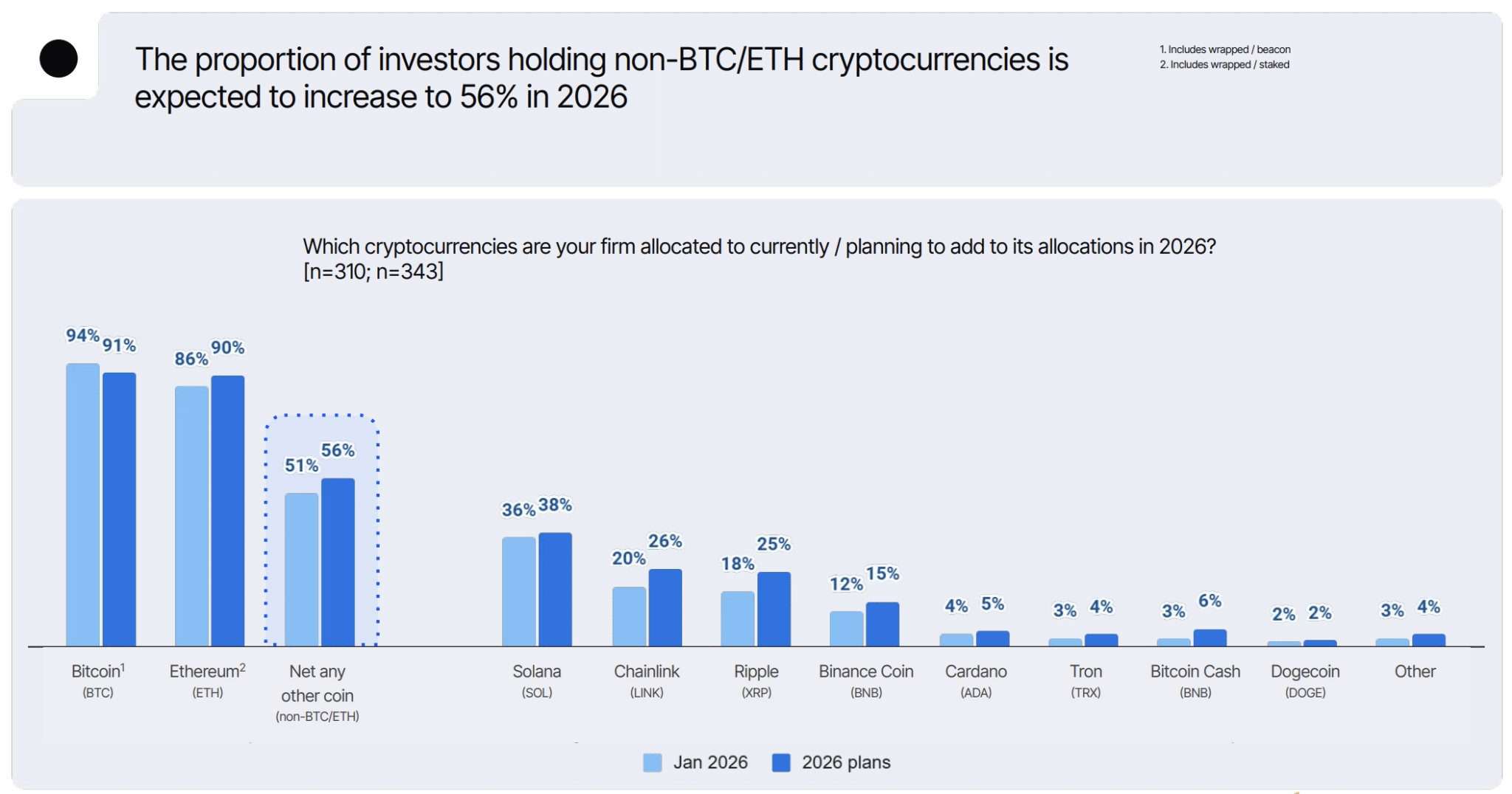
This trend is supported by rising network activity. The XRP Ledger recently recorded a two-year high of 4 million daily transactions, reflecting strong engagement across its ecosystem.
XRP Ledger Sees Rapid Growth in On-Chain Finance
The infrastructure behind XRP is also expanding rapidly in tokenized assets and decentralized finance. Real-world asset (RWA) tokenization on the XRP Ledger has surged from just $24.7 million at the start of 2025 to over $2 billion by March 2026.
Meanwhile, the network now hosts around 27,000 automated market maker pools, with XRP pairs dominating decentralized exchange routing.
Birla stressed that the focus for institutions is shifting beyond simple transaction speed. Instead, attention is moving toward capital efficiency: how XRP can function as collateral, liquidity, and a base layer for financial instruments within a growing on-chain ecosystem.
Evernorth Positions Itself as Institutional Bridge
Amid these developments, Evernorth is positioning itself as a gateway for institutional capital into the XRP ecosystem.
The company plans to go public via a merger with Armada Acquisition Corp. II. It aims to combine public market access with active on-chain participation.
Its strategy involves holding XRP and deploying it across the XRP Ledger to provide liquidity and support financial infrastructure.
Birla stressed that this approach differs from simply holding XRP as an asset as it offers exposure to its role in emerging financial systems.
Familiar Pattern in Market Evolution
Birla compared the current stage of digital assets to past financial transformations, such as the rise of electronic equity trading and the expansion of global FX markets.
In those cases, technology existed long before widespread adoption. It was only when regulation and institutional capital aligned that growth accelerated rapidly and became irreversible.
According to Birla, digital assets and XRP, in particular, are now entering that same phase. As this alignment strengthens, XRP’s role will evolve from a fast-settlement tool to a core component of next-generation financial infrastructure.