


Author:Fishing expert ks
Crypto flows dropped sharply in the first quarter of 2026, according to estimates by JPMorgan analysts, who had expected flows to increase this year.
Overall digital asset flows stood at around $11 billion in Q1 2026, which is about one-third of the level seen in the same period last year, said the JPMorgan analysts led by Managing Director Nikolaos Panigirtzoglou in a report. This implies an annualized pace of around $44 billion, they said, much lower than 2025's record $130 billion inflows.
The analysts estimate total digital asset flows by combining crypto fund flows, CME futures activity, crypto VC funding, and corporate treasury purchases, including bitcoin buying by Michael Saylor’s Strategy.
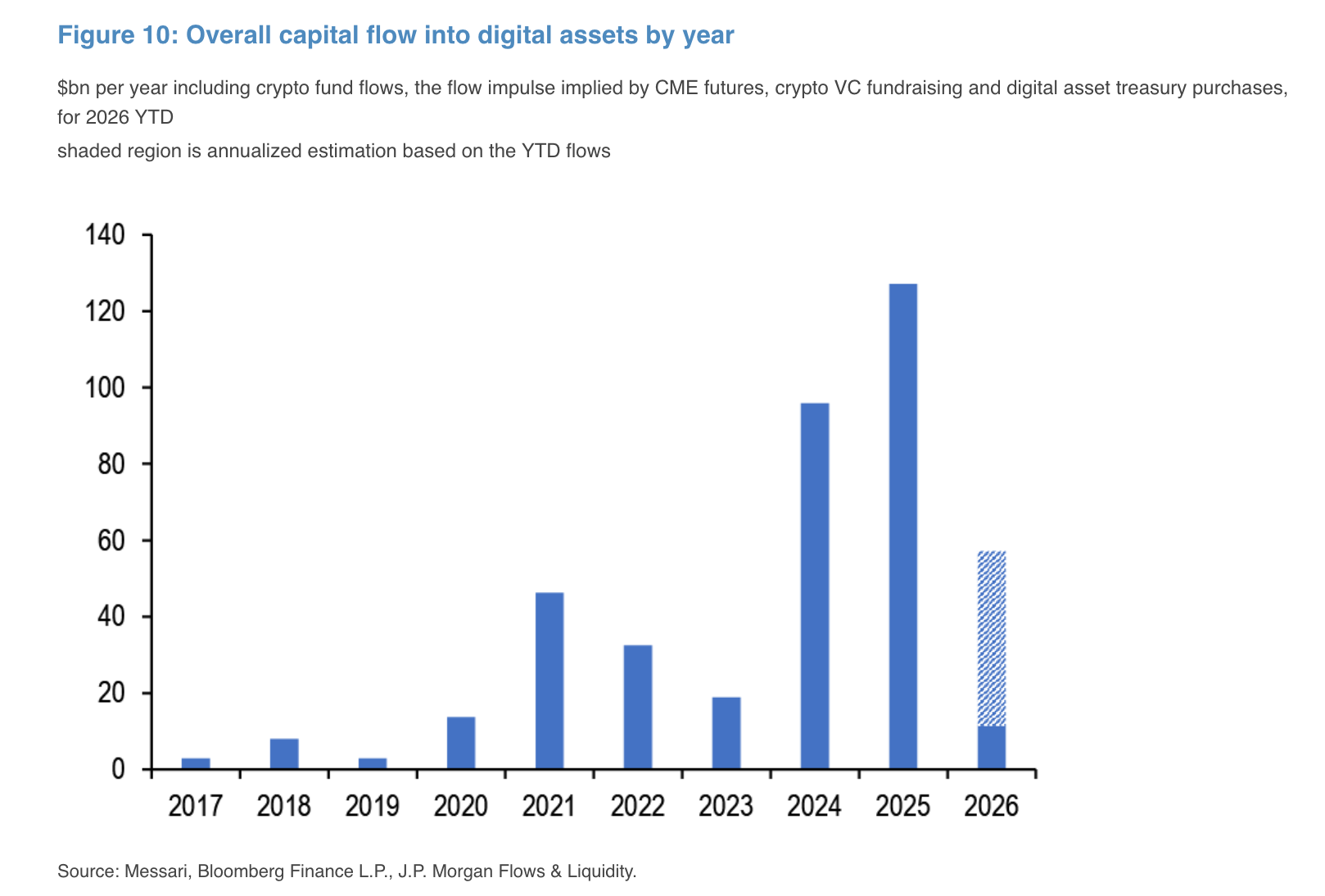
In the first quarter of this year, most inflows came from corporate treasury bitcoin purchases, mostly by Strategy and crypto VC funding rather than investors, either retail or institutional, the analysts said.
CME futures positioning weakened in Q1 compared to 2024 and 2025, suggesting institutional demand through futures turned negative so far this year, the analysts noted. Spot bitcoin and Ethereum ETFs also saw outflows during the quarter, mostly in January, while bitcoin ETFs saw some inflows in March.
Corporate treasury buys were one of the main drivers, but more uneven than last year, the analysts said. A small group of buyers, including Strategy, continued to buy bitcoin, while some smaller companies sold holdings to fund buybacks, the analysts added.
"In Q1’26 [Strategy’s] bitcoin purchases were funded primarily through equity issuance," the analysts wrote. "Further, the company indicated an intention to keep using a mix of common stock and perpetual preferred stock to support ongoing bitcoin accumulation, while other corporate treasuries retain a rather defensive stance."
Meanwhile, bitcoin miners became net sellers in Q1. Some listed mining firms sold bitcoin or used it as collateral to improve liquidity, fund capital expenditure, or manage liabilities. In some cases, these moves were linked to a shift toward artificial intelligence, the analysts said, adding that overall selling by miners was mainly due to tighter financing conditions and financial discipline, "rather than broad-based distress liquidation."
Crypto VC funding remained strong in Q1, tracking an annualized pace higher than the previous two years. However, deal count and investor participation declined, with funding more concentrated in fewer, larger rounds led by established firms.
"In all, our estimate of the overall digital asset flow slowed considerably in the first quarter of the year tracking an annualised pace that is close to a third of that seen last year. Moreover, investor flows, either retail or institutional, have been small or even negative YTD with the bulk of the digital asset flow in Q1’26 stemming from [Strategy’s] bitcoin purchases and concentrated crypto VC funding," the analysts concluded.