

Author:Wall Street CN
Intel announced its participation in Elon Musk's "Terafab" project, with both parties collaborating to advance semiconductor manufacturing and high-performance chip development. This move opens an important window for Intel's long-sought-after foundry business.
Intel announced the collaboration on Tuesday on Musk's social media platform X.com, and disclosed that it will work with SpaceX, Tesla, and Musk's artificial intelligence company xAI.
Intel stated that its capabilities in chip design, manufacturing, and packaging will help Terafab achieve its goal of producing 1 terawatt of computing power per year, providing computing power support for the future development of AI and robotics technologies.
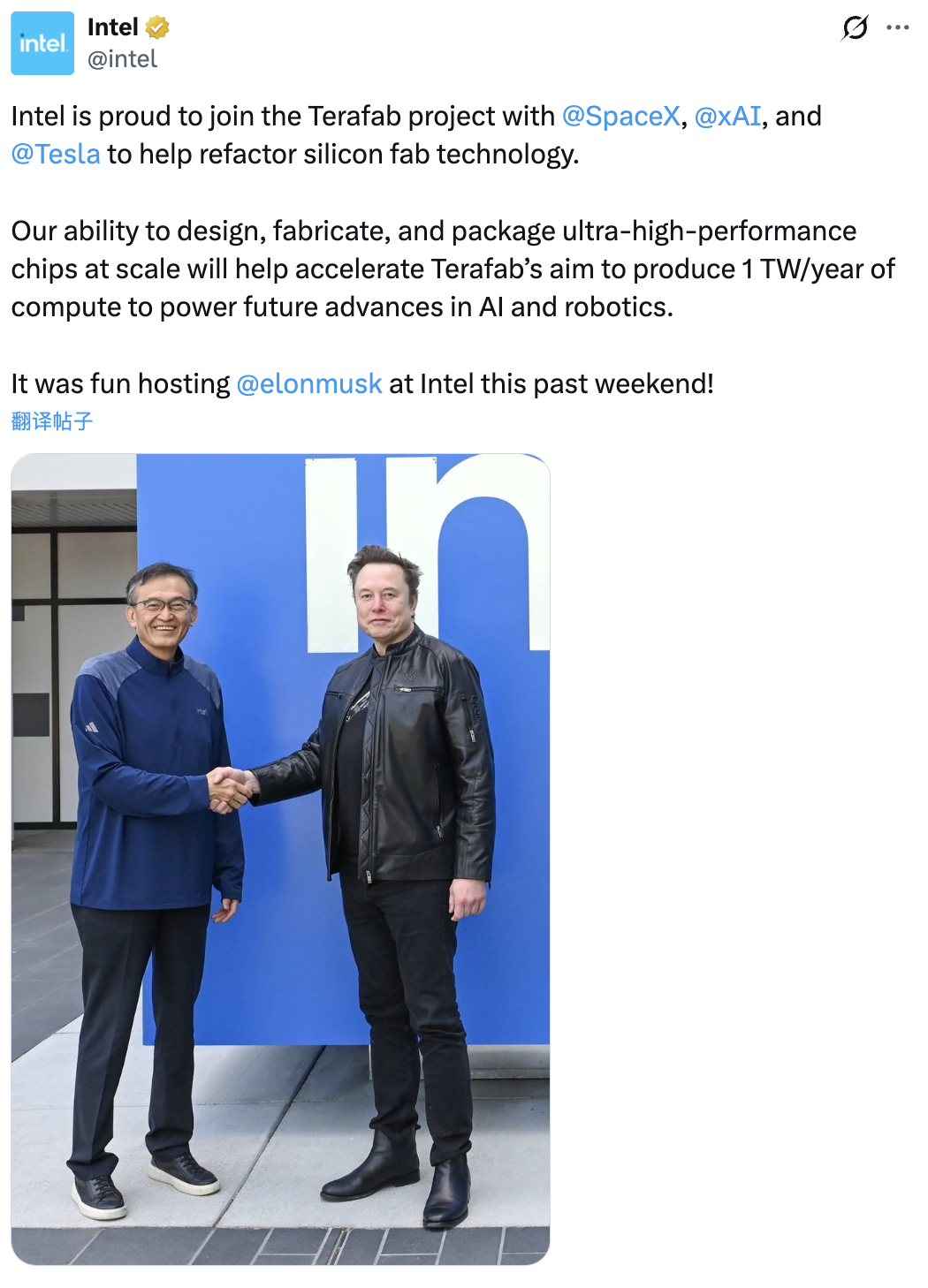
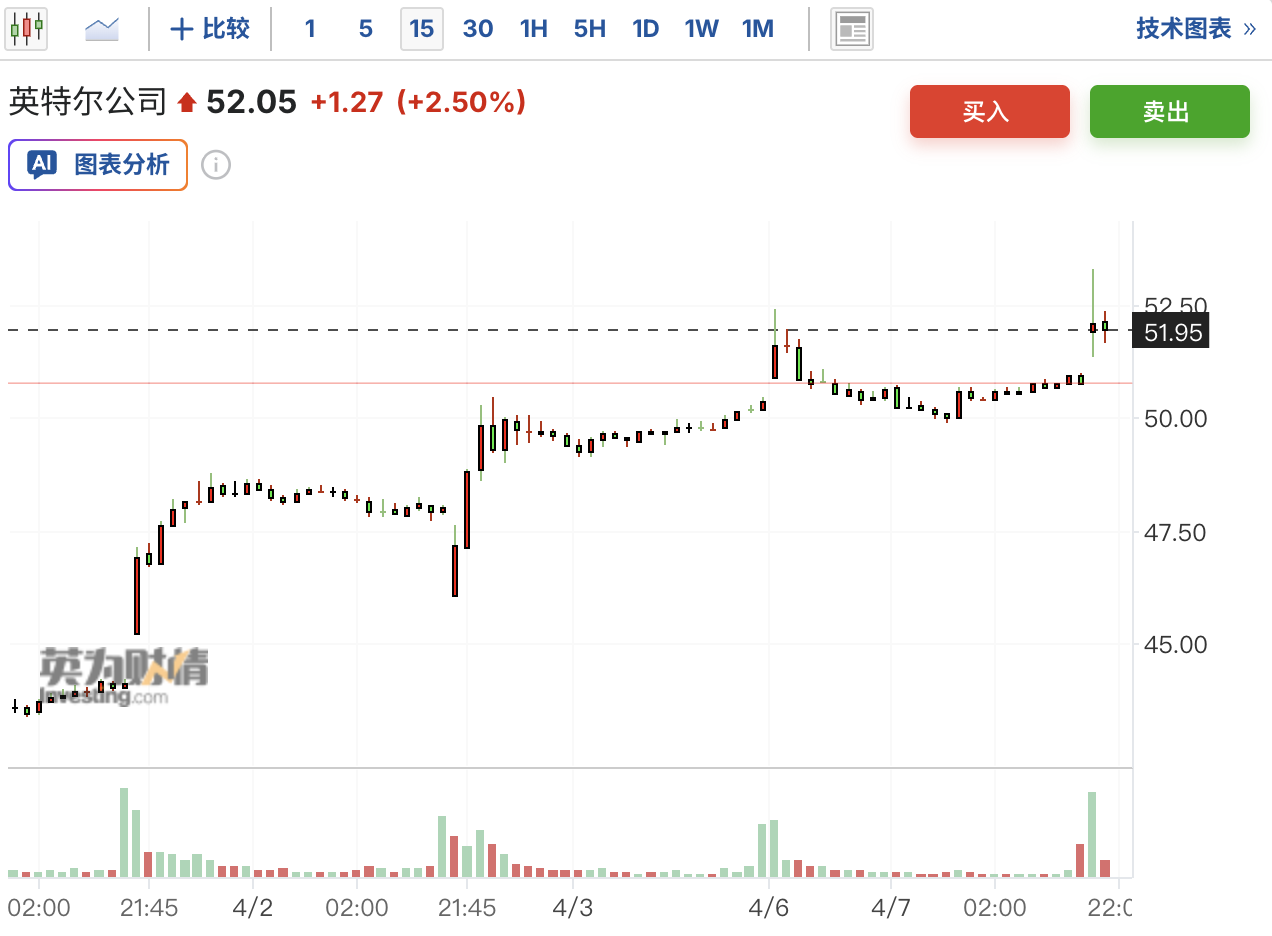
This collaboration is significant for Intel. The chip giant has been seeking external foundry customers for years, but has yet to announce any substantial agreements.The collaboration with Musk's companies may become a key breakthrough for the expansion of its wafer foundry business.Following the announcement, Intel's stock price rose approximately 2.5% to $52.05.
The details of the cooperation are yet to be clarified.
Despite Intel's high-profile announcement of its entry into the market, the announcement remains somewhat vague on specific details.
Intel has not disclosed its specific role or division of responsibilities in the "Terafab" project, nor have either party released any financial terms or contract size. It has only been mentioned that Intel will participate by leveraging its comprehensive capabilities in semiconductor design, manufacturing, and packaging.
In fact, this collaboration had been brewing for some time. At Tesla's annual shareholder meeting last month, Musk publicly stated that he might partner with Intel to build a semiconductor factory specifically for his companies, but also indicated that no agreement had been signed at that time.
Intel's formal announcement of its entry into the fray marks a shift in the relationship between the two companies from public statements to substantive progress.
A key milestone in Intel's foundry strategy
This collaboration has special strategic value for Intel's foundry business.
Intel has been pushing for a shift towards foundry manufacturing in recent years, actively seeking external customers to use its factories to produce its own chips. However, this strategy has been slow to progress, and no publicly announced foundry contracts have been finalized to date. Intel previously stated that it expects potential customers to begin making purchasing decisions by the end of this year or early next year.
Musk's companies span multiple high-computing-power sectors, including electric vehicles, aerospace, and artificial intelligence, and their demand for custom chips is considerable.
If the "Terafab" project proceeds as scheduled, Intel is expected to use it to build its first benchmark case for its foundry business, break the long-standing predicament of lacking external customers, and prove to the market that its manufacturing capabilities are sufficient to support the chip needs of top technology companies.