

Author:Wall Street CN
Just one day before Trump issued his ultimatum threatening to bomb Iranian power plants, the US dollar to Chinese yuan exchange rate returned to pre-war levels, with USDCNH briefly falling to 6.8550. Compared to other Asian currencies such as the Japanese yen and South Korean won, which remain at low levels, the yuan's performance was quite remarkable.
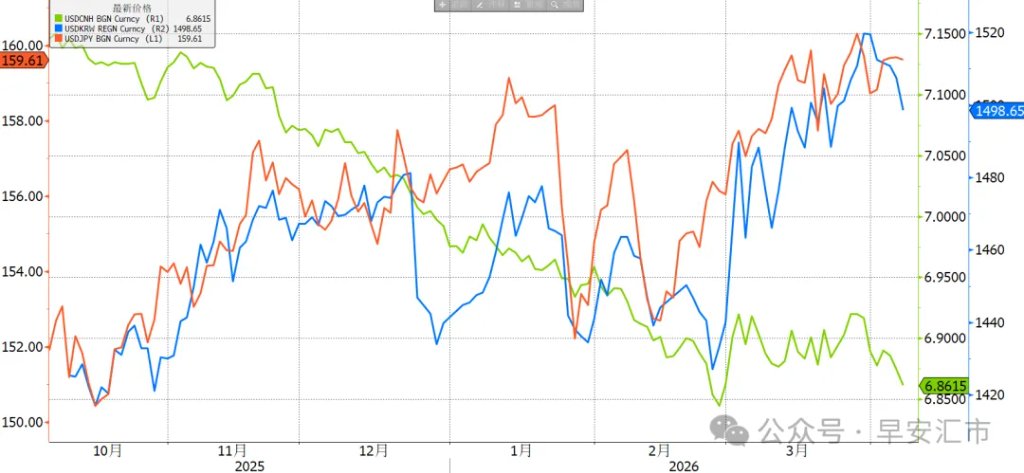
Chart: RMB outperforms other currencies
I. The negative impact of the war on the RMB is waning.
As the Iraq War continues, its impact on the RMB is diminishing, regardless of whether it escalates further.
First, the RMB is least affected by oil prices. With expectations of a prolonged closure of the Strait of Hormuz, Brent crude oil prices remained above $100, leading central banks to shift towards aggressive interest rate hikes, which in turn evolved into expectations of an economic recession. However, the RMB's monetary policy signals remained stable, and with ample liquidity in the first quarter, overnight repo rates actually declined, and long-term bond volatility narrowed, making it a safe haven amidst a global sell-off in government bonds.
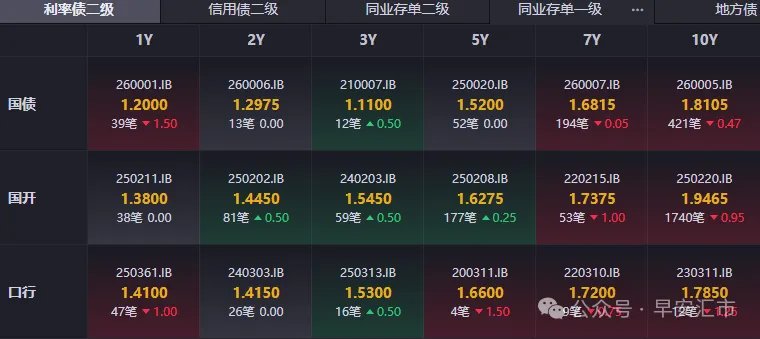
Chart: RMB long-term bond yields remain stable
Secondly, foreign exchange supply and demand are still driven by customer demand rather than sentiment. In the first quarter, net settlement of spot and forward contracts remained at $100 billion per month, with the war actually providing a window for settlement above 6.90. Given the current cautious stance of proprietary trading desks, customer demand has a stronger impact on liquidity.
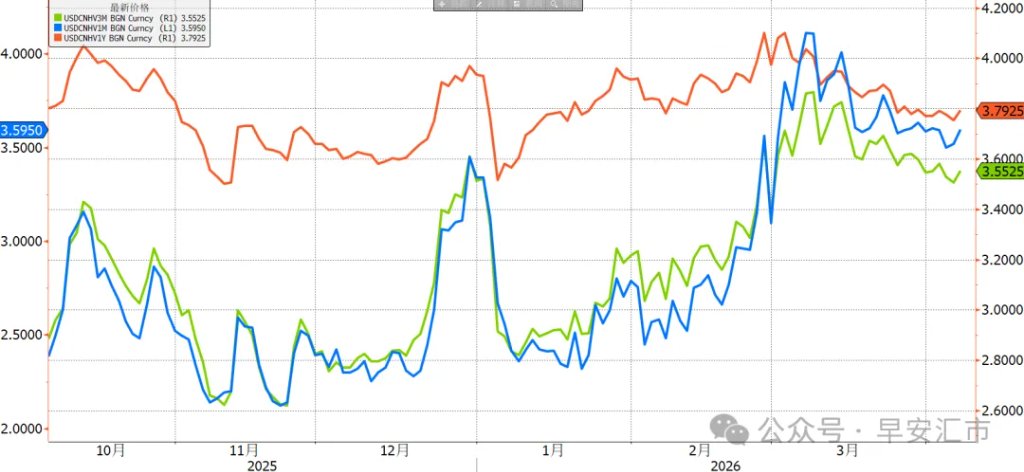
Chart: Lower Volatility
The RMB's steady progress is also reflected in its unusually calm implied volatility. Except for a brief surge driven by panic in early March, implied volatility steadily declined throughout the month, returning to pre-war levels. This means that from the short to the medium to long term, there are no excessive expectations of RMB appreciation or depreciation.
II. What's the outlook for the market?
In last week's article, "Why is it so difficult for the US and Iran to end the war?", we mentioned that market reaction functions may also change, one of which is that the RMB, as a potential alternative to the "petrodollar system," may outperform other Asian currencies.
The RMB is now showing a relative advantage. Following the depreciation of Japanese and South Korean currencies due to stock market crashes and Southeast Asian currencies due to the fragility of oil prices, the RMB exchange rate index has reached a new high in over a year.
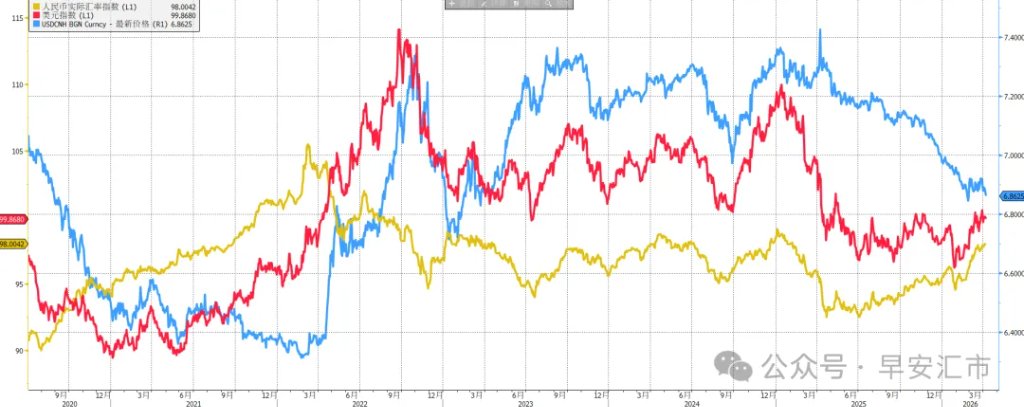
Chart: RMB Index Reaches New High
From this perspective, the RMB has already strengthened considerably. Unless the war ends sooner than expected, the RMB may still head towards the year's low of 6.80; otherwise, the short-term correction is likely complete.
III. Summary
(1) The exchange rate of the US dollar to the RMB returned to its pre-war level, the negative impact of the war gradually subsided, and the sensitivity to the event decreased.
(2) Judging from the RMB index, the short-term adjustment has been completed, and it is unlikely that it will fall below the 6.80 mark before the end of the war.
This article is sourced from: