

Author:Wall Street CN
Recent US intelligence reports warn that Iran is unlikely to open the Strait of Hormuz in the near future.
According to Xinhua News Agency, the U.S. intelligence community recently assessed that Iran views the Strait of Hormuz as an important "bargaining chip" against the United States and is unlikely to relax its control over this vital energy shipping route in the short term.
Analysts believe that the United States is currently facing multiple dilemmas: on the one hand, Iran controls the Strait of Hormuz with its unique geographical advantages, making it difficult for the United States to "open up" the waterway by force; on the other hand, Iran will continue to use the strait as a bargaining chip, making the United States' prospects for negotiation difficult.
Since the US-Iran war began on February 28, the Strait of Hormuz has been effectively blocked. This strait carries approximately one-fifth of global oil trade, and the blockade has directly driven international oil prices to multi-year highs, leading to fuel shortages in countries reliant on Gulf oil and gas.
Rising energy prices are exacerbating inflationary pressures in the United States and posing a political risk to Trump—the Republican Party is facing the midterm elections in November, and Trump's poll numbers are already quite poor.
Hormuz – Iran's Core Leverage
The core logic of the intelligence assessment is that blocking the Straits gives Iran unprecedented bargaining power.
According to media reports citing sources familiar with the matter, Ali Vaez, director of the Iran project at the International Crisis Group, bluntly stated: "In trying to prevent Iran from developing weapons of mass destruction, the United States has instead given Iran a weapon of mass destruction."
He further stated that Tehran is well aware that its ability to influence the global energy market by controlling the straits is "far more powerful than nuclear weapons."
An informed source, citing intelligence reports, claimed: "Once Iran has tasted the power and leverage to control the Straits, it will not easily relinquish it."
Former CIA Director Bill Burns stated on a Foreign Affairs podcast that Iran will use its control of the Straits of Hormuz to secure "long-term deterrence and security guarantees" in peace negotiations with the United States, while also seeking "direct material benefits"—such as charging tolls to commercial vessels. "This," he said, "makes the current negotiations extremely difficult."
Some experts also pointed out that even if the war ends, Iran is unlikely to give up its control over the right of passage through the Strait, as collecting passage fees will become an important source of funds for its reconstruction.
Forced military breakthrough: Risks far exceed expectations
according to
However, experts generally warn that the cost of using force is extremely high.
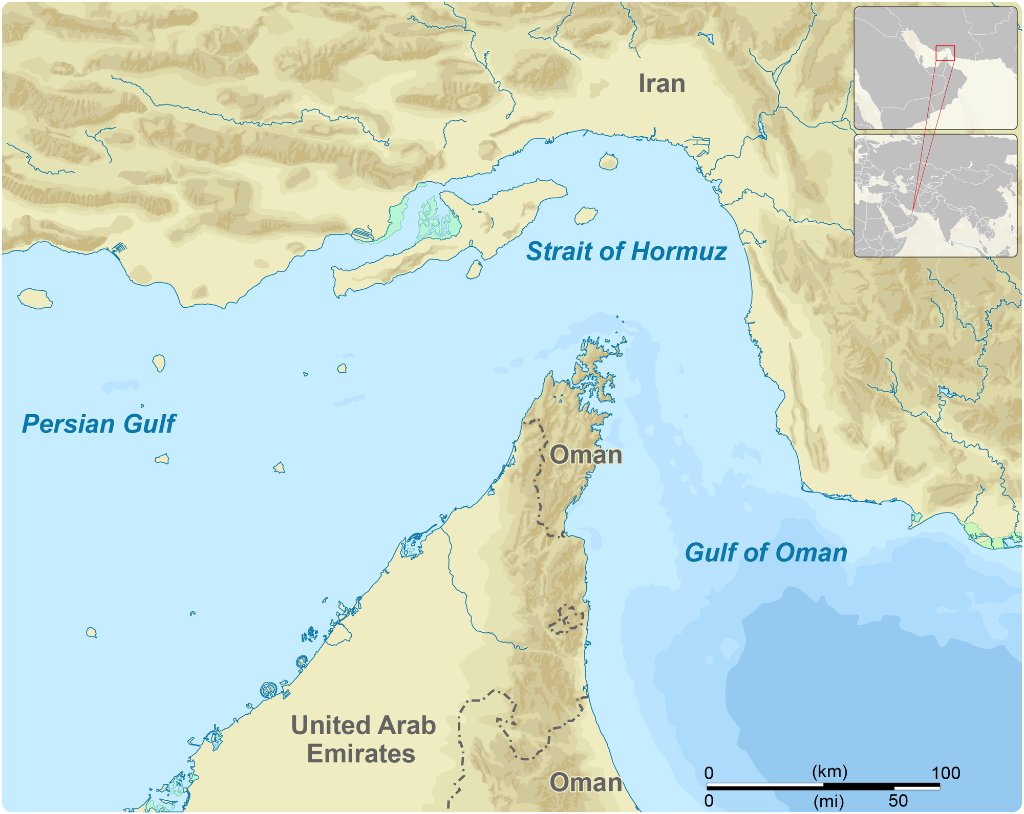
The Strait of Hormuz is only 21 miles (about 33 kilometers) at its narrowest point, and the two-way shipping lanes are only 2 miles (about 3 kilometers) wide on each side, making ships and troops extremely vulnerable to attack.
More importantly, even if the US occupies Iran's southern coast and islands, Iran can still launch drones and missiles from deep within its territory, continuing to threaten passing ships. Ali Vaez stated, "Just one or two drones are enough to disrupt traffic and scare away ships."
Trump's contradictory stance
At the policy level, Trump's statements are clearly contradictory. On the one hand, he lists opening the Strait of Hormuz as a precondition for a ceasefire, while on the other hand, he calls on countries that rely on Gulf oil and NATO allies to take the lead in resolving the issue.
An anonymous White House official said Trump "believes the Strait will open soon" and made it clear that postwar Iran should not control the right of way in the Strait. However, the official also noted that Trump believes other countries "have a greater interest than the United States in preventing this."
The intelligence assessment's conclusions differed significantly from Trump's optimistic statements, making the market more cautious about the short-term prospects of normal passage across the strait.