

Author:Currency Explorer
Whether investors are increasing their bond holdings, buying up commodities, or holding cash, they all share a common view: Trump's inconsistent stance over the past few weeks has caused significant market volatility, leaving them frustrated and uncertain about the future.
With only hours remaining until the deadline for Iran to accept the agreement, investors are once again forced to prepare for all possible outcomes.
“We just hope that reason will prevail in the next 24 hours,” said Gary Dugan, CEO of the Office of the Chief Investment Officer of Global. He has temporarily moved from Dubai back to his home in Jabalpur, a city in central India, to avoid the turmoil.He is reducing his stock positions and buying crude oil through exchange-traded funds.
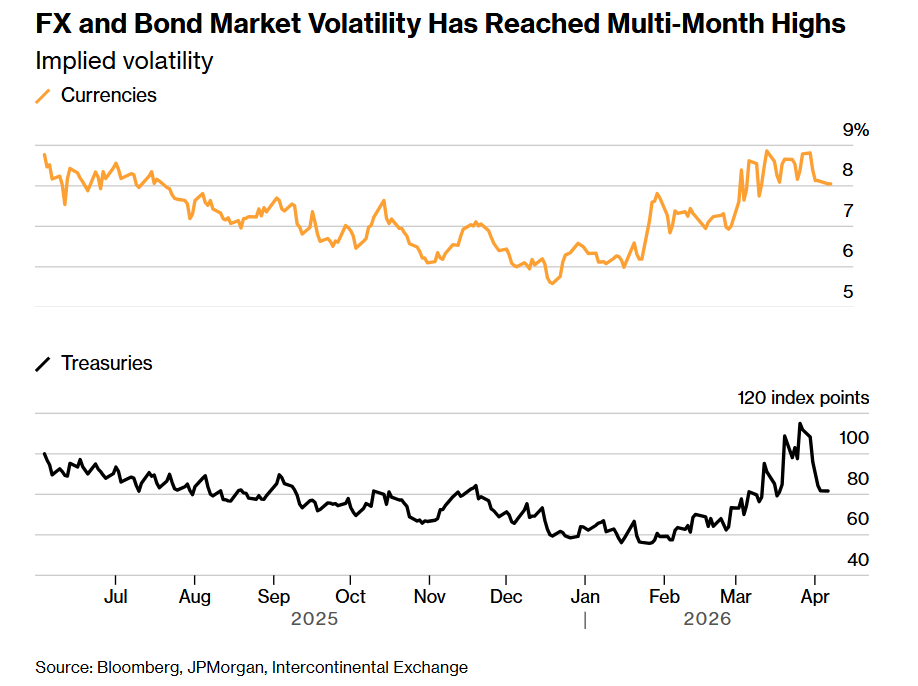
This scenario has played out repeatedly in recent weeks: Trump sets multiple deadlines, only to extend them again and again, triggering round after round of market volatility and leaving traders scrambling to keep up. With the latest deadline approaching at 8 p.m. New York time on Tuesday,Volatility indicators in both the foreign exchange and bond markets have reached multi-month highs.
On Tuesday during Asian trading hours, major asset classes were generally stable, with the US dollar failing to hold onto its early gains and Asian stock indices rising slightly; Brent crude oil fluctuated between gains and losses.
Despite the recent volatile price action, hedge fund investor Thomas Hayes remains optimistic.
“There is asymmetric upside potential in the market,” said Hayes, chairman of New York-based Mountain Capital.If Trump "messses up, US stocks will retrace to recent lows, with a drop of about 4%; if an agreement or ceasefire is reached, the market will be like a compressed spring, with the potential for a violent rebound of 10%."
Trump insists that freedom of navigation in the Strait of Hormuz must be part of any agreement to end the Middle East wars, and escalates his threats to destroy key Iranian infrastructure if the conditions are not met by the deadline.
He said on Monday that negotiations with Iran were "progressing well" and that reopening the Strait of Hormuz was "a top priority." But just weeks earlier, he had stated that an agreement on the Strait was not a core prerequisite for ending the conflict.
Trump also stated thatThe possibility of another postponement is "extremely low".
In Singapore, foreign exchange trader Mingze Wu believes that...Amid uncertainty, the US dollar will remain the most favored currency.
"In my view, the real pain has not yet truly arrived," said Wu Mingze of Stonex Financial.If the situation does not improve, the effects of the oil supply shortage may become apparent from mid-April to early May, at which point the real chaos will begin..
However, some investors say they have become somewhat desensitized to Trump's threats.
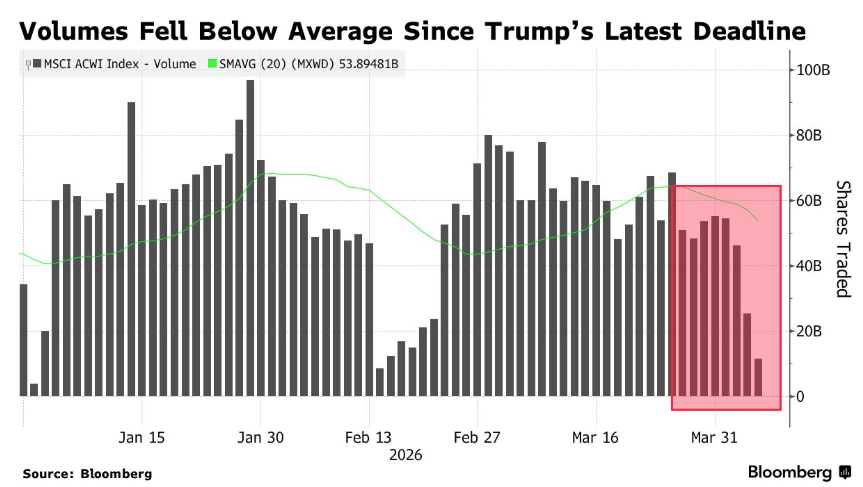
“The market is starting to see Trump as the boy who cried wolf,” said Hideo Shimomura, senior portfolio manager at Five Star Asset Management in Tokyo. “The focus is increasingly shifting to how Iran will respond, especially whether Iran will open the Strait of Hormuz.”
Thousands of miles away in Sydney, Nick Twidale, chief market analyst at AT Global Markets, is on high alert, waiting for the next headline to break.
“Traders are exhausted, frustrated, and just want a clear outcome,” he said. “Investors are long the dollar against all currencies simply to maintain liquidity because the outcome of Trump’s deadline is so extreme that it’s almost impossible to really position themselves.”