












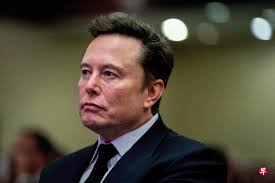


The U.S. Department of Justice and the Commodity Futures Trading Commission (CFTC) are investigating former U.S. Representative George Santos, focusing on whether he engaged in alleged insider trading on the prediction market platform Kalshi. Sources familiar with the matter say the investigation is related to a bet surrounding Trump's State of the Union address.
Contrast between betting and public schedule
The report mentioned that the day before the State of the Union address, Santos stated on the X platform that he planned to attend Trump's speech.
He ultimately did not show up, later posting that he was at the airport watching the speech. NPR previously reported that Santos had bet on Kalshi that he would not attend the event and profited tens of thousands of dollars as a result.
Both Kalshi and the CFTC declined to comment on the investigation. Santos and the U.S. Department of Justice have not yet responded to requests for comment. According to NPR, Santos said he "learned about the investigation from the news," and did not explicitly confirm whether he had Kalshi's account.
Santos already had a federal criminal record.

Santos pleaded guilty in 2024 to a federal fraud case involving wire fraud and aggravated identity theft. Prosecutors at the time stated that he was also involved in falsifying campaign finance reports, misappropriating donor credit card information, claiming unemployment benefits while employed, and misrepresenting his personal financial situation.

After pleading guilty, Santos entered the Felton Federal Correctional Facility in New Jersey in July 2025 to serve an 87-month sentence. In October 2025, Trump commuted his sentence, and Santos was subsequently released.
Market compliance risks are expected to continue to escalate.
This investigation has once again brought the compliance issues of prediction market platforms to the forefront. In recent months, platforms such as Kalshi and Polymarket have continued to be under scrutiny, with the focus on whether users could exploit non-public information to profit from contracts related to elections, military operations, and geopolitical events.
Business Insider previously reported that Kalshi had penalized three political candidates who bet on his election results and suspended their accounts. Meanwhile, Polymarket also flagged a U.S. Army soldier's transactions with authorities, alleging he profited over $400,000 in Venezuela-related markets using classified information.
From a regulatory perspective, the sensitivity of these cases lies not only in the individual transaction itself, but also in how prediction market platforms identify and restrict participants who may possess non-public information. As related products cover politics, war, and macroeconomic events, the monitoring and enforcement pressure on these platforms is also increasing.








