Author:AInvest
The crypto market's 2025 downturn has tested the resilience of even the most politically connected projects. Yet,
(WLFI), a crypto venture backed by the family, has emerged as a case study in leveraging real-world asset (RWA) tokenization and stablecoin innovation to stabilize value and attract institutional capital. With , its U.S. dollar-pegged stablecoin, and a strategic RWA framework, is positioning itself as a linchpin in the revival of Trump-linked crypto assets amid broader market volatility.Strategic Tokenization: Bridging Traditional and Digital Finance
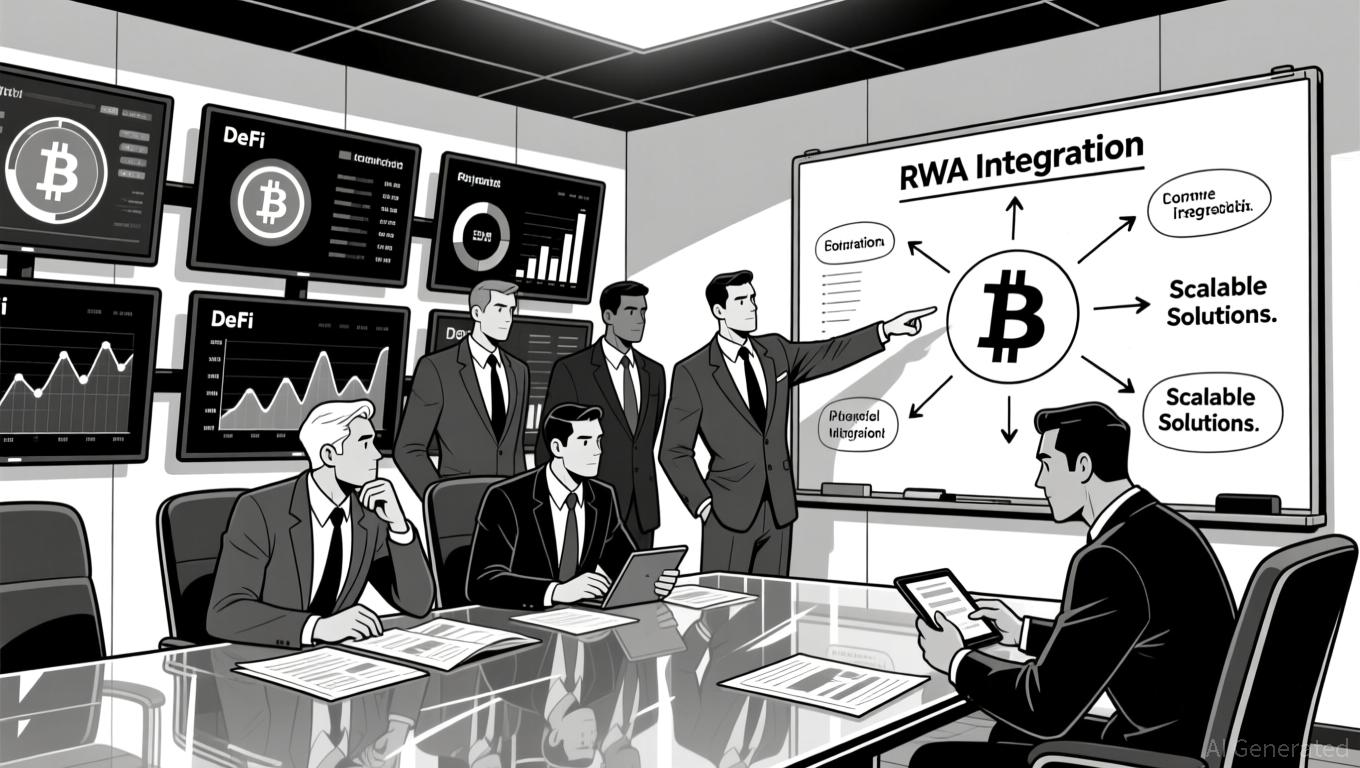
WLFI's RWA tokenization strategy,
, aims to tokenize high-value real estate and commodities like oil, gas, and timber, enabling fractional ownership starting at $1,000. This approach addresses liquidity constraints in traditional markets while aligning with the growing demand for programmable assets. By tokenizing these assets and pairing them with USD1-a stablecoin fully backed by U.S. Treasuries, bank deposits, and cash equivalents-WLFI , making its offerings attractive to both institutional and retail investors.
The market for non-stablecoin tokenized assets has
, driven by regulatory clarity and institutional adoption. Platforms like DigiFT and Tiger Research have , creating new financial primitives such as programmable collateral and tokenized lending. WLFI's RWA framework is designed to capitalize on this trend, with plans to expand to commodities and real estate, further cementing USD1's role as a bridge between traditional and digital finance.USD1: A Stablecoin with Institutional Ambitions
USD1's growth to a $2.68 billion market cap underscores its institutional appeal. Pegged to the U.S. dollar and backed by short-term U.S. government treasuries, USD1 has been integrated on blockchains like
Chain, , and , . This cross-chain strategy, bolstered by partnerships with and Chainlink's CCIP, enhances liquidity and compliance capabilities, .The stablecoin's utility extends beyond trading. In 2025,
, highlighting its role in large-scale financial transactions. Additionally, WLFI's of the USD1 Points Program incentivizes liquidity generation and trading activity, further driving adoption. These moves align with broader trends: analysts project the stablecoin market could reach $4 trillion by 2030, like the Trump administration's GENIUS Act.Market Recovery Amid Political and Regulatory Scrutiny
WLFI's efforts to stabilize Trump-linked crypto projects have
. A $51.7 million loss in its crypto portfolio following Trump's tariff announcements and concerns over centralization-such as token freezes and whale concentration-have raised questions about long-term viability. However, and a planned crypto debit card (Q4 2025/Q1 2026) aim to restore investor confidence.The political dimension remains complex. While the Trump family's backing has drawn institutional attention,
, including probes into foreign influence and conflicts of interest. Despite these challenges, WLFI's RWA and USD1 strategies are gaining traction. For instance, , blending utility with financial returns. This innovation, coupled with USD1's expanding cross-chain presence, could mitigate the broader market's downturn by attracting capital to politically insulated, asset-backed projects.Risks and Systemic Implications
Critics warn that stablecoins like USD1, despite their perceived stability, carry systemic risks.
, a concern amplified by the GENIUS Act's potential to scale failures. Additionally, WLFI's endorsement of memecoins like SPSC has drawn criticism for conflicting with its institutional DeFi positioning.Yet, WLFI's deflationary token buybacks and focus on RWAs suggest a long-term vision. By tokenizing assets with USD1, the project taps into a $24 billion RWA market, offering a hedge against crypto's volatility. If successful, this model could redefine how traditional assets are traded, with 24/7 liquidity and fractional ownership democratizing access to markets once dominated by gatekeepers.
Conclusion
WLFI's RWA strategy and USD1 stablecoin represent a bold attempt to merge traditional finance with blockchain innovation. While political and regulatory risks persist, the project's institutional partnerships, cross-chain expansion, and asset-backed approach position it as a key player in the post-2025 market recovery. For investors, the challenge lies in balancing the potential of tokenized RWAs with the inherent risks of a politically charged, rapidly evolving sector.