


Author:Wall Street CN
Amid the impact of the war with Iran, Türkiye has mobilized its gold reserves to a greater extent than the market expected.
According to data cited by Reuters on Thursday, Turkey's central bank gold reserves have plummeted by more than 118 tons in the past two weeks, worth nearly $20 billion. Last week alone, reserves fell by 69.1 tons to 702.5 tons.The weekly volume of sales has recorded the largest weekly decline since at least 2013.
According to estimates from three banking professionals, approximately 26 tons of gold were sold directly last week alone, while another 42 tons were used through swap transactions; the previous week, gold reserves decreased by 49.3 tons. The Central Bank of Turkey declined to comment on these estimates.
This move marks a significant shift in Turkish policy. For the past decade, Türkiye has been one of the world's most active buyers of gold.
Analysts say the current sell-off represents about 15% of the country’s total gold reserves, equivalent to the reserves the country has accumulated over the past six years.Following the outbreak of the Iran-Iraq War, global energy prices soared, leading to a surge in demand for foreign exchange liquidity. This put pressure on the lira, forcing the authorities to make significant use of gold reserves to stabilize the exchange rate and meet the payment needs for energy imports.

Despite this massive sell-off, gold prices did not fall accordingly, raising questions in the market: who are the buyers who are continuously absorbing this huge amount of gold dumped by Türkiye?
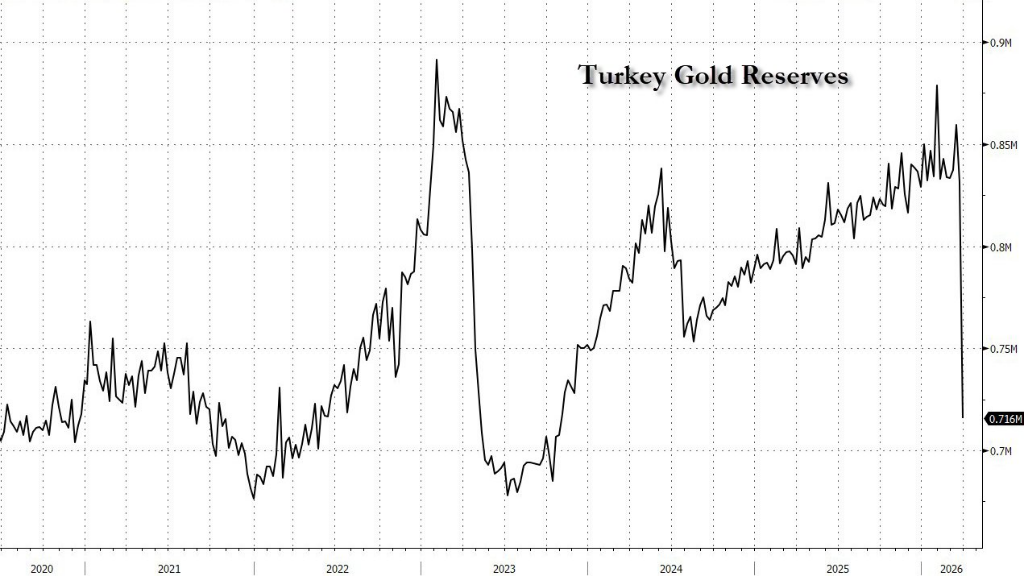
The decline was the largest in a decade, but attention should be paid to "gold swaps".
According to reports, Turkey's gold reserves fell by 69.1 tons last week, the largest drop since the bank began publishing international standard gold reserve data in 2013.
According to Iris Cibre, founder of Istanbul-based Phoenix Consultancy, Turkish officials have used a significant portion of the central bank's approximately $135 billion gold reserves through sales and gold swap arrangements. She estimates the cumulative sales amount to be approximately 58.4 tons.More than half of these transactions were completed through overseas swaps involving "gold for foreign exchange".Independent calculations by three banking professionals show that approximately 26 tons of gold were sold directly last week, while another 42 tons were used through swap transactions.
according to
The central bank's choice to use swaps instead of outright sales reflects at least three considerations.First, maintain long-term positions.If the surge in oil prices is judged to be only a temporary shock, swaps can provide immediate relief, allowing for later redemption of gold and preventing the loss of ten years' worth of accumulated wealth.Second, reduce the impact on gold prices.A direct dump of 60 tons of gold would be enough to trigger a precipitous drop in the market, significantly reducing the value of its remaining gold reserves of over $100 billion. Swaps, conducted quietly in the over-the-counter market, have a much smaller impact.Third, a buffer at the domestic political level.Gold is seen as an "inflation-fighting symbol" by the Turkish people, and announcing a large-scale gold sale could easily trigger panic. Swaps, on the other hand, can technically maintain a certain degree of ambiguity.
The reason this operation could be completed so quickly in two weeks was due to a key prior arrangement: Türkiye had deposited approximately 111 tons of gold, worth about $30 billion, in the Bank of England.This gold can be used for foreign exchange intervention without logistical constraints—it can be directly pledged and converted into cash in the City of London without the need for cross-border transportation of physical goods.
The lira defense battle and the double pressure of energy bills
Two overlapping pressures are driving Türkiye to sell off its gold reserves:Lira exchange rate stability and energy import financing.
Following the outbreak of the Iran-Iraq War, global energy prices surged, putting Turkey, an economy heavily reliant on energy imports, under immense pressure to make foreign exchange payments. Simultaneously, rising risk aversion in the market put downward pressure on the lira, forcing the Turkish central bank to increase its intervention efforts. In addition to utilizing its gold reserves, the central bank increased its direct foreign exchange sales and the use of other market manipulation tools.
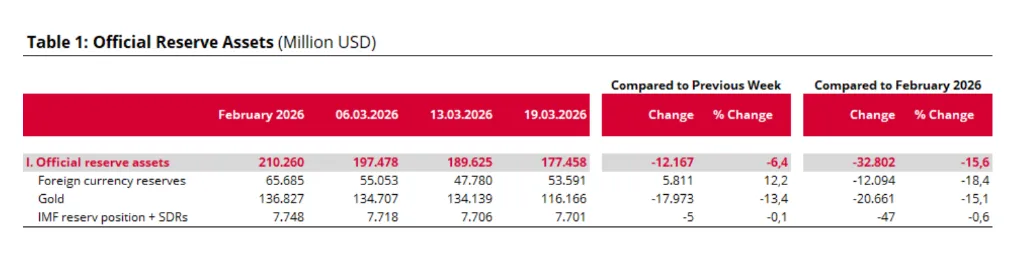
This situation poses a direct threat to Turkey's "deinflation" strategy, the core of which is to maintain the lira's exchange rate stable or on a gradual and controlled depreciation path, usually achieved through foreign exchange intervention by state-owned banks.However, rising energy costs and increased demand for dollars are eroding the sustainability of this framework.
Central Bank Governor: Proactive, Flexible, and Controllable
In response to external questions about the significant reduction in Turkey's gold reserves, Central Bank Governor Fatih Karahan publicly defended the move before traveling to London this week to attend an investor conference.
In an interview with Turkey's state news agency Anadolu Agency, Karahan stated that the central bank is adopting a "proactive, flexible, and controlled" approach to reserve management and liquidity tools. This implies that the current gold sell-off is a tactical adjustment within the established policy framework, rather than a reactive response to the crisis.