

Author:Wall Street CN
Strong jobs data dampened expectations of interest rate cuts, putting pressure on the US Treasury market and strengthening the dollar. US stock and spot markets were closed for the day due to a holiday.
According to Wall Street NewsU.S. nonfarm payrolls increased by 178,000 in March, exceeding market expectations, and the unemployment rate also unexpectedly declined. Due to Good Friday, U.S. stock markets and most major markets were closed on Friday, and the U.S. Treasury market was only open for half a day.
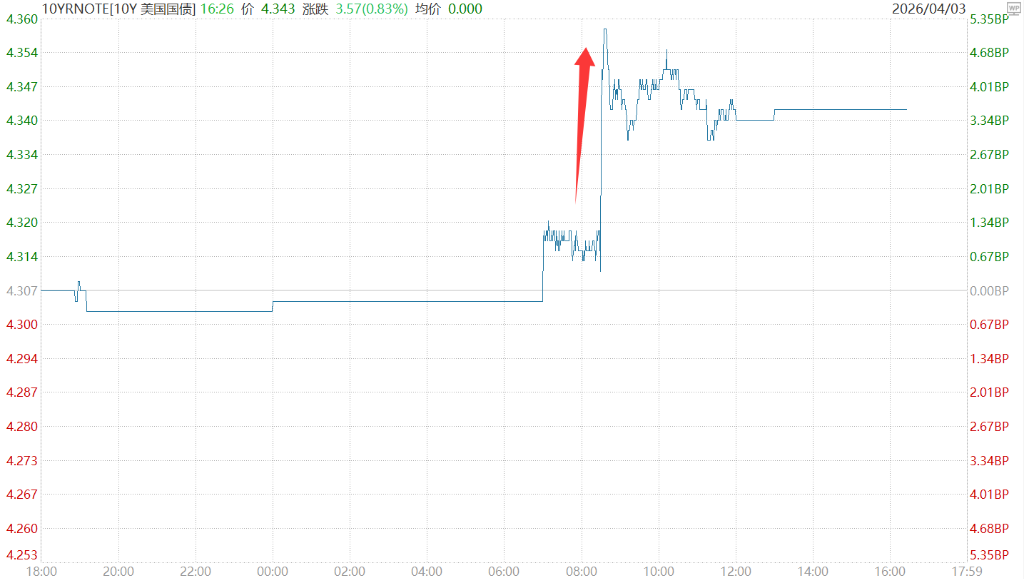
Following the data release, the yield on the 2-year US Treasury note, which is sensitive to interest rate trends, rose by 6 basis points to 3.86%, while the yield on the 10-year Treasury note rose by more than 5 basis points.
U.S. stock futures also fell, with S&P 500 futures down 0.3% and Nasdaq 100 futures down 0.4%. This followed gains in Asia-Pacific stock markets, boosted by news that Iran and Oman might reach an agreement on regulating passage through the Strait of Hormuz.
However, some data provided a buffer against expectations of interest rate cuts. The revised February non-farm payroll data showed a larger job loss than previously reported, while March wage growth also slowed more than expected, partially offsetting the potential inflationary pressure from the strong employment data.
Tony Farren, Managing Director of Interest Rate Sales and Trading at Mischler Financial Group, stated:
This data will not push the Federal Reserve closer to raising interest rates, but it also does not provide any reason for a rate cut.
In a client note, Jefferies chief U.S. economist Thomas Simons wrote that the report is unlikely to substantially change the Federal Reserve's decision-making path. Simons stated:
The data largely reflects past conditions and may not yet include the impact of recent energy price increases or risks related to the Iran war. Currently, there are no indications that the Federal Reserve needs to take immediate action.
Despite the disruptions caused by employment data, the underlying driver of the market remains the trajectory of the Middle East conflict.
Furthermore, CCTV, citing US media reports, stated that two US warplanes may have crashed on Friday, with Trump claiming that the downing of the jets would not affect negotiations. This dual setback in both military and diplomatic affairs has further deepened market concerns about the situation in the Middle East.
According to a recent poll jointly released by CCTV and Ipsos, the poll was cited by the media.86% of U.S. respondents were concerned about the safety of U.S. military personnel, 56% believed the conflict would negatively impact their personal finances, and more than three-quarters of respondents opposed sending ground troops to Iran.
Max Gokhman, Deputy Chief Investment Officer of Franklin Templeton Investment Solutions, stated:
Asset prices fluctuated wildly in response to every news headline. Economic growth will remain under pressure, and overall inflation will face upward pressure, until a clear agreement is reached and an acceptable plan for reopening the Straits is devoid of direction. This means significant digestive difficulties for both stock and bond investors.
Rina Oshimo, senior strategist at Okasan Securities in Tokyo, points out:
Markets are highly alert to potential developments over the weekend, especially the first weekend after Trump's national address. Oil prices could remain high for an extended period if attacks escalate or retaliatory actions erupt.
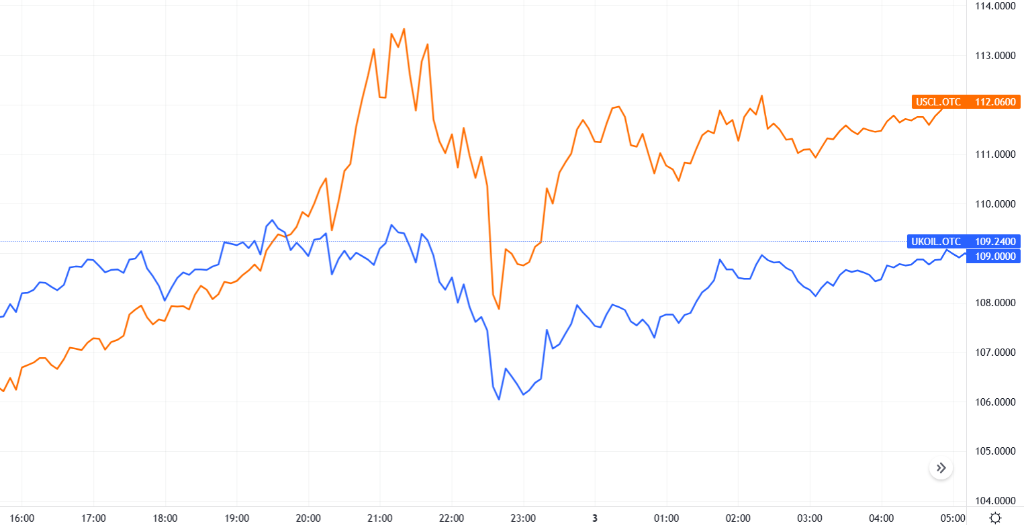
The crude oil market was closed on Friday for a holiday. Oil prices closed at extremely high levels on Thursday, with WTI crude oil exceeding $110 and Brent crude nearing $109.
Strong jobs data boosted the dollar, causing G10 currencies to weaken across the board. The cryptocurrency market also came under pressure, with Bitcoin falling 0.3% to $66,704.7 and Ethereum dropping 1% to $2,047.83.