

Author:Wall Street CN
A recent report from UBS's precious metals team indicates that UBS has engaged in in-depth discussions with several market participants in China, concluding that gold demand from China is highly likely to continue.
Affected by the spillover risks from the Middle East conflict, a deteriorating global macroeconomic outlook, and expectations of a weakening US dollar, respondents were generally cautious, but almost unanimously held an upward expectation for the medium- to long-term trend of gold. The bank noted, "Most, if not all, of our conversations indicated an upward bias towards the medium- to long-term price trend of gold."
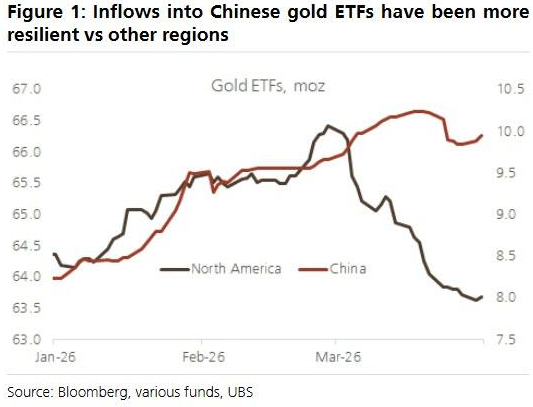
Macroeconomic concerns act as a catalyst for gold demand.
The report shows that Chinese market participants are highly vigilant about the impact of the situation in the Middle East, and the overall sentiment is quite pessimistic.
Respondents generally believe that the negative impact of the global macroeconomic outlook has been largely absorbed, and even if a window of easing tensions appears between the United States and Iran, it will be difficult to fundamentally change this assessment in the short term.
Most respondents held a cautious view of the U.S. outlook, focusing on the risks of stagflation and a weakening dollar. At the same time, they were skeptical of rapid interest rate hikes by global central banks, preferring to focus on the substantial impact of high energy prices and geopolitical uncertainty on economic growth.
The aforementioned concerns about growth, inflation, and geopolitics are the underlying logic behind the Chinese market's continued bullish outlook on gold.
Institutional demand is being released at an accelerated pace.
Changes in demand are not only driven by sentiment; structural factors are also driving institutional funds into the market.
UBS identified three main driving factors:
First, tax rules have been adjusted.New regulations introduced last year continued to exempt investment gold from taxation, while increasing the tax costs for jewelry gold.
According to the Shanghai Securities News, the Ministry of Finance and the State Taxation Administration jointly issued an announcement regarding tax policies related to gold. The relevant rules will be implemented from November 1, 2025, to December 31, 2027.The new policy stipulates that standard gold traded through the Shanghai Gold Exchange and the Shanghai Futures Exchange will continue to be exempt from value-added tax.
Secondly, the bank's accumulation plan expanded.Banks are promoting their gold accumulation programs on a large scale through electronic platforms, with coverage continuing to expand and the threshold for retail participation being further lowered.
Third, the pilot program for insurance companies is being accelerated.This is the most noteworthy piece of new information in the report. Currently, about half of the insurance companies participating in the pilot program and permitted to invest up to 1% of their assets under management (AUM) in gold have already begun actively deploying such investments.
The trading activity of these insurance companies will be reflected in the trading volume of the Shanghai Gold Exchange (SGE), "because this is the product they are allowed to trade." Data confirms this assessment—SGE trading volume has increased significantly in the past few weeks.
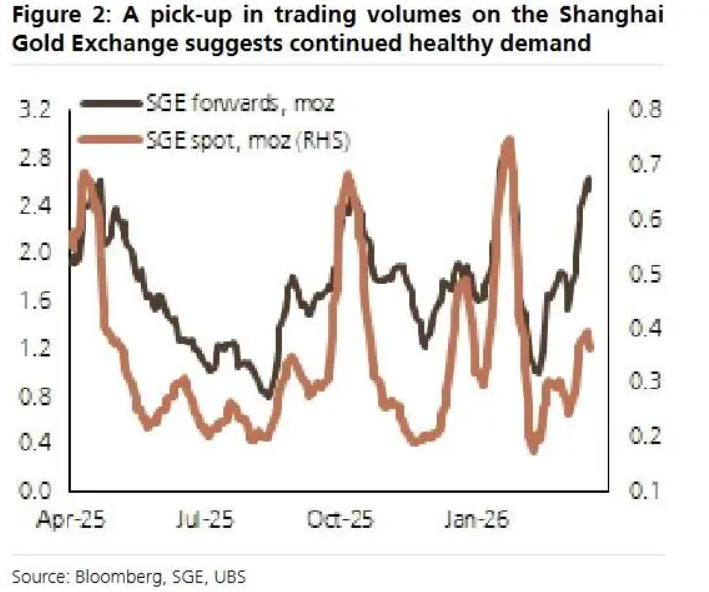
UBS believes that insurance companies' current deployment is still in its early stages and "is still a long way from being fully equipped."
Mid-sized insurance companies and some other institutions with a higher risk appetite are expected to be the most active participants in the near term. For insurance companies that have remained relatively cautious so far, the lack of expertise and the fact that gold does not generate returns are the two main obstacles.
In the long term, upside risks come from two directions: first, expanding the pilot program to more industries or other sectors; and second, raising the upper limit of the AUM ratio for investable gold. Once these policies are implemented, they will open up greater opportunities for gold demand.
Short-term fluctuations have not shaken medium- to long-term confidence.
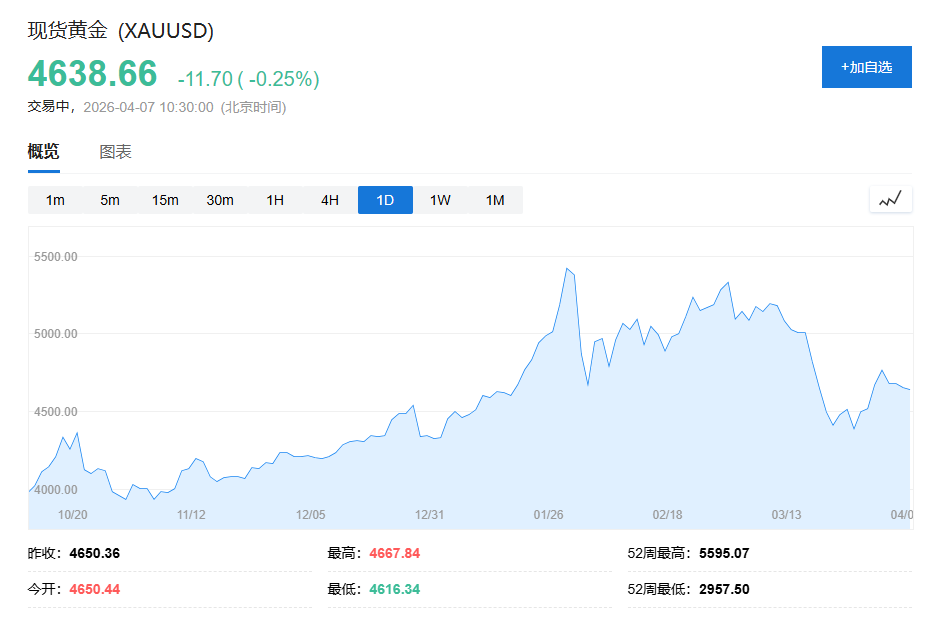
It is worth noting that the sharp correction in gold prices at the end of February and the continued weakness in March have caused some concern in the Chinese market.
UBS stated, "Almost every conversation we've had in China has touched on the various reasons for the downward pressure on gold prices," and market participants are clearly re-examining their underlying assumptions and long-term outlook, with "the tension being palpable."
The key question is: Is the current price level an attractive entry point, or is there still room to wait patiently?
Nevertheless, UBS maintains a constructive outlook for the overall second quarter, especially given the stabilization of gold prices and the continued presence of domestic premiums. There are currently no significant bottlenecks on the supply side, and obtaining import quotas and licenses has been relatively smooth.