

Author:Wall Street CN
According to CCTV International News, Majid Mousavi, commander of the Aerospace Force of the Iranian Islamic Revolutionary Guard Corps, stated on social media on the evening of April 6th local time that in the past 24 hours, Iranian missiles had bombed oil refineries, power facilities, ports, and railways in the northern Israeli city of Haifa, with no reports of missile interception. He pointed out, "By abandoning the northern cities, Israel has effectively admitted defeat."
Israeli emergency services said on June 6 that after 18 hours of search and rescue efforts, all four people trapped under the rubble of a residential building in the northern Israeli city of Haifa, where an Iranian missile attack had struck, had died, and eight others were injured to varying degrees. This is the deadliest casualty incident caused by Iranian missiles in Haifa since the start of the conflict.
Iran's Islamic Revolutionary Guard Corps issued a statement on the 6th, saying that it launched the 98th wave of Operation True Commitment-4 that day, targeting areas including northern and southern Tel Aviv, strategic centers in Haifa, chemical plants and factories in Beersheba, and Israeli military bases in Petah Tikwa.
Iranian missiles repeatedly breached interception, causing damage in multiple locations.
CCTV reporter Liang Hui:From the afternoon of May 5th to the morning of May 6th local time, Iranian missiles repeatedly penetrated Israel's air defense system, hitting locations in Haifa, Tel Aviv, and other cities, causing widespread damage. This is a relatively rare instance recently of Iranian missiles simultaneously causing significant damage and casualties in multiple densely populated urban areas.
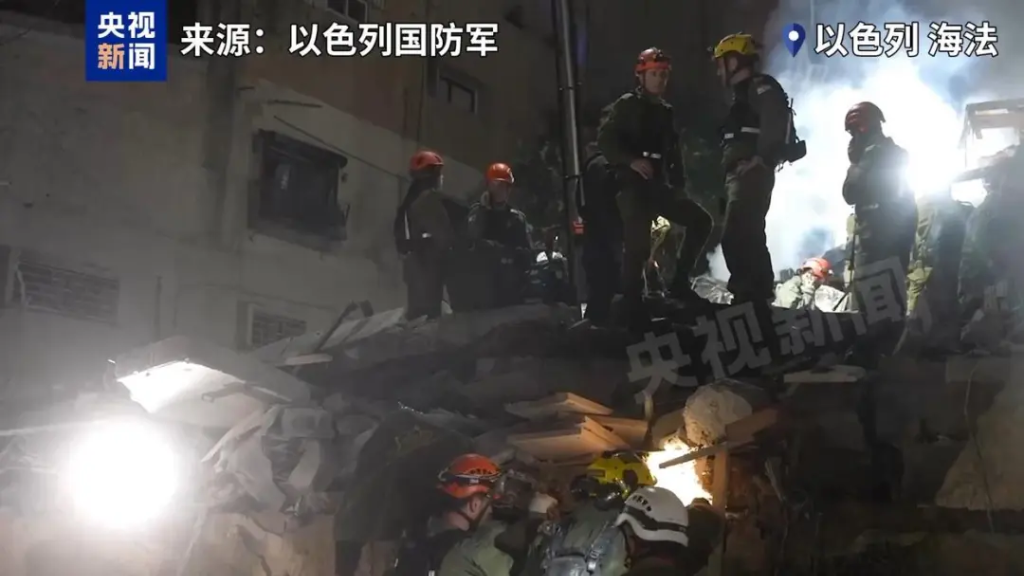
CCTV reporter Liang Hui:In the northern city of Haifa, a six-story residential building was hit by an Iranian missile on the afternoon of May 5th, causing structural damage and a fire. At least four people were buried under the rubble. According to emergency services, as of 9:00 AM on May 6th, two people had been found but had died. Two others remained buried under the rubble. The attack also injured at least eight people.
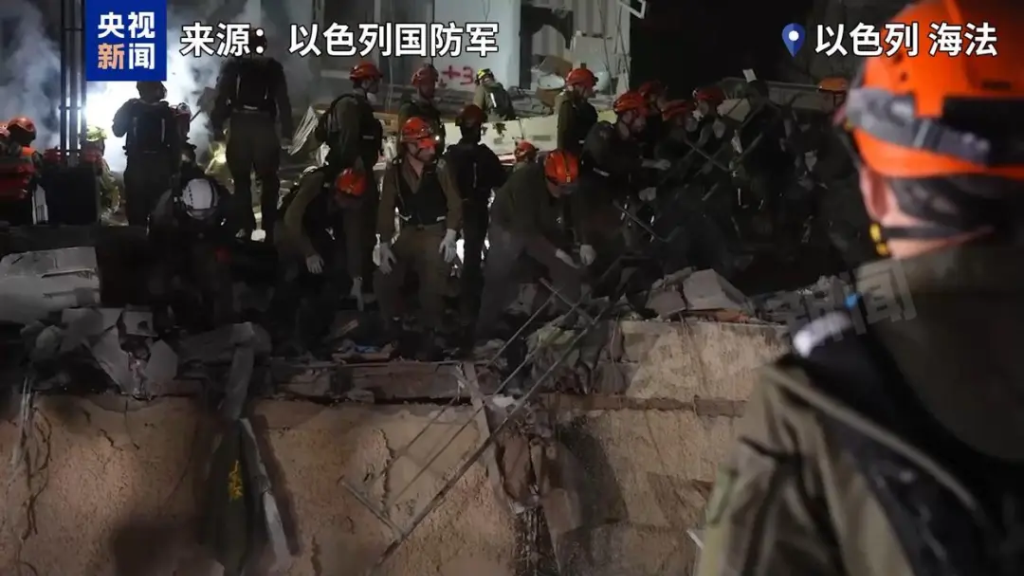
CCTV reporter Liang Hui:From the early hours of the 6th until morning, Iran launched four rounds of missiles, totaling more than a dozen, at Israel, including some carrying cluster warheads. This is a relatively rare instance of Iran launching missiles in the early morning hours recently. Preliminary statistics indicate that these missiles caused damage in Haifa and Tel Aviv, with at least 20 instances of damage in central Israel alone, including buildings, vehicles, and streets, resulting in at least 20 injuries.
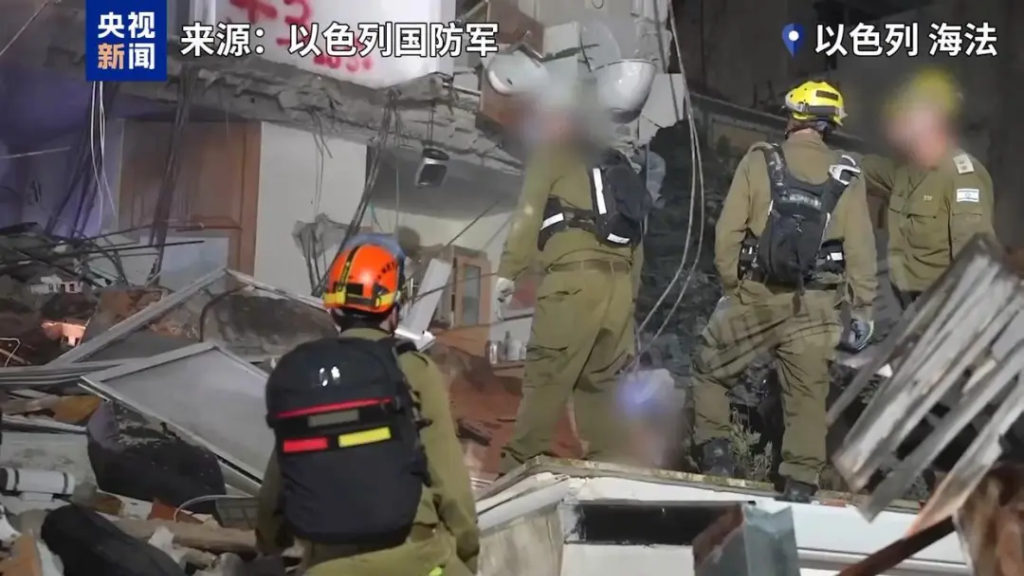
CCTV reporter Liang Hui:According to Israeli statistics, Iran has launched approximately 500 missiles at Israel since the start of the conflict, with at least 14 hitting densely populated areas and causing widespread destruction. There are also reports of around 30 missiles carrying cluster warheads hitting local cities. Israeli Air Force intelligence assesses that Iran still possesses approximately 1,000 ballistic missiles, capable of directly threatening Israeli territory.
CCTV reporter Liang Hui:The building behind me is the six-story residential building that was directly hit by the Iranian missile. Now, pointing to the side facing the street, we can see that the building itself didn't suffer much damage. However, this side of the building was almost completely destroyed; we can't see what it originally looked like.
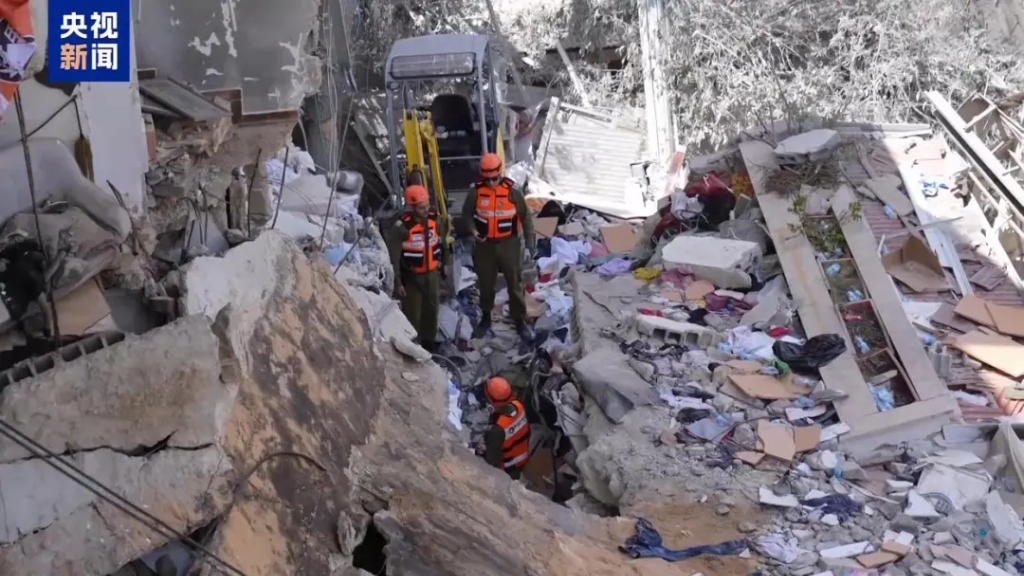
CCTV reporter Liang Hui:This is because the warhead, weighing several hundred kilograms, did not explode upon impact, but instead struck the back side of the building directly, causing the current scene. The warhead remains buried under the rubble and therefore still poses a risk of explosion. Local police have informed us that residents of this building and several surrounding structures have been evacuated.
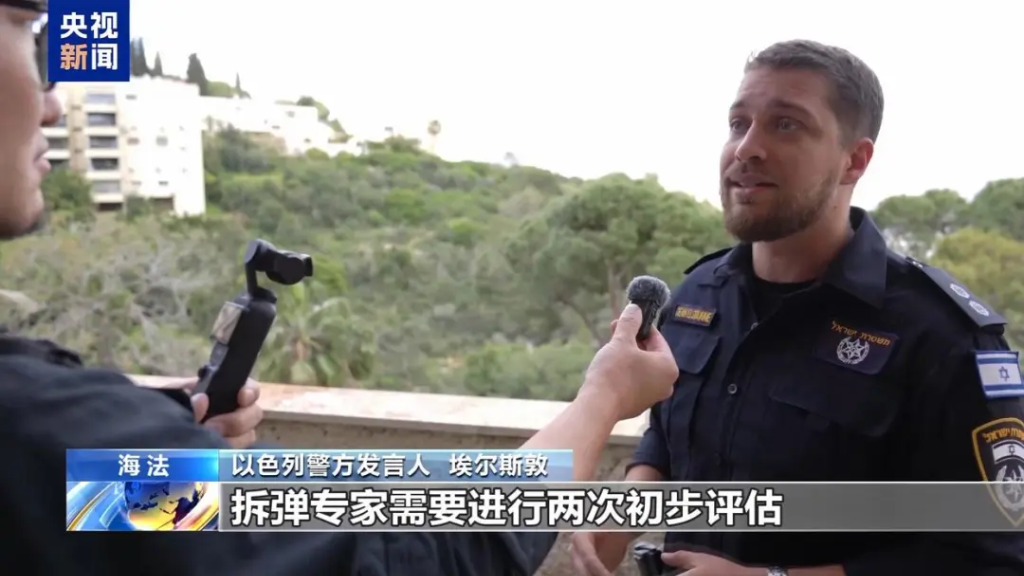
Israeli police spokesman Elsdon:We are facing an unexploded warhead, and bomb disposal experts need to conduct two preliminary assessments. The first assessment is to ensure it is stable enough for us to carry out search and rescue operations, and the second assessment will determine whether we should detonate the warhead here.
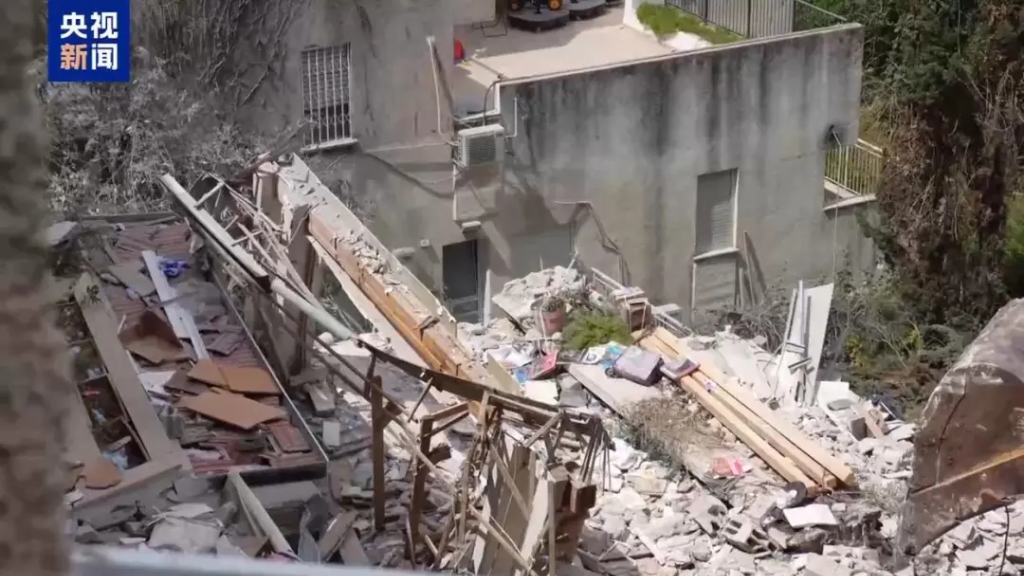
CCTV reporter Liang Hui:The building was hit by a missile on the afternoon of the 5th local time. It wasn't until the morning of the 6th, around noon, that the four people trapped under the rubble were finally found. All four had perished.

CCTV reporter Liang Hui:Now let's look at the location of this attack site. The direction I'm pointing is the building that was hit by the missile. And in the distance behind me, you can see that Haifa Port, the power plant, and Haifa Airport are all in that direction. They're only a few kilometers away from where I am now, as the crow flies.
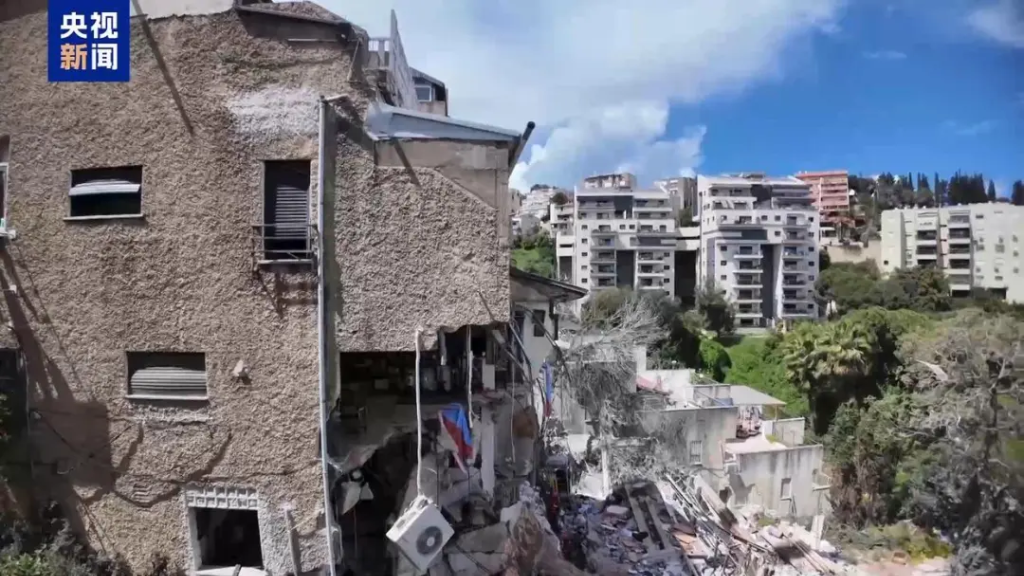
CCTV reporter Liang Hui:We have noted that in the early stages of the war, Iranian missile attacks primarily targeted Tel Aviv and several locations in central Israel. However, now, in addition to these previously mentioned locations, Iranian missiles are also focusing their attacks on industrial cities in the south, and Haifa, Israel's most important industrial city in the north.
Israel says it will accelerate production of Arrow interceptor missiles.
According to CCTV News, the Israeli Ministry of Defense issued a statement on April 6th, stating that it will accelerate the production of interceptor missiles for the Arrow missile defense system and "prepare for an ever-changing combat situation." Israeli Defense Minister Katz stated in the statement that Israel currently has "sufficient" interceptor missiles to protect its citizens, and the accelerated production aims to ensure "persistent operational capability."
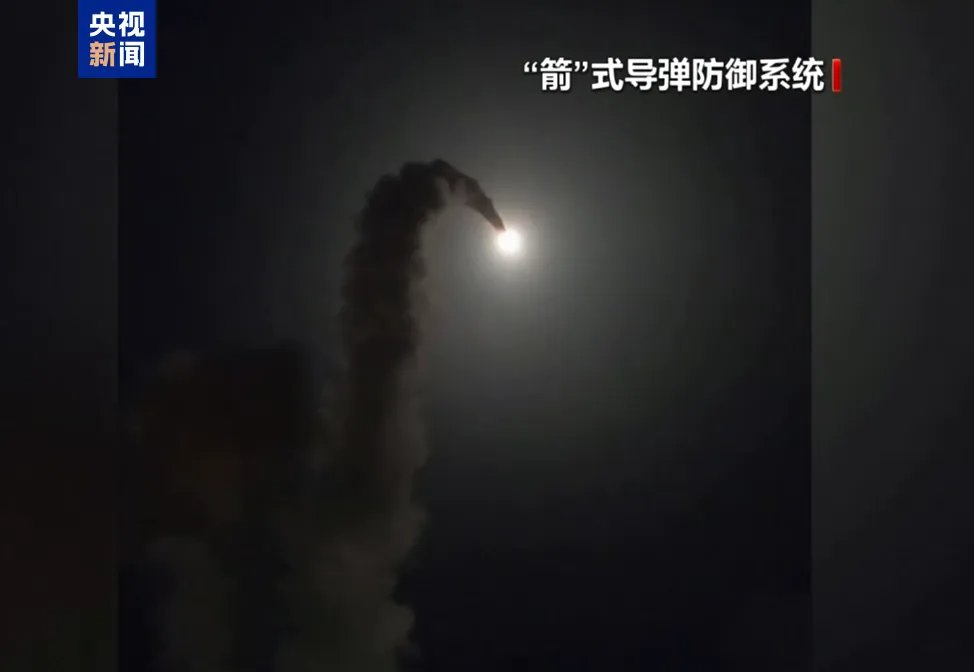
According to previous reports from Israeli and American media, Israel's interceptor missiles are being rapidly depleted, with its stockpile "severely insufficient." This problem existed long before the joint US-Israeli military strike against Iran on February 28, as the Israeli military had already used up a large number of interceptor missiles in the military conflict with Iran last June, the so-called "12-Day War."
Israel's multi-layered defense system includes the Arrow system, capable of intercepting long-range ballistic missiles; the David's Sling system, a medium-range air defense system; and the Iron Dome and Iron Beam systems, both short-range air defense systems. Among these, the Arrow system, jointly developed by the US and Israel, is the mainstay against Iranian ballistic missiles, cruise missiles, and drones.
According to AFP, the Arrow-2 interceptor missile of the Arrow system can intercept both inside and outside the atmosphere, while the Arrow-3 interceptor missile is responsible for interception missions outside the atmosphere. The cost of a single Arrow-2 and Arrow-3 interceptor missile is approximately US$1.5 million and US$2 million, respectively.
Israel has announced that it has halted all defense purchases from France.
On May 5th local time, a reporter from CCTV learned that, according to a spokesperson for the Israel Defense Forces, the Israeli Ministry of Defense has suspended all defense procurement from France due to several measures taken by France that "harm Israel's security," including prohibiting Israeli military aircraft from using French airspace to carry out combat missions against Iran.
The spokesperson stated that Israel is currently conducting military operations against Iran, and France is "actively obstructing the transfer of munitions to Israel." The spokesperson added that Iran's ballistic missiles "have the capability to strike European cities, including Paris."
The spokesperson stated, "Despite prior coordination, clear explanation that the munitions were targeted only at Iran, and mutual understanding that this effort was equally vital to European security, France still imposed the ban."
The spokesperson stated that, in response, Israeli Defense Ministry Director General Amir Balam "has decided to reduce all defense procurement from France to zero" and replace it with domestic procurement or procurement from "ally countries." He added that this is part of a strategy to "establish complete defense autonomy and not rely on untrusted countries."
The spokesperson added that the Israeli Ministry of Defense, together with the Israeli National Security Council, informed French Defense Minister Voutland that "we do not intend to meet with him and will not engage in new business dealings with the French military."
France has not yet responded to this.
This article is sourced from: