

Author:Bloomberg
In many respects, the 2026 African Land Forces Summit in Rome looked like any other US-led military conclave. The event was packed with men in uniform, chests plastered with medals and badges, shoulders weighed down by golden braids and epaulets. In a luxury hotel perched on a hill above the Vatican, the African representatives met with US and NATO counterparts for sessions on counterterrorism, training and coordination, and more than a few informal chats in the corridors.
But just outside the conference hall, the atmosphere at the March 22-24 conference had a different tone, reflecting the changing priorities of the White House. There were, of course, defense contractors selling drones, rifles, missile systems and other hardware, but those more traditional vendors were outnumbered by the kinds of businesses that have flocked to Trumpworld—cryptocurrency, artificial intelligence, consulting and finance. “It’s very useful for us to have all of these companies here,” Capt. Esono Nchama, Inspector General of Equatorial Guinea’s Armed Forces, told Bloomberg Businessweek, scanning the crowd.
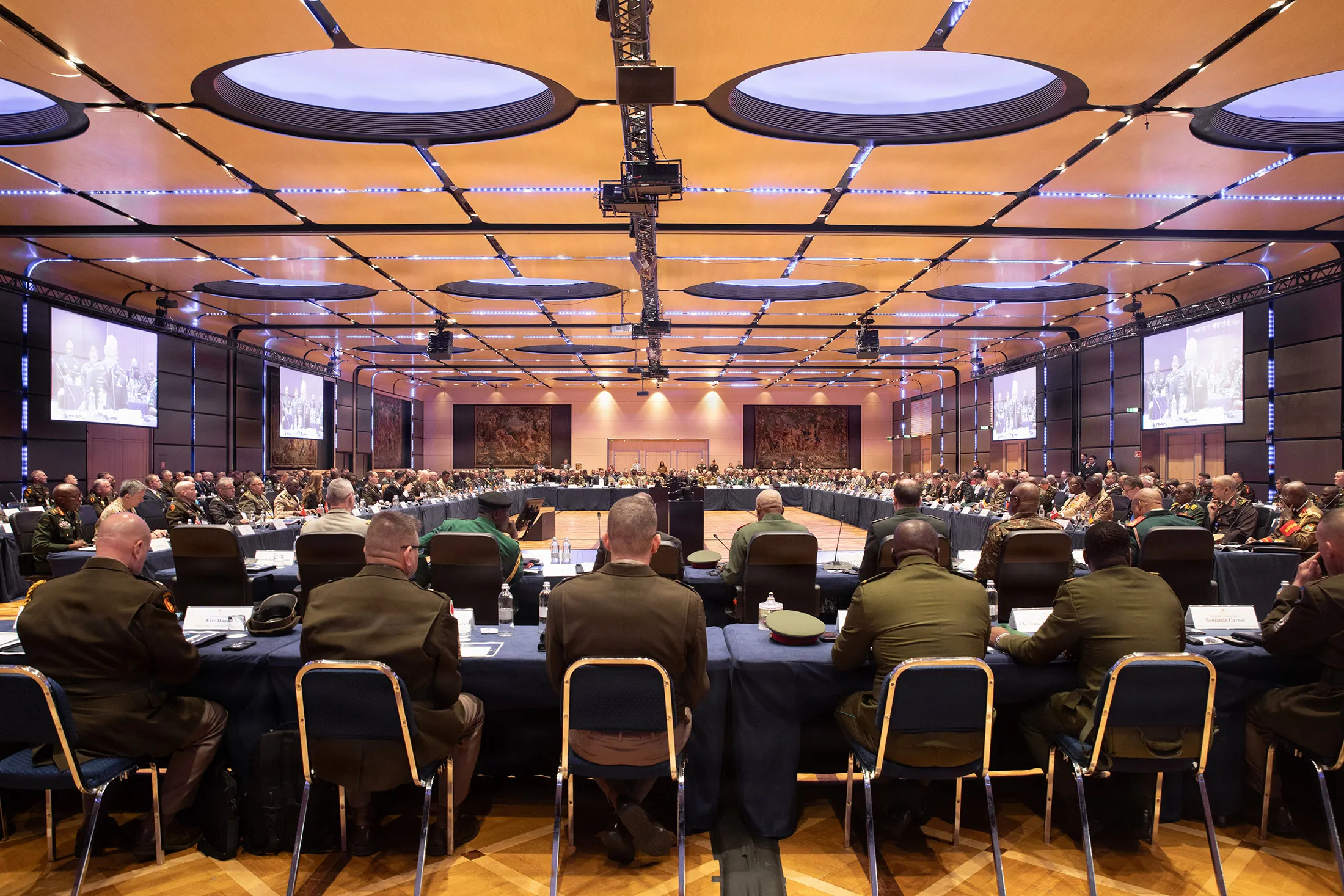
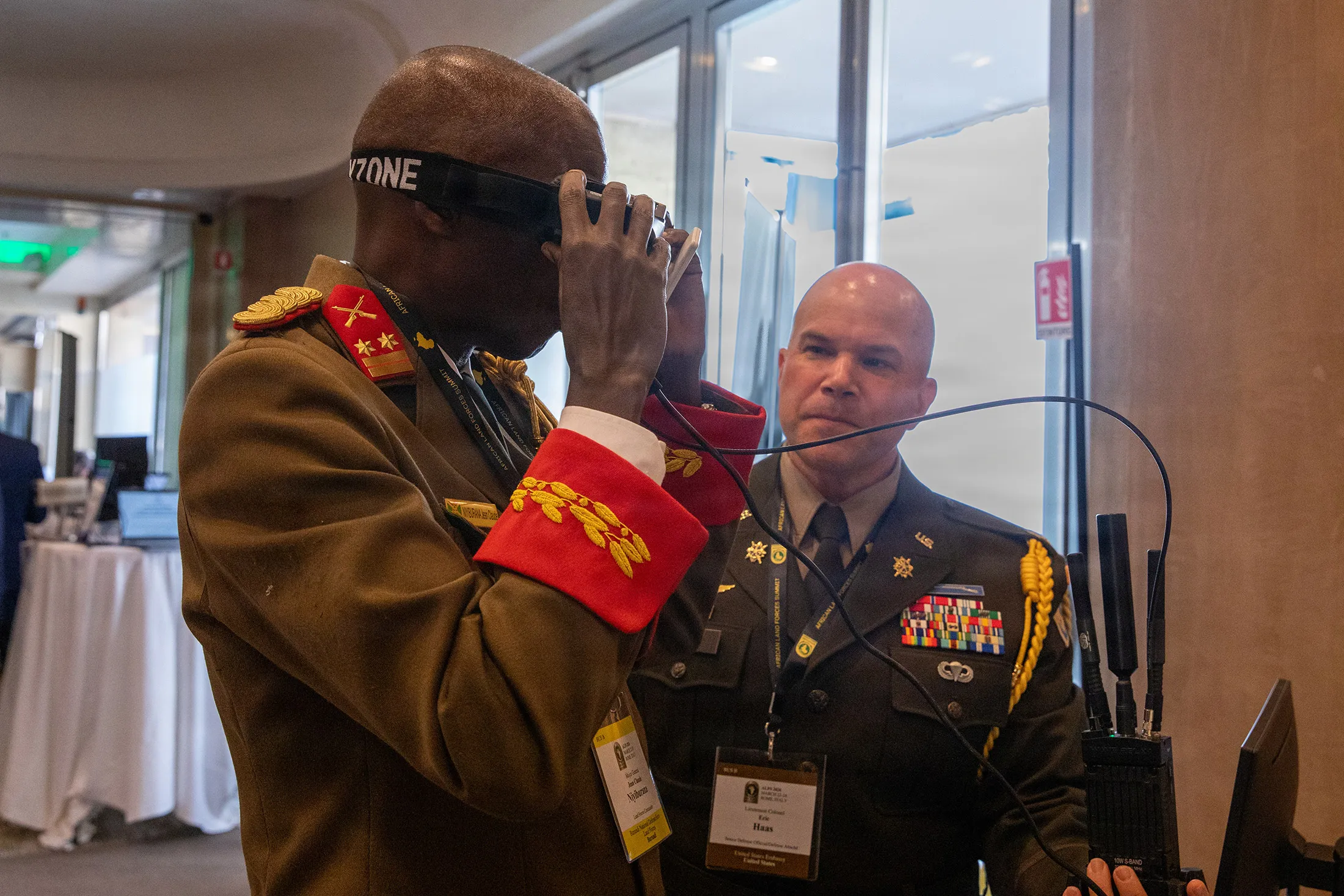
The event teemed with US private equity firms, data startups, and purveyors of AI software promising to catapult militaries into the 21st century. At dozens of stands, sales teams stood with frozen smiles, seeking to drum up business while sipping endless cups of espresso. A US colonel offered a look at new explosive technologies via virtual-reality glasses. Guys from “Operation Bitcoin” and “Bitcoin Beach” worked the room, handing out business cards while seeming to duck conversations with those lacking stripes on their shoulders. Ian Newell, a vice president at the AI startup OpenTeams, in Austin, which has been a Pentagon contractor for the past three years, said that while he didn’t expect immediate sales, the trip to Rome would ultimately pay off in stronger connections to a fast-growing region. “I’m excited to build relations at scale with Africa instead of telling Africa what they have to have,” Newell said.
The scene highlighted US President Donald Trump’s efforts to turn arms sales and commercial ties into a central tool of foreign policy. Since dismantling the US Agency for International Development last year, Trump has recast engagement with partners in more transactional terms. In February, the administration directed agencies to identify export opportunities and develop a “sales catalog” of weapons systems to promote abroad.
Though the idea is still taking shape, the shift to a more deal-driven approach was a major topic of discussion in Rome as private contractors seek to fill the void left by USAID. Lieutenant General John W. Brennan, Deputy Commander of US Africa Command, told journalists that the conference reflects “the trade, not aid, guidance that we’ve been given,” and that the Pentagon is now working with private US companies to broker deals across Africa.
Cotter Friess, the 20-year-old founder of Wyoming-based Triumvirate Industries, was seeking opportunities for mining in war-torn regions of sub-Saharan Africa. Clad in a brown pinstriped suit, a gray cowboy hat, a bolo tie and python-skin boots—“I’m a real cowboy,” he said—he cited his company’s experience in South Sudan, where it has won government concessions but has yet to start digging. “Mining is intrinsic to civilization, but we’ve taken our hands off it because it’s dirty,” he said. “We’ve given it to the Chinese.”
A grandson of Foster Friess, a Wyoming investor and Republican megadonor who bankrolled Charlie Kirk’s Turning Point USA and various other conservative Christian causes, the younger Friess also talks the party line. “The world is shifting toward privatized statecraft,” he said. “No Africans even want aid anymore. Aid forces dependency cycles, because you’re making people dependent on begging.”
More than a few attendees, though, confessed confusion at the administration’s ongoing shift. Aleks Mehrle of Abdel Hadi Abdullah Al Qahtani & Sons Co., a Saudi conglomerate with interests such as minerals and defense technology, said he wanted greater clarity in how businesses might assume the role once played by the US government. “The policy-business line has definitely blurred quite a bit,” Mehrle said. “Some of the businesspeople are wondering why they’re here.”
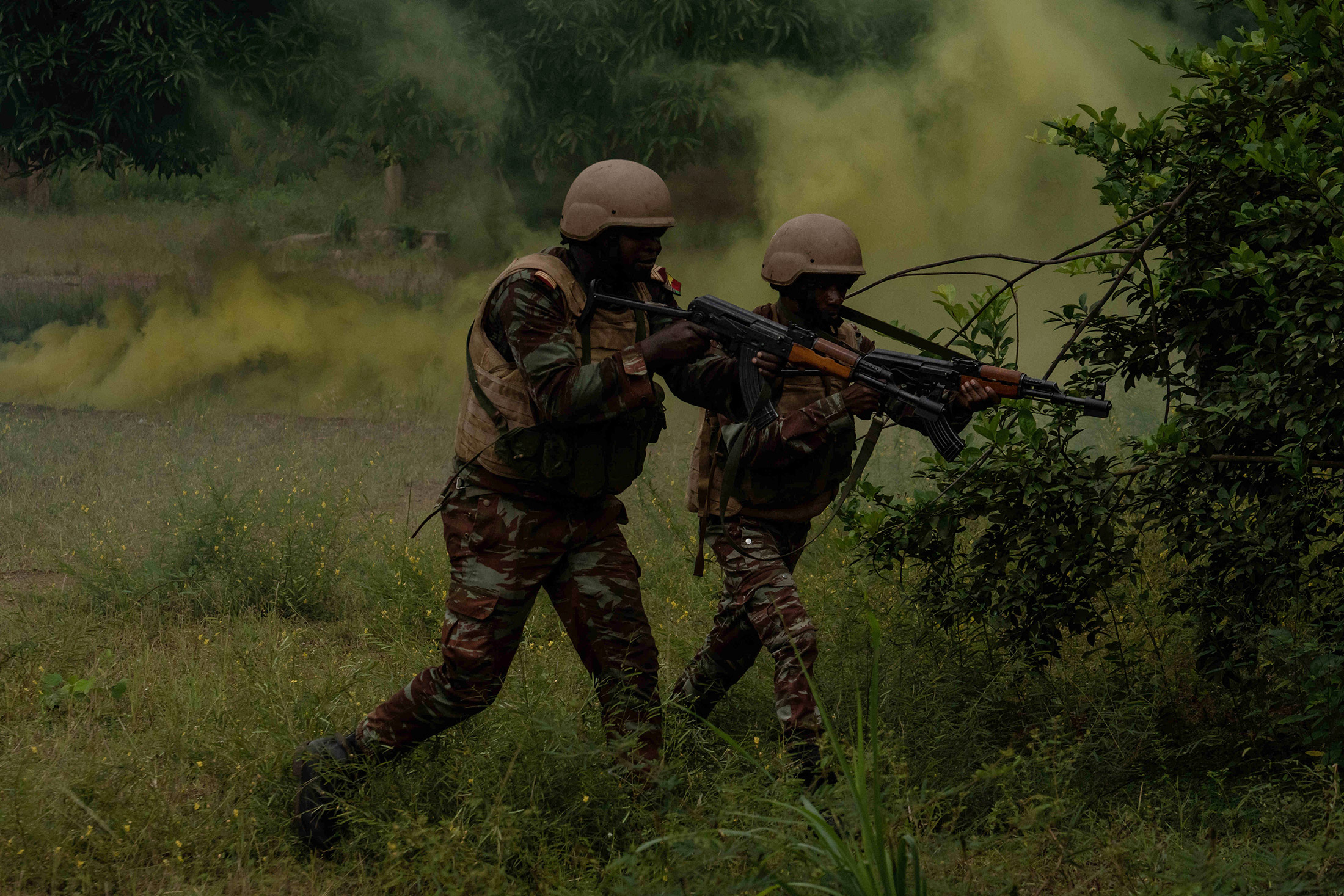
And some African participants questioned whether the new approach can work. In Benin, where militants linked to al-Qaeda are increasingly active, the army is reeling from US cutbacks to training programs and supplies—areas where private companies are less likely to step in. “They’re saying, ‘We are withdrawing from your country, but here are the technologies you should use,’” said Lt. Gen. Abou Issa, the country’s land forces chief. The bottom line, he said, is that Washington must be more dependable and predictable. “Our main concern is that our partnership with the US has not been consistent,” he said. “How can we rely on a partner that can change from one day to another?”