

Author:Wall Street CN
It is no coincidence that new entrants to the tea beverage industry are increasingly focusing on innovative approaches that are "small but beautiful".
With stores becoming increasingly dense, products becoming highly homogenous, and franchisees' profits being constantly diluted, it is becoming increasingly difficult for new players to replicate the "10,000-store model" from the ground up.
But against this backdrop, a new brand called "Sweetheart Pipi" chose to go against the grain—attempting to replicate the logic of "affordable stores for thousands of people".
This brand, established in July 2025, opened 100 stores in six months and then announced its goal of "10,000 stores".
At the recent LR Venture Lab Ecosystem Strategy Summit, its president, Guo Guanghui, systematically explained this path to the public for the first time.
According to its 2026 plan, Sweetheart Pipi will expand and iterate its products at an extremely high frequency: opening an average of 30 new stores every day, launching a new product every 15 days, promoting the introduction of embodied smart technology in 20% of its stores, and structurally achieving 30% overseas coverage.
Sweetheart Pipi's journey didn't start from scratch.
According to Guo Guanghui, 60% of his core team members come from leading brands with tens of thousands of stores, with an average of over 10 years of industry experience, having served over 30,000 stores and accumulated over 18,000 customer resources.
On the product side, Sweetheart Pipi chose a more direct path: 2 yuan ice cream, 4 yuan lemonade, and fruit tea products under 10 yuan. The overall price range is very close to that of Mixue Ice Cream and Sweet Lala, prioritizing the entry into the affordable price range that has already been proven by the market.
The problem is that, in the early stages before economies of scale are achieved, low prices often mean thinner profit margins. This makes "10,000 affordable stores" no longer just an expansion issue, but a cost structure issue. Sweetheart Pipi is destined not to simply copy Mixue's business model, but needs to choose its own approach.
To this end, Sweetheart Pipi is simultaneously addressing both the supply chain and store operations: on the one hand, it is binding production areas with contract farming and combining multi-level warehouse networks and forward warehouse systems to improve turnover efficiency and reduce costs; on the other hand, it is introducing smart devices into some stores to try to reduce reliance on manual labor and optimize cup-making efficiency, thereby reshaping the single-store model.
Guo Guanghui stated that the company never intended to participate in the "inflation" of the domestic market from the beginning, and its main source of profit is not in China. Currently, they have set their sights on nearly 30 countries, and the first batch of stores is expected to open soon in Southeast Asia.
“It is indeed very difficult to create a brand with 30,000 stores in China,” Guo Guanghui said, “but it is possible to create a brand with 100,000 stores abroad.”
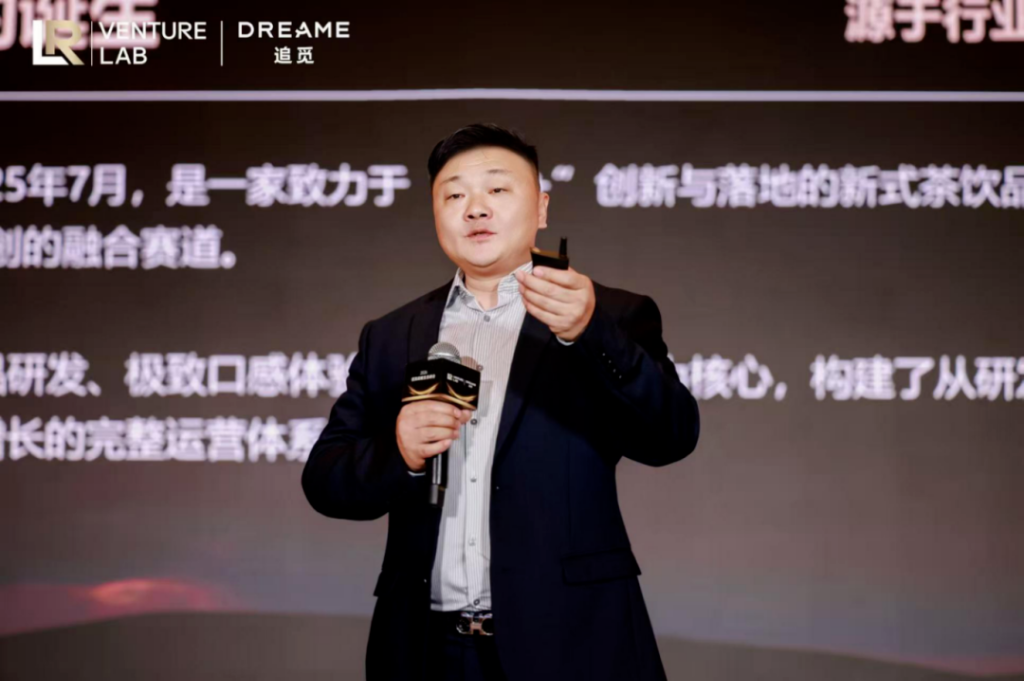
All-Weather Technology recently held a conversation with Guo Guanghui, president of Sweetheart Pipi, regarding the re-validation of the 10,000-store model and its overseas expansion strategy. The following is an abridged transcript of the conversation:
Market space and model selection: not based on location, but on "profit sharing".
All-Weather Technology: In the current highly competitive tea beverage market, where does the growth potential lie for new brands?
Guo Guanghui:There are many stores with weak profitability in the market, which are being squeezed out as leading brands expand their store networks, resulting in a continuous diversion of sales revenue per store. Our opportunity mainly comes from taking over the locations of these existing but inefficient stores.
However, we will evaluate the situation very carefully, and I won't take it on if it's not profitable. But we certainly don't lack customers or store locations, which are resources that the team brings with us.
All-Weather Technology: If this path holds true, why did Sweetie Pipi emerge?
Guo Guanghui:Having been in this industry for so long, I know all too well the pain points of franchisees. Most brands make money through their supply chain, but we do things differently, having designed a "235" profit distribution mechanism.
For example, if a product originally priced at 10 yuan is sold to consumers for 7 yuan, we offer a 30% discount. Of the profit generated from this 7 yuan sale, 50% is distributed to our partners, and the company retains only 20%. The company absorbs the costs of warehousing, logistics, and transportation.
This kind of distribution mechanism is almost non-existent in the industry because everyone wants to make money off franchisees through the supply chain. But I don't want that; I want to make the right money through scale.
All-Weather Technology: What is the profile of Sweetheart Pipi's franchisees? What are the differences in franchisee structure between the domestic and overseas markets?
Guo Guanghui:There are almost no newcomers in China; most are franchisees who switched from other brands because they saw the advantages of our model.
Overseas, we prefer to select Chinese who have lived in the local area for more than 5 years. They understand the local environment and have a team foundation. I will not authorize the brand to franchisees who do not have a local team.
All-Weather Technology: How should this year's "10,000 Stores Plan" be broken down in terms of pace and structure?
Guo Guanghui:There are approximately 6,000 such stores in China and 3,000-4,000 overseas. Among them, smart vending machines account for less than 20%, with the remainder being traditional stores, as traditional stores are the most stable source of customers.
All-Weather Technology: Which store types will Sweetheart Pipi primarily promote in China this year? What functions do different store types perform?
Guo Guanghui:There are two main store types: regular stores and mobile food trucks. Currently, the food trucks only achieve one-third of their intended functionality, and more modules will be added later. Our ultimate goal is to achieve unmanned operation based on voice interaction. A customer says, "Hello, Sweetie Pipi, I'd like a cup of milk tea," the system completes the dialogue and generates a QR code, which the user can scan to complete the delivery.
In the future, each food truck will be equipped with a smart vending machine, suitable for scenarios such as scenic spots and transportation hubs. One supply truck can replenish 10 to 20 vending machines.
In addition, we are planning smart stores equipped with 10 to 20 unmanned delivery vehicles. One side of the vehicle is used for product delivery, while the other side can be used to cooperate with social organizations, such as assisting neighborhood offices in delivering groceries or providing warmth to elderly people living alone. The vehicle also has space reserved inside so that sanitation workers can stop the vehicle at any time to get free ice water or hot milk tea.
All-Weather Technology: How are embodied smart devices being used in stores? What impact does this have on the cost structure of a single-store model?
Guo Guanghui:The process of integrating embody smart devices into stores is still quite lengthy. We prioritize their application in scenic spots and transportation hubs because these scenarios are readily available and easy to implement.
The slow adoption of embody intelligence in physical stores is due to a lack of application scenarios and high prices for upstream equipment. We are waiting for application scenarios to increase and prices to decrease. Currently, we are developing "semi-intelligent" systems, which cost over 200,000 yuan per device, while top-tier systems cost hundreds of thousands. I believe the true explosion of embody intelligence will have to wait another four to five years.
The domestic market serves as a "model," while overseas markets are the real battleground.
All-Weather Technology: What is Sweetheart Pipi's logic for going global?
Guo Guanghui:It's indeed difficult for a brand to reach 30,000 stores domestically again, but the overseas market offers greater potential. Our idea is to create a "showroom" domestically, building the supply chain and operational system; and to increase sales overseas by raising prices by 20% to attract foreign consumers.
In overseas markets, we don't rely on the Chinese community; instead, we expand to local users. We go to places others are less willing to go: Africa, South America, Europe, and even the Middle East. The more turbulent and stressful the place, the higher the demand for sweetness; milk tea is more suitable for this situation than coffee.
In our overseas operations, we adhere to the principle of "local people managing local companies." I am an early practitioner of localization in the milk tea industry. During the pandemic in 2020, my team in Vietnam consisted of only 4-5 Chinese people, with the rest being locals. Through systematic training and remote management, we still achieved rapid growth.
All-Weather Technology: How do you solve supply chain issues? Will local sourcing cause stability problems?
Guo Guanghui:The overseas supply chain strategy involves two steps: first, quickly establish a foothold using a mature domestic supply chain, and then gradually diversify some procurement and production locally. Although diversification may result in some lost profits, it will lead to faster scale and a more stable supply.
I started working on exporting Chinese milk tea in 2018, making me one of the earliest people in the industry. At that time, the overseas market was a huge red ocean. Initially, we tried to impress customers with advanced concepts, but the results were not good. Later, we realized that we needed to do brand marketing in a down-to-earth manner, just like in China. Overseas marketing is completely different from China, but once done well, it turned out to be easier than domestic marketing.
The biggest challenge for tea beverage companies going global remains the supply chain. Milk tea ingredients typically have a shelf life of only six months. From shipping from China to overseas customs clearance, the entire process can take a month and a half, leaving only 3-4 months of shelf life before reaching the customer. Many brands struggle to accurately predict market demand, potentially leading to issues with their inventory preparation.
Sweetheart Pipi's strategy is to build a dual supply chain system of "core Chinese raw materials + localized basic materials". Even if Chinese goods cannot be exported, operations can be guaranteed by the local supply chain.
A local supply chain requires a deep understanding of the local community, including sourcing fresh fruit directly from farmers and outsourcing processing. Many brands don't allow local sourcing due to profit concerns, but we are willing to sacrifice some profit to do so. Local sourcing eliminates stability issues, maintains consistent quality standards globally, and some local fruits are even of higher quality than those produced domestically.
All-Weather Technology: With overseas expansion plans involving many countries, will you face resource allocation issues?
Guo Guanghui:No. Our team consists of former heads of leading brands in Japan, South Korea, Australia, and other regions, and we have already established a preliminary system overseas. We will divide into several groups, each led by someone with local experience. Running a milk tea business overseas requires a lot of experience; without it, success is very difficult.
All-Weather Technology: Without the scale of a major brand, how can we obtain lower costs?
Guo Guanghui:This is thanks to the industry resources our team has accumulated over the years. For example, when we make light milk tea, leading suppliers in the industry are willing to customize a dairy product specifically for our price range, so we don't need to invest in research and development ourselves. We also get more flexible payment terms for equipment. This is the trust built through long-term cooperation.
We also collaborate with specialized raw material suppliers in the industry. For example, there's a traditional brown sugar from Mile, Yunnan, an intangible cultural heritage product that's known overseas as "China's chocolate." However, local production lacks standards, and from planting to initial processing, it doesn't meet export requirements.
After we intervened, we helped establish a complete set of standards, from cleaning and juicing to sterilization, so that it could meet the market access requirements of the EU or North America. These agricultural products may cost two dollars per kilogram locally, but through supply chain integration, their value can be significantly increased.
Our strategy can be summarized in eight words: Buy from China, sell globally; buy globally, sell from China.
All-Weather Technology: What keywords do you hope consumers will think of when they think of Sweetheart Pipi?
Guo Guanghui:Cheap, delicious, and visually appealing. That's enough.
Our core team members have over a decade of experience in the industry, witnessing the entire process from zero to one, and from one to 10,000. We secured funding not to burn money, but to provide a safety net for our partners and to offer discounts to consumers. We are willing to share a portion of our future profits with the team and our partners. Only when everyone makes money can this brand go far.