

Author:Wall Street CN
On Tuesday, local time, the Federal Reserve Bank of New York released its March 2026 Consumer Expectations Survey. The report showed that households' inflation expectations rose in the short and medium term, while long-term inflation expectations remained unchanged. Gasoline price increases were expected to surge to their highest level since March 2022. Job-seeking expectations improved, while unemployment expectations and expectations regarding the unemployment rate worsened. Expectations for spending and household income growth were largely flat. Respondents were more pessimistic about their future household finances.
This Federal Reserve survey will be conducted between March 2 and March 31, 2026.
The Federal Reserve's Consumer Expectations Survey collects consumers' expectations about overall inflation and price trends for items such as food, gasoline, housing, and education. It also reflects Americans' views on employment prospects, income growth, and future spending and credit access, and provides a measure of uncertainty in respondents' expectations. The survey results are further categorized by age, region, income, education level, and mathematical ability.
This is a representative online survey conducted nationwide. The respondents were rotated groups of approximately 1,300 household heads, with each respondent participating for a maximum of 12 months, and approximately the same number of respondents rotating in and out each month. Unlike cross-sectional surveys that use different respondents for each period, this group design allows researchers to track the changing expectations and behaviors of the same respondent over time.
Key findings
The following are the key findings of the Federal Reserve's March survey.
inflation
- The median inflation expectation for the next year rose 0.4 percentage points to 3.4%; the expectation for the next three years rose 0.1 percentage points to 3.1%; and the expectation for the next five years remained unchanged at 3.0%. The divergence among respondents narrowed over the one-year period but widened over the three-year and five-year periods. The median inflation uncertainty increased across all timeframes.
- The median expectation for house price growth rose 0.3 percentage points to 3.3%, having fluctuated within a narrow range of 3.0% to 3.3% since August 2023.
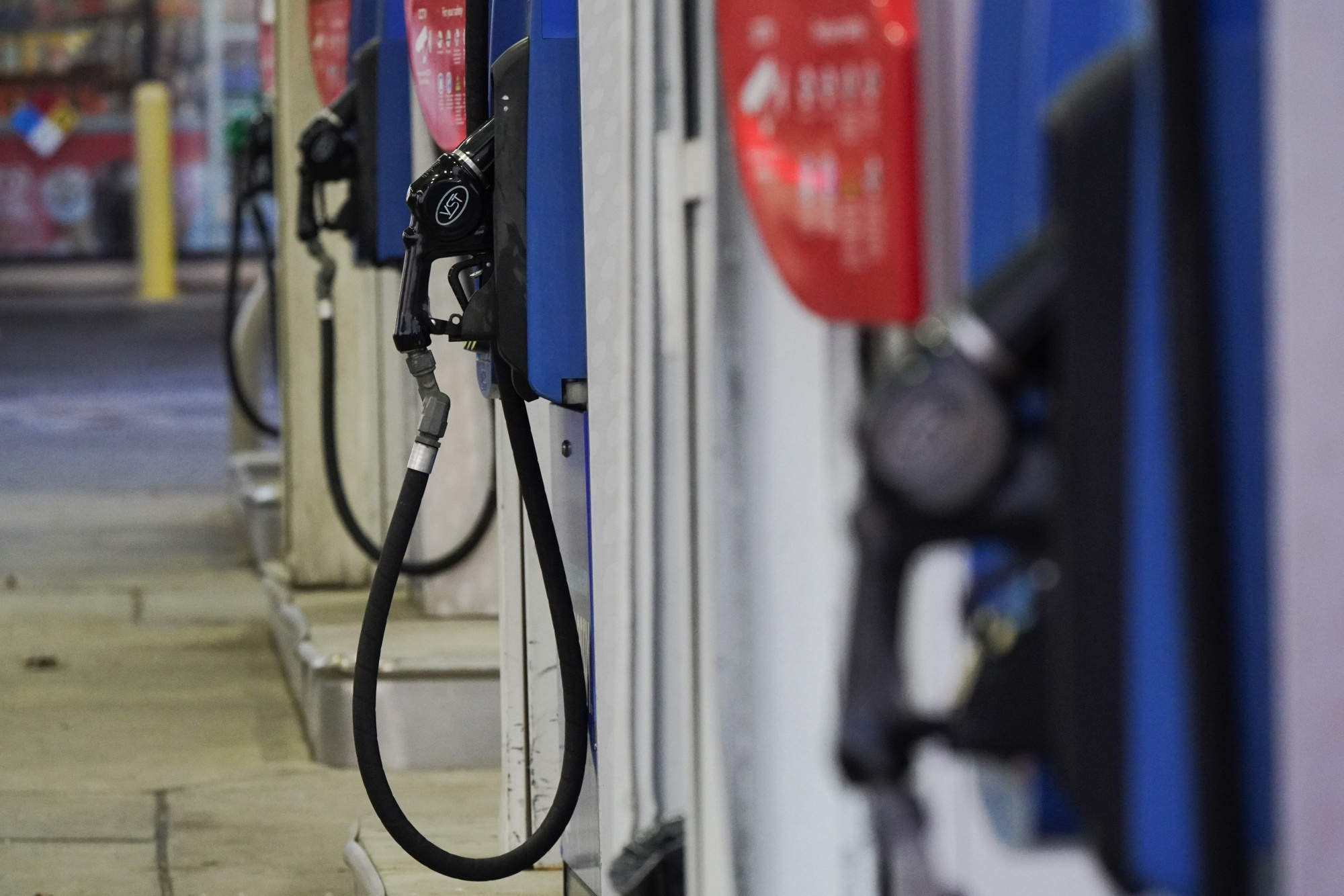
- Commodity price changes expected over the next year: gasoline is expected to rise 5.3 percentage points to 9.4%, the highest since March 2022; food is expected to rise 0.7 percentage points to 6%; rent is expected to rise 1.2 percentage points to 7.1%; medical expenses are expected to remain unchanged at 9.7%; and university education expenses are expected to fall 0.1 percentage points to 9.0%.
labor market
- The median expectation for income growth over the next year fell 0.1 percentage points to 2.4%, below the 12-month average of 2.6% and at the low end of the range since May 2021.
- The average probability of a rise in the U.S. unemployment rate over the next year has increased by 3.6 percentage points to 43.5%, the highest level since April 2025.
- The average probability of losing one's job within the next 12 months rose by 0.6 percentage points to 14.4%, still lower than the 12-month average of 14.6%; the average probability of voluntarily leaving one's job rose by 2.4 percentage points to 18.3%.
- The average probability of finding a new job after losing one's current job rose by 1.9 percentage points to 45.9%, but it is still lower than the 12-month average of 47.5%, with improvements across all age groups, education levels, and income levels.
Family Finance
- The median expected household income growth for the next year remains unchanged at 2.9%.
- The median forecast for household spending growth over the next year has risen 0.2 percentage points to 5.1%.
- Compared to a year ago, perceptions of credit access have improved: the proportion of households that believe it is more difficult to obtain loans has decreased, while the proportion that believe it is easier to obtain loans has increased; however, expectations for future credit availability have deteriorated slightly.
- The average probability of being unable to repay minimum debt within the next three months rose by 0.7 percentage points to 12.3%, still lower than the 12-month average of 13.3%, with the most significant increases among respondents aged 60 and above, those with some college education, and those with an annual income of less than $50,000.
- The median expected change in tax burden over the next year is expected to decrease by 0.2 percentage points to 3.1%.
- The median expected growth in government debt over the next year has risen 0.6 percentage points to 9.8%, well above the 12-month average of 7.4%.
- The average probability that the average interest rate on savings accounts will rise over the next 12 months remains unchanged at 24.9%.
- Households' perception of their current financial situation has deteriorated: the proportion of those who believe their financial situation has worsened has increased, while the proportion who believe it has improved has decreased. Expectations for their financial situation in the coming year have also deteriorated, with the proportion who believe it will worsen reaching its highest level since April 2025, while the proportion who believe it will improve has declined.
- The average probability of U.S. stock prices rising over the next 12 months has fallen by 1.6 percentage points to 36.3%.