BTC
BTC
$66,863.98
+1.40%
涨跌箭头
ETH
ETH
$2,020.36
+1.52%
涨跌箭头
USDT
USDT
$0.9993
+0.00%
涨跌箭头
BNB
BNB
$616.38
+1.05%
涨跌箭头
XRP
XRP
$1.34
+1.46%
涨跌箭头
USDC
USDC
$1.00
-0.02%
涨跌箭头
SOL
SOL
$83.22
+0.69%
涨跌箭头
TRX
TRX
$0.3183
+2.64%
涨跌箭头
WTRX
WTRX
$0.3183
+2.75%
涨跌箭头
stETH
stETH
$2,018.33
+1.47%
涨跌箭头
DOGE
DOGE
$0.0922
+2.32%
涨跌箭头
USDS
USDS
$0.9999
+0.01%
涨跌箭头
HYPE
HYPE
$39.92
+3.66%
涨跌箭头
BCH
BCH
$483.10
+3.60%
涨跌箭头
ADA
ADA
$0.2497
+1.34%
涨跌箭头
WSTETH
WSTETH
$2,485.78
+1.70%
涨跌箭头
WBTC
WBTC
$66,757.22
+1.44%
涨跌箭头
WBETH
WBETH
$2,207.01
+1.57%
涨跌箭头
WETH
WETH
$2,019.95
+1.68%
涨跌箭头
XMR
XMR
$331.21
+2.01%
涨跌箭头
LINK
LINK
$8.58
+0.47%
涨跌箭头
CC
CC
$0.1585
+12.31%
涨跌箭头
AETHWETH
AETHWETH
$2,019.78
+1.62%
涨跌箭头
USDe
USDe
$0.9991
-0.00%
涨跌箭头
CBBTC
CBBTC
$66,868.62
+1.62%
涨跌箭头
XLM
XLM
$0.1703
+1.37%
涨跌箭头
weETH
weETH
$2,204.70
+1.55%
涨跌箭头
DAI
DAI
$0.9998
+0.01%
涨跌箭头
AETHUSDT
AETHUSDT
$0.9995
+0.01%
涨跌箭头
USD1
USD1
$1
+0.00%
涨跌箭头
BTCB
BTCB
$66,871.09
+1.51%
涨跌箭头
LTC
LTC
$54.15
+0.78%
涨跌箭头
RAIN
RAIN
$0.008318
+0.28%
涨跌箭头
HBAR
HBAR
$0.09055
+1.80%
涨跌箭头
PYUSD
PYUSD
$1.00
+0.00%
涨跌箭头
AVAX
AVAX
$8.87
+1.37%
涨跌箭头
ZEC
ZEC
$217.63
+1.06%
涨跌箭头
sUSDe
sUSDe
$1.22
+0.01%
涨跌箭头
SHIB
SHIB
$0.0{5}593
+2.42%
涨跌箭头
TAO
TAO
$318.90
-1.67%
涨跌箭头
SUI
SUI
$0.8827
+0.65%
涨跌箭头
TON
TON
$1.25
+2.72%
涨跌箭头
CRO
CRO
$0.07218
+2.08%
涨跌箭头
WLFI
WLFI
$0.099
+1.75%
涨跌箭头
M
M
$2.20
+0.88%
涨跌箭头
XAUT
XAUT
$4,491.20
-0.41%
涨跌箭头
PAXG
PAXG
$4,502.61
-0.13%
涨跌箭头
MNT
MNT
$0.6804
+0.67%
涨跌箭头
UNI
UNI
$3.44
+1.42%
涨跌箭头
DOT
DOT
$1.28
+0.08%
涨跌箭头
PI
PI
$0.1805
+4.09%
涨跌箭头
USDG
USDG
$1.00
+0.00%
涨跌箭头
OKB
OKB
$84.08
+3.22%
涨跌箭头
ASTER
ASTER
$0.662
+0.00%
涨跌箭头
USDf
USDf
$0.9989
+0.12%
涨跌箭头
SKY
SKY
$0.07012
+0.24%
涨跌箭头
HTX
HTX
$0.0{5}1714
+1.08%
涨跌箭头
syrupUSDC
syrupUSDC
$1.16
+0.03%
涨跌箭头
BFUSD
BFUSD
$0.9994
+0.00%
涨跌箭头
NEAR
NEAR
$1.19
+0.59%
涨跌箭头
AAVE
AAVE
$98.27
-0.06%
涨跌箭头
RLUSD
RLUSD
$1.00
-0.02%
涨跌箭头
PEPE
PEPE
$0.0{5}334
+1.83%
涨跌箭头
BGB
BGB
$1.95
+0.47%
涨跌箭头
ONDO
ONDO
$0.2748
+1.55%
涨跌箭头
SIREN
SIREN
$1.81
+131.46%
涨跌箭头
USDY
USDY
$1.12
+0.06%
涨跌箭头
ETC
ETC
$8.16
+0.87%
涨跌箭头
ICP
ICP
$2.25
+1.30%
涨跌箭头
RSETH
RSETH
$2,151.82
+1.52%
涨跌箭头
USDD
USDD
$0.999
-0.00%
涨跌箭头
USDCE
USDCE
$1.00
+0.07%
涨跌箭头
BTCT
BTCT
$66,780.43
+1.19%
涨跌箭头
U
U
$1.00
+0.01%
涨跌箭头
JLP
JLP
$3.69
+0.71%
涨跌箭头
KCS
KCS
$7.96
+2.09%
涨跌箭头
JITOSOL
JITOSOL
$105.48
+0.94%
涨跌箭头
POL
POL
$0.0922
+1.99%
涨跌箭头
WBNB
WBNB
$616.05
+1.10%
涨跌箭头
BBTC
BBTC
$67,159.48
+0.00%
涨跌箭头
KAS
KAS
$0.03504
+1.39%
涨跌箭头
RNDR
RNDR
$1.69
+2.05%
涨跌箭头
USDTb
USDTb
$0.9996
-0.01%
涨跌箭头
NIGHT
NIGHT
$0.05173
+13.71%
涨跌箭头
QNT
QNT
$71.16
+0.64%
涨跌箭头
WLD
WLD
$0.2733
+4.75%
涨跌箭头
ATOM
ATOM
$1.69
+0.84%
涨跌箭头
BNSOL
BNSOL
$91.70
+0.44%
涨跌箭头
RETH
RETH
$2,342.11
+1.44%
涨跌箭头
ENA
ENA
$0.0932
+3.44%
涨跌箭头
LBTC
LBTC
$66,930.27
+1.68%
涨跌箭头
KHYPE
KHYPE
$40.53
+4.26%
涨跌箭头
GT
GT
$6.54
+1.37%
涨跌箭头
APT
APT
$0.942
-3.38%
涨跌箭头
ALGO
ALGO
$0.0825
+1.85%
涨跌箭头
FBTC
FBTC
$66,912.46
+1.23%
涨跌箭头
TRUMP
TRUMP
$2.98
-0.43%
涨跌箭头
FLR
FLR
$0.007851
+2.09%
涨跌箭头
WFLR
WFLR
$0.007806
+1.46%
涨跌箭头
FIL
FIL
$0.822
-1.79%
涨跌箭头
BTC
BTC
$66,863.98
+1.40%
涨跌箭头
ETH
ETH
$2,020.36
+1.52%
涨跌箭头
USDT
USDT
$0.9993
+0.00%
涨跌箭头
BNB
BNB
$616.38
+1.05%
涨跌箭头
XRP
XRP
$1.34
+1.46%
涨跌箭头
USDC
USDC
$1.00
-0.02%
涨跌箭头
SOL
SOL
$83.22
+0.69%
涨跌箭头
TRX
TRX
$0.3183
+2.64%
涨跌箭头
WTRX
WTRX
$0.3183
+2.75%
涨跌箭头
stETH
stETH
$2,018.33
+1.47%
涨跌箭头
DOGE
DOGE
$0.0922
+2.32%
涨跌箭头
USDS
USDS
$0.9999
+0.01%
涨跌箭头
HYPE
HYPE
$39.92
+3.66%
涨跌箭头
BCH
BCH
$483.10
+3.60%
涨跌箭头
ADA
ADA
$0.2497
+1.34%
涨跌箭头
WSTETH
WSTETH
$2,485.78
+1.70%
涨跌箭头
WBTC
WBTC
$66,757.22
+1.44%
涨跌箭头
WBETH
WBETH
$2,207.01
+1.57%
涨跌箭头
WETH
WETH
$2,019.95
+1.68%
涨跌箭头
XMR
XMR
$331.21
+2.01%
涨跌箭头
LINK
LINK
$8.58
+0.47%
涨跌箭头
CC
CC
$0.1585
+12.31%
涨跌箭头
AETHWETH
AETHWETH
$2,019.78
+1.62%
涨跌箭头
USDe
USDe
$0.9991
-0.00%
涨跌箭头
CBBTC
CBBTC
$66,868.62
+1.62%
涨跌箭头
XLM
XLM
$0.1703
+1.37%
涨跌箭头
weETH
weETH
$2,204.70
+1.55%
涨跌箭头
DAI
DAI
$0.9998
+0.01%
涨跌箭头
AETHUSDT
AETHUSDT
$0.9995
+0.01%
涨跌箭头
USD1
USD1
$1
+0.00%
涨跌箭头
BTCB
BTCB
$66,871.09
+1.51%
涨跌箭头
LTC
LTC
$54.15
+0.78%
涨跌箭头
RAIN
RAIN
$0.008318
+0.28%
涨跌箭头
HBAR
HBAR
$0.09055
+1.80%
涨跌箭头
PYUSD
PYUSD
$1.00
+0.00%
涨跌箭头
AVAX
AVAX
$8.87
+1.37%
涨跌箭头
ZEC
ZEC
$217.63
+1.06%
涨跌箭头
sUSDe
sUSDe
$1.22
+0.01%
涨跌箭头
SHIB
SHIB
$0.0{5}593
+2.42%
涨跌箭头
TAO
TAO
$318.90
-1.67%
涨跌箭头
SUI
SUI
$0.8827
+0.65%
涨跌箭头
TON
TON
$1.25
+2.72%
涨跌箭头
CRO
CRO
$0.07218
+2.08%
涨跌箭头
WLFI
WLFI
$0.099
+1.75%
涨跌箭头
M
M
$2.20
+0.88%
涨跌箭头
XAUT
XAUT
$4,491.20
-0.41%
涨跌箭头
PAXG
PAXG
$4,502.61
-0.13%
涨跌箭头
MNT
MNT
$0.6804
+0.67%
涨跌箭头
UNI
UNI
$3.44
+1.42%
涨跌箭头
DOT
DOT
$1.28
+0.08%
涨跌箭头
PI
PI
$0.1805
+4.09%
涨跌箭头
USDG
USDG
$1.00
+0.00%
涨跌箭头
OKB
OKB
$84.08
+3.22%
涨跌箭头
ASTER
ASTER
$0.662
+0.00%
涨跌箭头
USDf
USDf
$0.9989
+0.12%
涨跌箭头
SKY
SKY
$0.07012
+0.24%
涨跌箭头
HTX
HTX
$0.0{5}1714
+1.08%
涨跌箭头
syrupUSDC
syrupUSDC
$1.16
+0.03%
涨跌箭头
BFUSD
BFUSD
$0.9994
+0.00%
涨跌箭头
NEAR
NEAR
$1.19
+0.59%
涨跌箭头
AAVE
AAVE
$98.27
-0.06%
涨跌箭头
RLUSD
RLUSD
$1.00
-0.02%
涨跌箭头
PEPE
PEPE
$0.0{5}334
+1.83%
涨跌箭头
BGB
BGB
$1.95
+0.47%
涨跌箭头
ONDO
ONDO
$0.2748
+1.55%
涨跌箭头
SIREN
SIREN
$1.81
+131.46%
涨跌箭头
USDY
USDY
$1.12
+0.06%
涨跌箭头
ETC
ETC
$8.16
+0.87%
涨跌箭头
ICP
ICP
$2.25
+1.30%
涨跌箭头
RSETH
RSETH
$2,151.82
+1.52%
涨跌箭头
USDD
USDD
$0.999
-0.00%
涨跌箭头
USDCE
USDCE
$1.00
+0.07%
涨跌箭头
BTCT
BTCT
$66,780.43
+1.19%
涨跌箭头
U
U
$1.00
+0.01%
涨跌箭头
JLP
JLP
$3.69
+0.71%
涨跌箭头
KCS
KCS
$7.96
+2.09%
涨跌箭头
JITOSOL
JITOSOL
$105.48
+0.94%
涨跌箭头
POL
POL
$0.0922
+1.99%
涨跌箭头
WBNB
WBNB
$616.05
+1.10%
涨跌箭头
BBTC
BBTC
$67,159.48
+0.00%
涨跌箭头
KAS
KAS
$0.03504
+1.39%
涨跌箭头
RNDR
RNDR
$1.69
+2.05%
涨跌箭头
USDTb
USDTb
$0.9996
-0.01%
涨跌箭头
NIGHT
NIGHT
$0.05173
+13.71%
涨跌箭头
QNT
QNT
$71.16
+0.64%
涨跌箭头
WLD
WLD
$0.2733
+4.75%
涨跌箭头
ATOM
ATOM
$1.69
+0.84%
涨跌箭头
BNSOL
BNSOL
$91.70
+0.44%
涨跌箭头
RETH
RETH
$2,342.11
+1.44%
涨跌箭头
ENA
ENA
$0.0932
+3.44%
涨跌箭头
LBTC
LBTC
$66,930.27
+1.68%
涨跌箭头
KHYPE
KHYPE
$40.53
+4.26%
涨跌箭头
GT
GT
$6.54
+1.37%
涨跌箭头
APT
APT
$0.942
-3.38%
涨跌箭头
ALGO
ALGO
$0.0825
+1.85%
涨跌箭头
FBTC
FBTC
$66,912.46
+1.23%
涨跌箭头
TRUMP
TRUMP
$2.98
-0.43%
涨跌箭头
FLR
FLR
$0.007851
+2.09%
涨跌箭头
WFLR
WFLR
$0.007806
+1.46%
涨跌箭头
FIL
FIL
$0.822
-1.79%
涨跌箭头
Market
/CRV Price
币种icon
CRV
CRV
No.154
$0.2145
+0.80%
≈$0.21
Market Cap
$503.75M
Cir. Cap
$313.52M
Cir. Supply
1.46B
Cir. Rate
62.2372%
Total Supply
2.35B
Max Supply
3.03B
24h Volume
$201.26M
24h Vol (BTC)
43.16M
24h Turnover
13.76484%
Market Share
0.02%
Performance
Low
0.21
Range
+0.06%
High
0.22
Listing
$13.01
ATH (2024-08-05)
$60.50
-99.65%
ATL (2020-08-14)
$0.1811
+18.45%
Official
Contract
Gnosis: 0x712b...bdd0bd
Official
Network
Converter
Chart
Market
About
Ad
XBIT Invite: Earn points & commission
Price
Cap
K-line
Depth
1 Second
1 Minute
5 Minutes
1 Hour
4 Hours
1 Day
TradingView
1H
-0.56%
24H
+0.8%
7D
-8.57%
30D
-14.2%
1Y
-57.43%
All
-98.31%

AI Assistant
CRV下跌原因
CRV资金流向
CRV买卖支撑位
CRV多空比分析
CRV趋势分析
Ask AI
CRV Market
Capital Distribution
15m
30m
1h
2h
4h
1D
0 CRV
Outflow
Inflow
0 CRV
Net inflow of funds in 24 hours (CRV)
Net inflow of funds in 24 hours 0
Historical Fund Flow (CRV)
Day
Week
Month
1D Net Inflow
1W Net Inflow
1M Net Inflow

About CRV
What Is Curve (CRV)?
Curve is a DeFi ecosystem consisting of several core products: * Curve DEX is a decentralized exchange best suited for stablecoins and pegged assets that uses an automated market maker (AMM) to manage liquidity. * crvUSD decentralized stablecoin issuance app allows you to borrow stablecoin against secure assets such as ETH and BTC with collateral liquidation protection. * Curve Lend's borrowing platform operates as isolated markets where you can borrow crvUSD against other assets, or lend crvUSD at interest. It uses the same LLAMMA Lend engine as crvUSD. * Savings crvUSD is a decentralized stablecoin with embedded yield.
Investors
-
64%
35%
Bullish
Bearish
Community
haowi.eth🦙🦙🦙🚀🚀🚀
13h ago
The dispute involving Curve Finance over a $9.3 million Resupport vulnerability has concluded in a Singapore court.
396
0
0
22
Abu Talks Crypto
03-28 01:33
I highly recommend watching the documentary *A Day in the Life of Warren Buffett*. There are no ostentatious mansions, no private jets, and no empty platitudes about success. The film focuses on a man in his nineties, living an ordinary life like yours and mine: eating hamburgers and drinking cola, yet controlling a vast business empire. After watching this film, you'll be left in deep thought. You'll realize that what truly rewrites destiny is never a momentary burst of energy, but rather the seemingly mundane persistence and choices made day after day. Control of Desire: Maintaining the Basics of Life Buffett lives in Omaha in a house he bought decades ago. He still lives there, with only minor renovations, never expanding, and never moving to a wealthy neighborhood for the sake of so-called "status." As a world-class billionaire, he hasn't embodied his wealth in the extravagance of his residence. True wealth is the ultimate restraint of desire, not the mindless accumulation of material possessions. Many people, upon earning a little money, immediately think of buying a new house—a bigger living room, a more expensive location, and a social circle that better "matches" their status. But you must understand that what you gain is not just space, but a passive upgrade in your consumption level. Your environment subtly reshapes your spending structure: your neighbor's luxury car raises your aesthetic standards, and friends' gatherings push up your budget. Once your social circle upgrades, spending automatically accelerates. You think you're growing, but you're simply being led by the nose by your environment. Warren Buffett didn't fall into this trap. He maintained a baseline in his life, thus protecting the boundaries of his assets. Wealth accumulation isn't about how fast you earn it, but how slowly you lose it. The Flow of Money: Planning for the Future, Not Proving the Present He drove an ordinary car to work for many years. The car he later bought was simply for daily commuting. With his wealth, he could have owned any limited-edition luxury car, but he never wasted money on conspicuous consumption. In his view, expenditures that don't generate returns are worthless. Masters are ruthless about unnecessary spending, almost harsh on waste, yet extremely generous with genuine investments. This is the difference: ordinary people use money to prove themselves, masters use money to plan for the future. Berkshire Hathaway, which he leads, is essentially a "company that acquires companies." While most people are still thinking about how to "sell" products to make money, masters are already profiting by "buying" excellent companies. The logic is simple, yet extremely difficult to replicate. The Compound Interest of Time: Combating Mediocrity with Cognition On his way to the office, he often stops at McDonald's for breakfast—a burger and a Coke—a routine he's maintained for decades. This isn't a show, but a highly efficient, low-cost choice—sufficient as long as it's enough. He never deliberately embellishes his life for status; true confidence doesn't need to be proven by price. Many people mistakenly believe that success must appear "expensive," but what's truly expensive is time. The most striking scene in the documentary is him reading. As someone who generates enormous wealth every minute, he unfailingly dedicates five to six hours daily to reading. He says, "Knowledge is the most powerful engine of compound interest. Where you invest your time, that's where the compound interest will occur." Others use time to gain immediate traffic; he uses time to gain future knowledge. This difference often only becomes apparent after ten years. The Power of Passion: Going to Work While Tap Dancing Speaking of work, even in his nineties, he still insists on going to the office every day. This is no longer about money, but stems from passion. He once famously said, "I go to work every day while tap dancing." This sounds easy, but it carries profound weight. Only what can keep you passionate for decades deserves the title of "career." Many people only admire the results, ignoring the process. What truly differentiates people is never talent, but long-term commitment. Are you willing to repeat the basics when no one applauds? To hone your skills when there's no reward? To press the pause button in the face of temptation? These are the key questions. The Art of Decision-Making: Less is More His investment principles were equally restrained. He only made a dozen or so truly life-changing investments in his lifetime. It wasn't frequent trading, but patient waiting. There's a famous "punch-the-hole machine theory": If you only had 20 investment opportunities in your life, would you still act recklessly? Limiting choices is the simplest way to improve decision-making quality. Most people lose because of impulsiveness, while masters win by waiting. The market fluctuates daily, and emotions rise and fall daily. But those who truly make money are never led by the nose by prices. Emotions determine trading frequency, while understanding determines the direction of wealth. Conclusion: The Triumph of Long-Termism Looking back at "A Day in the Life of Warren Buffett," there are no earth-shattering dramatic tensions or extreme conflicts. But all the details point to the same core: simplicity, restraint, focus, and repetition. These words sound unremarkable, yet they constitute a top-tier compound interest system. Outsiders think success comes from luck, but it actually comes from a system; outsiders see asset size, insiders see decision-making structure. He didn't try to live a life that "looked successful"; he simply lived a life that was "effective in the long run." Greatness isn't about flashes of glory, but about consistently making the same mistakes; wealth isn't about explosive growth, but about steady accumulation; strength isn't about speed, but about accurate direction. What you should truly learn isn't how much money he made, but how he consistently avoided foolish decisions over decades—not changing houses to avoid being hijacked by the environment; not driving luxury cars to avoid compromising with vanity; investing less to increase the density of judgment; reading more to amplify cognitive leverage; and loving his work to extend his growth cycle. After watching this documentary, you'll discover a truth: what determines your wealth level is never the peak of your income, but the bottom line of your behavior. How a person wakes up each day, how they spend money, and how they manage their time are the draft of their future asset curve. Your day is determining your ten years. True long-termism isn't a slogan—it's about restraining desires, reducing noise, and maintaining stable output. When everyone is chasing trends, remain calm; when everyone is upgrading their consumption, maintain a stable structure; when everyone is engaging in high-frequency trading...Reduce the number of opportunities you seize; accumulate skills while everyone else is anxious about the future. A person's future potential depends not on how many opportunities they grasp, but on how many temptations they resist. This
394
0
0
40
Crypto Tony
03-27 16:48
$CRV/$USD - Latest News It would be great if the CRV exchange rate could follow a similar trend at present.
313
0
0
30
Miles Deutscher
03-27 05:16
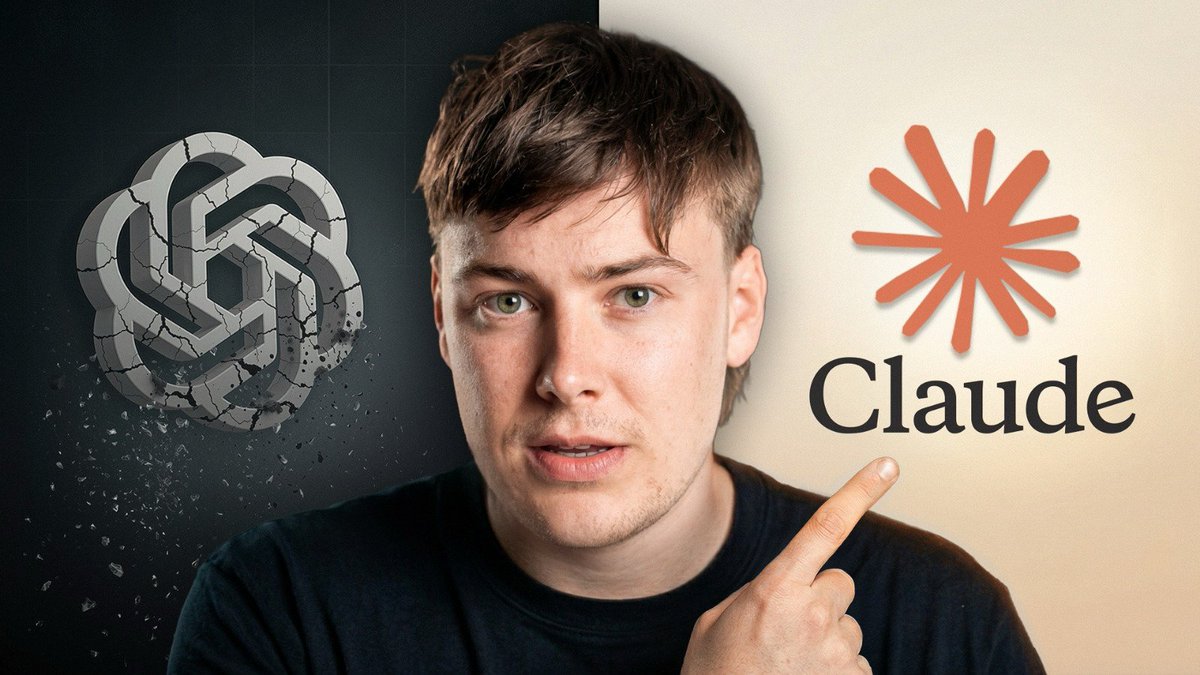
Switching to Claude and then back to ChatGPT feels like using AI from the 90s. I switched to Claude earlier this year, and you should try it too. This video teaches you how to switch in under 10 minutes—with absolutely no resistance or learning curve. You'll thank me later. Click here to watch 👉
383
0
0
21
FC
03-27 00:57
How to distinguish between anxiety disorder and a heart attack? Since 2020, I've frequently experienced near-death experiences, going to the ER three times. Each time, the symptoms subsided after testing. Later, I learned at the hospital that it was panic disorder. I took medication for over a year, and eventually, through exercise and psychotherapy, I was able to wean myself off the medication. However, recently, I've seen several very young people suddenly pass away due to heart problems, including some very, very good friends of mine. What alarmed me even more was that a friend called me a couple of days ago after suffering an acute heart attack and said: "You really need to be careful, because a heart attack can feel very similar to anxiety disorder." This statement suddenly made me realize: This can't be guessed. I can't gamble on "I think it's probably just anxiety." I break it down into three layers: early prevention, daily monitoring, identification and emergency response, and establishing a long-term lifestyle. 1) Early Prevention My approach is to first prevent the worst-case scenario from occurring, so I've had all the necessary tests done: ECG 24-hour Holter monitoring Blood test results Coronary CTA It's worth mentioning the coronary CTA, which I consider the most authoritative examination because it can detect calcified spots in your heart, a very dangerous precursor. Many people assume they're healthy and don't feel anything, so there's no problem. However, calcification, plaque, and narrowing of the coronary arteries don't necessarily alert you to problems beforehand. Previously, I always thought tests were "only done when something goes wrong." Now, I increasingly believe that a truly mature health perspective is about identifying risks before they occur. 2) Daily Monitoring I've started to monitor myself more data-driven, rather than relying entirely on subjective feelings. I use devices like the WHOOP to monitor sleep, recovery, resting heart rate, and HRV. The warning system is also integrated into the automation system, sending alerts via API. In severe cases, it can even automatically contact emergency contacts. 3) Differentiating Emergency Responses Anxiety disorders often occur in specific situations and can be alleviated by adjusting breathing, especially when you see quantifiable indicators, as they tell your body you are safe. A heart attack, however, will not. This is what a friend told me. My current principle is very simple: If I can't distinguish between an anxiety attack and a heart problem, treat the more dangerous one first. Especially in these situations: Persistent chest tightness Pain in arms, back, neck, and jaw Cold sweats, nausea, difficulty breathing, dizziness, near fainting These symptoms are clearly different from your previous anxiety attacks. Don't gamble or try to tough it out; go directly to the emergency room. 4) True Long-Term Prevention is Lifestyle Finally, I increasingly feel that the hardest part isn't testing or equipment, but acknowledging that many "habits" are not pleasurable, but rather draining. Many people say, "If I quit all that—staying up late, drinking, smoking—what's the point of living? Happiness is the most important thing." But I'm increasingly disagreeing with this statement. Happiness is certainly important. But who says happiness has to come from these harmful things? You can build other systems for happiness: Tennis, the exhilaration after exercise, more stable sleep, a clearer mind, higher-quality relationships. I'm not writing this to create panic. But to remind everyone who suffers from chronic anxiety, late nights, and high stress: Especially traders, manage your health, set stop-loss orders, and meticulously manage your capital curve. Don't gamble. Check your health early, review your trades regularly, and deal with problems immediately. Helping others is helping yourself. (Content contributed by gpt)
498
0
0
25
SOL I don't understand
03-26 22:33
I highly recommend watching the documentary *A Day in the Life of Warren Buffett*. No mansions on display, no private jets flaunted, no sentimental self-help rhetoric—just a 90-year-old man, waking up and leaving home like an ordinary person: a hamburger, a Coke, yet supporting a multi-billion dollar empire. After watching it, you'll be silent for a long time. Because you suddenly understand that what truly changes destiny is never explosive power, but rather the choices made day after day. He lives in Omaha, in a house he bought decades ago, still standing. He's renovated but hasn't expanded, hasn't moved, and certainly hasn't upgraded his social circle. A world-class billionaire hasn't turned his wealth into a ostentatious display of residence. True wealth is the restraint of desire, not the accumulation of material possessions. How many people, upon earning money, immediately think of buying a new house—a bigger living room, a more expensive neighborhood, an environment more befitting their status? But what they're changing isn't space, but their consumption standards. Environment subtly alters your spending structure: your neighbor's car elevates your aesthetic sense, your friends' gatherings increase your budget, and your social hierarchy reshapes your desires. As your social circle upgrades, your spending automatically accelerates. You think you're growing, but you're actually being led by your environment. But Buffett didn't. He maintained a basic standard of living and protected the boundaries of his assets. Wealth isn't about how quickly you earn it, but how slowly it leaks away. He drives to work in a very ordinary car, one he drove for many years before finally getting a new one, still just for daily commuting. With his abilities, he could own any limited-edition luxury car, but he never spent money on ostentation. Because in his view, expenditures that don't generate returns aren't worth boasting about. Masters are ruthless about unnecessary spending. They are almost harsh on waste, yet extremely generous with investments. That's the difference—ordinary people use money to prove themselves, masters use money to plan for the future. Berkshire Hathaway, which he leads, is essentially a "company that buys companies." Others make money by selling products; he makes money by buying excellent companies. The logic is simple, yet extremely difficult to replicate. While most people want to be sellers, masters are buyers. Along the way, he frequently visited McDonald's, buying breakfast burgers and Cokes, a routine he maintained for decades. It wasn't a show, but a choice—efficient, low-cost, and satisfying enough. He never used his lifestyle for status. True confidence doesn't need to prove its value through price. Many people believe success must appear expensive. But what's truly expensive is time. The most striking scene in the documentary is his reading. Five or six hours a day, a man creating wealth every minute, he devoted a significant amount of time to reading. He said, "Knowledge is the most powerful engine of compound interest. Where you invest your time, that's where the compound interest happens." Others exchange time for traffic; he exchanges time for knowledge. The difference became apparent after ten years. Let's talk about work. Even in his 90s, he still goes to the office every day. Not because he needs money, but because he loves it. He once said, "I go to work every day like I'm tap dancing." This sounds easy, but it's actually quite profound—only what keeps you passionate for decades deserves to be called a career. Many people envy the results but ignore the process. What truly sets people apart is never talent, but long-term commitment. Are you willing to repeatedly practice the fundamentals when no one applauds? To hone your skills when there are no returns? To press the pause button in the face of temptation? These are the real questions. His investment principles are similarly restrained. The investments that truly determine one's fate in life are only a dozen or so. It's not about frequent trading, but about patiently waiting. There's a famous "punch-machine theory": If you only had 20 investment opportunities in your lifetime, would you still act recklessly? Limiting choices is the simplest way to improve quality. Most people lose because of impulsiveness; masters win by waiting. The market fluctuates daily, and emotions rise and fall daily. But those who truly make money aren't led by price—emotions determine frequency, understanding determines direction. Looking back at "A Day in the Life of Warren Buffett," there are no earth-shattering dramatic tensions, no extreme conflicts. But all the details point to the same core: simplicity, restraint, focus, and repetition. These words sound plain, yet they constitute a top-tier compound interest system. Outsiders believe success comes from luck, but it actually comes from a system; outsiders see asset size, insiders see decision-making structure. He didn't try to live a life that "looks successful," he simply lived a life that is "effective in the long run." Greatness isn't about flashes of glory, but about consistently making the same mistakes; wealth isn't about explosive growth, but about steady accumulation; strength isn't about speed, but about accurate direction. What you should really learn isn't how much money he made, but how he avoided foolish decisions over decades—not changing houses to avoid being hijacked by the environment; not driving luxury cars to avoid compromising with vanity; investing less to increase the density of judgment; reading more to amplify cognitive leverage; loving his work to extend his growth cycle. After watching this documentary, you'll discover a truth: what determines wealth level is never peak income, but bottom-line behavior. How a person wakes up each day, how they spend money, and how they manage their time is the draft of their future asset curve. Your day is determining your ten years. True long-termism isn't a slogan—it's about restraining desires, reducing noise, and maintaining stable output. When everyone is chasing trends, stay calm; when everyone is upgrading their consumption, maintain a stable portfolio; when everyone is engaging in high-frequency trading, reduce the number of trades; when everyone is anxious about the future, build up your skills. A person's future success depends not on how many opportunities they seize, but on how many temptations they resist. This is a typical day for Warren Buffett.
466
0
0
36
haowi.eth🦙🦙🦙🚀🚀🚀
03-26 05:24
This dispute stemmed from repeated harassment and baseless accusations of fraud/false information against me by ohyishi and web3feng (affiliated with the founder of Onekey and other KOLs in the cryptocurrency/DeFi circle). They attacked my work and reputation—which often involved defending projects like Curve Finance and refuting criticism. I filed a lawsuit with the Singapore Anti-Harassment Court. After review of evidence and a hearing, the court ruled in my favor on March 25, 2026, issuing a binding protective order prohibiting any threatening, abusive, or insulting conduct or posting accusations of fraud/false information against me. The defendant was ordered to pay damages. Breach of the order will be considered contempt of court, punishable by a maximum fine of S$10,000 and 12 months imprisonment. The case is now closed; I will focus on project development.
488
0
0
42
CRYPTO (Bitcoin God of Wealth)
03-26 05:07
Health is the foundation of everything. May all my friends enjoy good health and harmonious families while making money. Regular sleep and sufficient rest are the foundation of trading. Trading isn't about who can stay up the latest, but about who can live the longest. The market works 24/7, but your body doesn't. Zhang Xuefeng worked long hours and often complained of being tired, but he didn't prioritize rest. A common mistake traders make is staying up late reviewing market data, monitoring global markets, and consuming news, resulting in disrupted biological clocks and weakened immunity. Recommendation: Get 7-8 hours of sleep daily, try to turn off your screen before 10 PM, and completely avoid market activity at least one day on weekends. Health is the 1, profits are the 0s; without health, everything is zero. Avoid FOMO (Fear of Missing Out). FOMO is one of the biggest enemies of traders. Zhang Xuefeng's style is straightforward and quick to output information. We are often driven by anxiety about "hot topics," "surges," and "missing out on top stocks," impulsively adding to positions and frequently switching strategies. And the result? Emotional exhaustion leads to capital drawdown. The lesson is: only trade products you've thoroughly researched and whose risks are manageable. If you miss an opportunity, let it go; the market always offers another chance. Maintaining a calm mindset is more likely to lead to long-term profits than chasing highs and lows. Focus on what you can control with your time and abilities. The most painful thing in trading is trying to control the uncontrollable—macroeconomic policies, breaking news, and how others operate. Zhang Xuefeng spoke frankly, but his words also drew him into a media storm, putting him under immense pressure. The same applies to us traders: don't predict tomorrow's market movements, don't go all-in on black swan events, just manage your own position sizing, stop-loss discipline, and equity curve. The only things you can control are execution and mindset; focus your energy on these, and your win rate will naturally improve. Get regular checkups, pay attention to your body's signals, and don't use "youth" as an excuse. Zhang Xuefeng is 41 years old, in his prime, but has underlying heart problems (reports mention severe stenosis of the left anterior descending artery). Running, intended for fitness, became a trigger. Traders who sit for long periods, experience high stress, and have irregular diets have a higher cardiovascular risk. Recommendations: Have a comprehensive physical examination at least once a year (especially echocardiography, blood lipids, and blood pressure). If you experience chest tightness, palpitations, or extreme fatigue, stop and rest immediately. Exercise scientifically; avoid sudden high-intensity workouts. Those with underlying medical conditions should consult a doctor before exercising. Balance work and life; learn to "slow down" to accumulate compound interest. Zhang Xuefeng left behind a company, wealth, and his daughter, but also regrets—not spending enough time with his family. Trading is not a lifelong career, but a tool. Allocating time to family, exercise, and hobbies is true long-termism. Like value investing masters, those with a peaceful mindset and who value close relationships tend to live longer and earn more steadily. Traders can try this: establish a fixed "no-market day" each week, spend more time walking and chatting with family, and truly relax your mind.
481
0
0
20
Fiona ❤️& ✌️
03-26 02:22
A few words about Google's TurboQuant and Micron/memory. With the release of TurboQuant today, $MU, $WDC, and $SNDK all fell. The market consensus is that this new technology is impacting memory chip stocks. What is TurboQuant? It's an algorithm that compresses AI's "memory usage" by 6 times, increases inference speed by up to 8 times, and achieves almost no loss in accuracy. Therefore, it can drastically change the cost structure of AI, enabling a surge in long-contextuality capabilities. This naturally means that what we previously perceived as a memory shortage may be significantly reduced. Inevitably, this will have a huge impact on memory stocks in the short term. However, in the long run, lower costs make a surge in applications possible. With decreased unit memory demand and increased total demand, it essentially solves the efficiency problem. $MU is already sold out this year, and despite the overall growth in AI demand, memory demand is still growing, at most with a slower growth curve. High profit margins, high growth, and a good price—I still bought it. I bought some at the bottom to see how it goes 👀 The risk of this is still quite high, this is not investment advice.
411
0
0
45
TheCryptoBasic
03-25 13:47
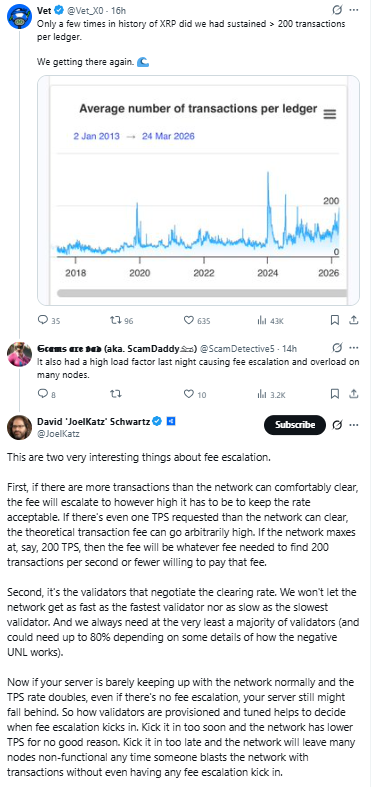
David Schwartz reveals why $XRP fees suddenly spiked without warning. #RIpple XRPL recently experienced a surge in transaction volume, approaching 200 transactions per ledger, an extremely rare occurrence in network history. This increased network activity led to higher fees and increased load, drawing criticism. Schwartz explains that fees rise when transaction demand exceeds network capacity; even slightly exceeding the 200 TPS limit can cause significant fee spikes. Validators collectively determine the settlement fee rate, requiring at least a majority vote, sometimes as high as 80%, depending on the negative UNL setting. When network performance degrades, for example, when a consensus round takes approximately 12 seconds, validators lower transaction targets and adjust the fee curve to stabilize the network.
443
0
0
44

About

  • About Us
  • History
  • Careers
  • Partners

News

crypto

Products

  • Live
  • Data
  • Calendar
  • App Market

Contact

  • Project Listing
  • Exchange Listing
  • Advertising
  • Feedback

Open Platform

  • API
  • RSS
  • Agent API
  • Gitbook

Data

  • Liquidation Map
  • Liquidation
  • Long/Short Ratio
  • Stablecoin
CoinMeta

Download CoinMeta

500K+ Web3 users are watching, making investment simpler

Copyright © 2025 CoinMeta. All rights reserved.

X
Facebook
LinkedIn
Social
Instagram
Youtube
TikTok
Email
Pixel
Telegram

CoinMeta is an independent media and information service platform focused on blockchain and digital assets. We adhere to objective, fair, and transparent reporting principles, following strict news and editorial standards, committed to providing users with accurate, in-depth, and forward-looking industry information, data, and analysis. Our editorial team operates independently, free from interference by advertisers, project parties, or any external investors. CoinMeta may use artificial intelligence to assist in generating or analyzing content, but all published information is reviewed and fact-checked by humans to ensure authenticity and reliability.