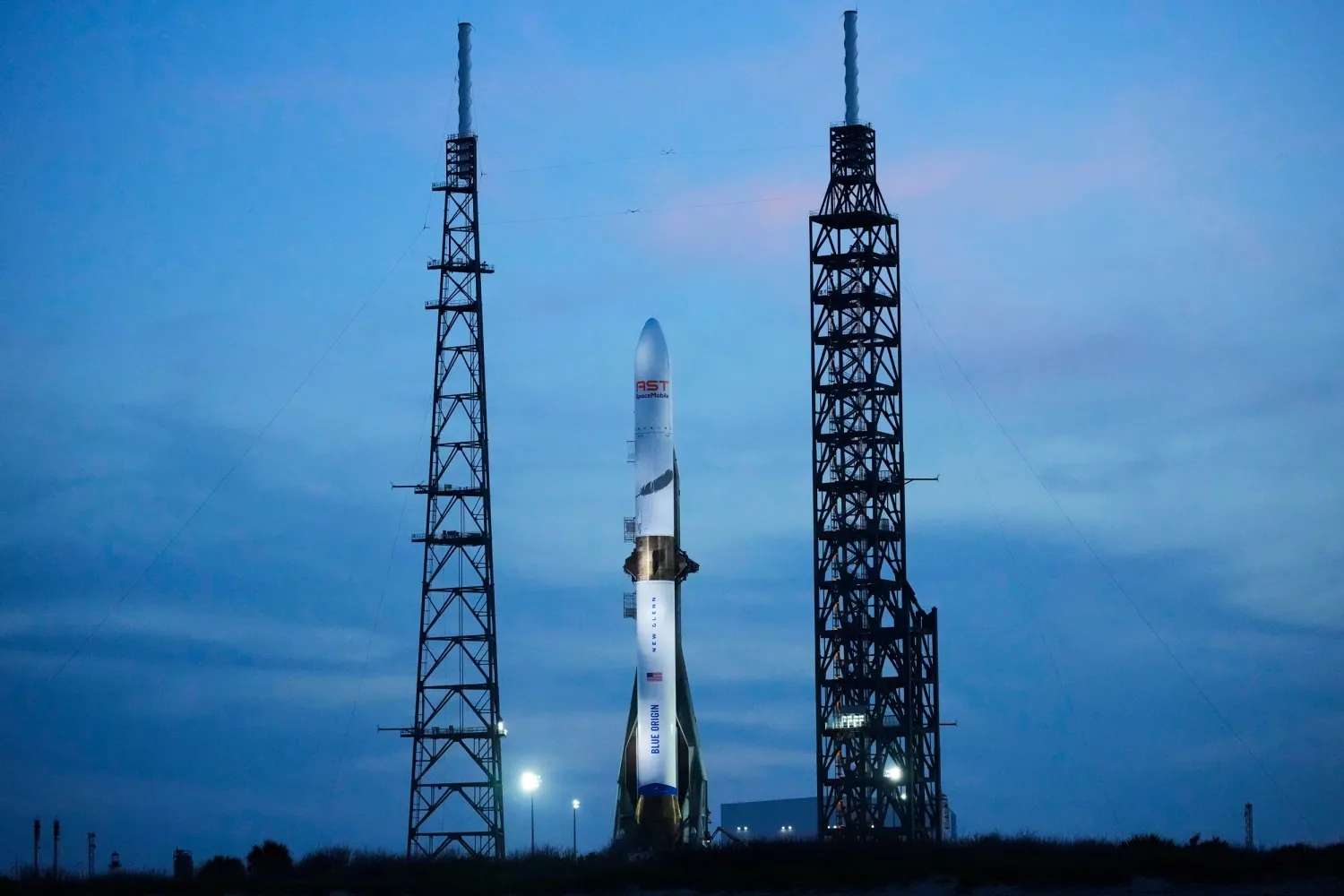
Blue Origin's New Glenn rocket exploded during a static fire test in Florida. The company stated that all personnel on site are safe, but did not specify the cause. The test was in preparation for a fourth launch in several weeks, and the rocket was likely already fueled at the time.
The fourth mission may be postponed.
This incident will likely force Blue Origin to suspend its New Glenn project and reinvestigate the cause of the malfunction. The company had planned to conduct up to 12 New Glenn launches this year to accelerate its efforts to catch up with SpaceX's leading position in the heavy-lift launch vehicle market.
The originally planned fourth mission was also related to Amazon's Leo satellite internet project. According to the contract, this was supposed to be the first of 24 launches Blue Origin would carry out for Amazon. Amazon subsequently confirmed that the test did not carry a Leo satellite.
NASA and military missions attract attention
NASA Administrator Jared Isaacman stated that the agency will work with partners to advance the accident investigation, assess the impact on recent missions, and facilitate the resumption of launches. The Federal Aviation Administration (FAA) stated that it is aware of the explosion and that air traffic was not affected.
NewGlen also played a crucial role in Blue Origin's expansion in the US government market. Besides commercial satellites, the rocket was also expected to participate in NASA's Artemis lunar mission and secure Pentagon national security launch missions. These arrangements may all need to be adjusted following this accident.
The previous flight had just ended in failure.
Just weeks before the explosion, New Glenn had completed its third flight. However, during that mission, the upper stage failed to place the AST SpaceMobile satellite into its intended orbit, resulting in mission failure. Blue Origin had only just received approval from the Federal Aviation Administration to resume flights last week after completing its investigation.
The New Glenn rocket's maiden flight took place in January 2025, when it successfully entered orbit, but the first-stage booster exploded before an attempt to recover it at sea. By its second flight in November 2025, Blue Origin had not only launched two spacecraft to Mars for NASA but also successfully recovered its booster for the first time.
In its third mission, the booster successfully flew back to base and was recovered, demonstrating Blue Origin's first-stage reusability. However, a malfunction in the upper-stage cryogenic system caused the entire mission to fail. The explosion on the test stand now signifies another major setback for this rocket before it can enter routine commercial launches.
Additional information:Bezos stated that it is too early to determine the root cause of the accident, and the company has begun an investigation and will rebuild the damaged facilities. Musk later posted on social media, expressing his hope that Blue Origin would recover as soon as possible.