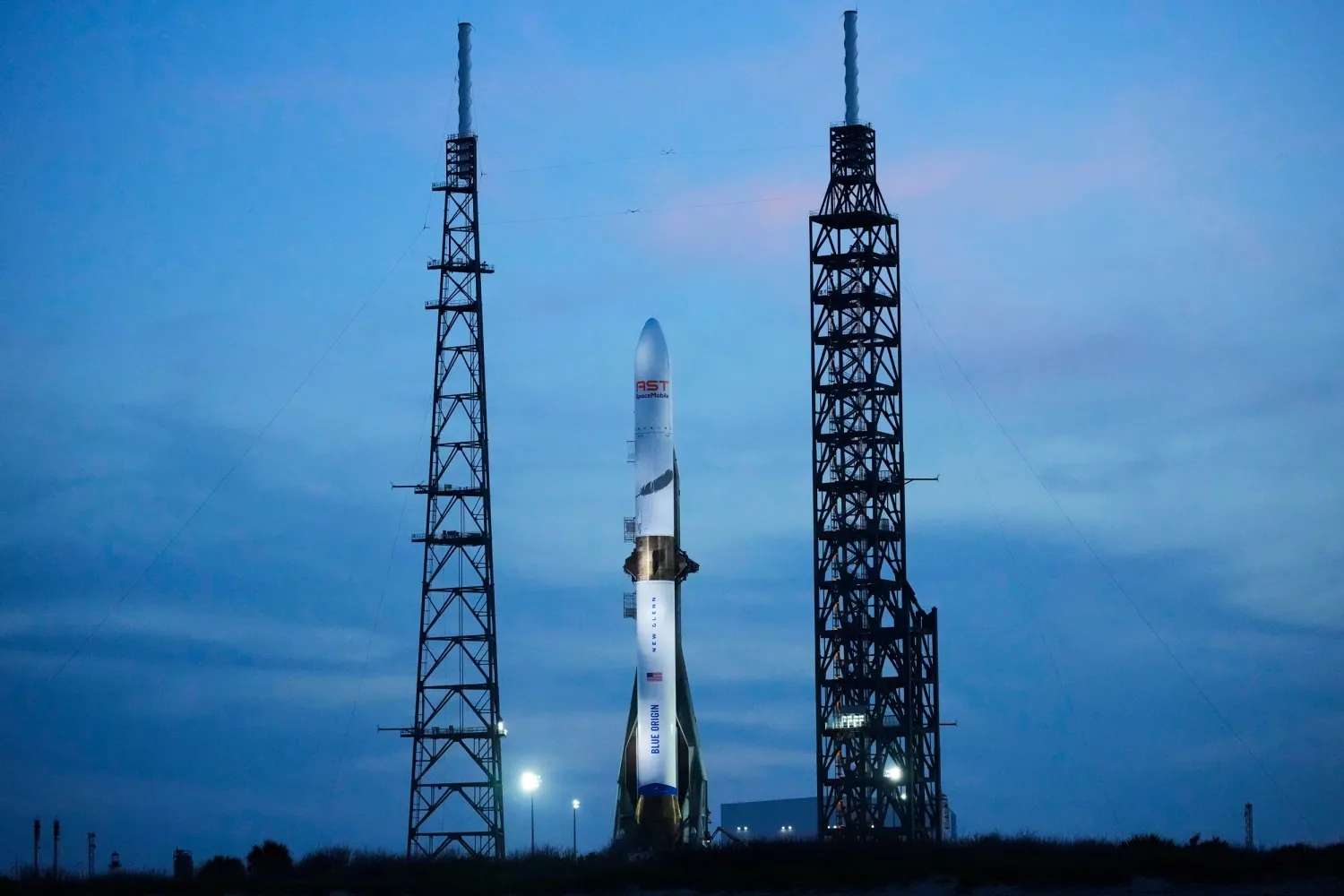
Blue Origin plans to resume launches of its New Glenn rocket by the end of 2026. Company CEO Dave Limp stated that the damage to the launch pad following last week's test explosion at Cape Canaveral, Florida, was less than expected, and some key hardware remains usable.
The damage to the launch facility was less than expected.
Limp stated on June 2nd that more infrastructure at the launch site than anticipated was in "good condition." The New Glenn booster, which had already completed its mission, and the three upper stages, parked in the launch area, did not appear to suffer any significant damage.
He also gave a clear timeline, stating that the company would launch the new Glenn again before the end of this year. This statement came faster than many industry insiders had previously predicted. After the accident, the market had initially expected Blue Origin to be ready for flight again until 2027.
The cause of the accident has not yet been announced.
This explosion, which occurred during testing in Florida, is one of the most serious and high-profile launch site accidents in Blue Origin's history. A major reason for the caution surrounding the return-to-flight timeline is that the New Glenn currently has only one usable launch pad, and the rocket's ground systems are highly dependent on dedicated facilities.
Unlike SpaceX, which resumed launches within months of the Falcon 9 launch pad explosion in 2016, Blue Origin currently lacks a viable backup launch pad. While the company is also building a second launch pad at Cape Canaveral, the project is still in its early stages.
Lunar missions and commercial launches affected
The New Glenn is Blue Origin's most important orbital launch vehicle. NASA's planned Artemis lunar mission relies on this rocket for several stages. In conjunction with this mission, Blue Origin also announced in January of this year that the smaller New Shepard space tourism flights will be suspended for at least two years.
The New Glenn's maiden flight was completed in January 2025, with the upper stage reaching orbit on its first attempt, but the booster exploded during recovery. The second launch, in November, successfully sent two spacecraft bound for Mars into space and achieved the first-ever sea recovery of a booster. The company subsequently used the booster again on a third mission this April, but the upper stage failed, resulting in the loss of a satellite belonging to customer AST SpaceMobile.
The fourth mission was originally scheduled to launch a batch of satellites for Amazon. Since the satellites had not yet been loaded onto the rocket, they were not damaged in the explosion.
Ground transportation methods will be adjusted
Limp denied speculation that Blue Origin might switch to a larger, new Glenn version for its return to service. He stated that the company will continue to use the existing model, but will adjust the way the rocket is transported to the launch pad and erected.
Previously, Blue Origin used a system that combined transport and erection capabilities. Limp did not disclose details of the alternative, but this means that in addition to investigating the cause of the accident, the company will need to modify some ground operation procedures before resuming launches.