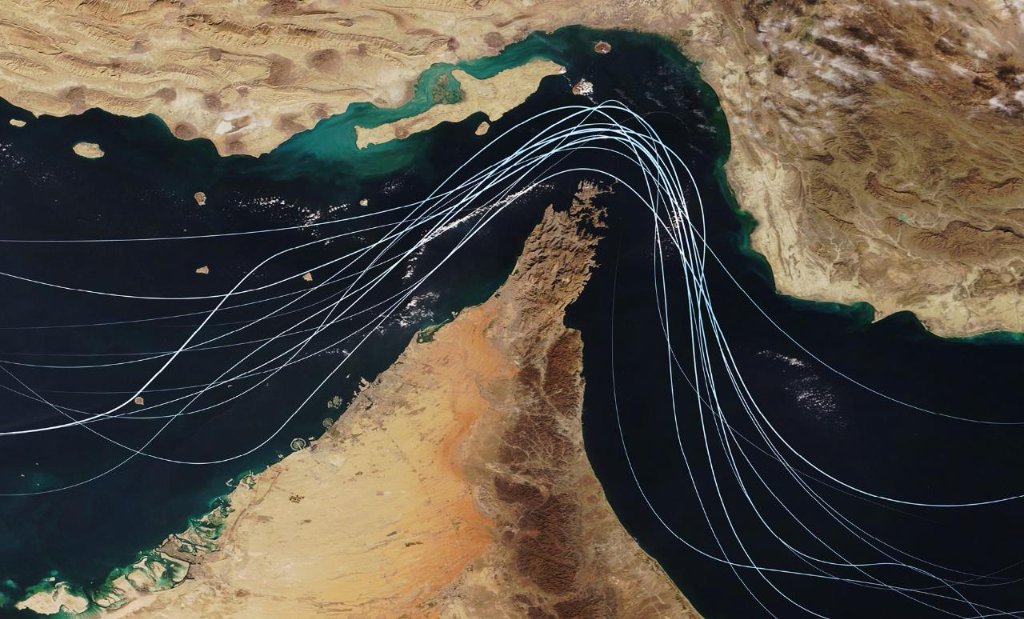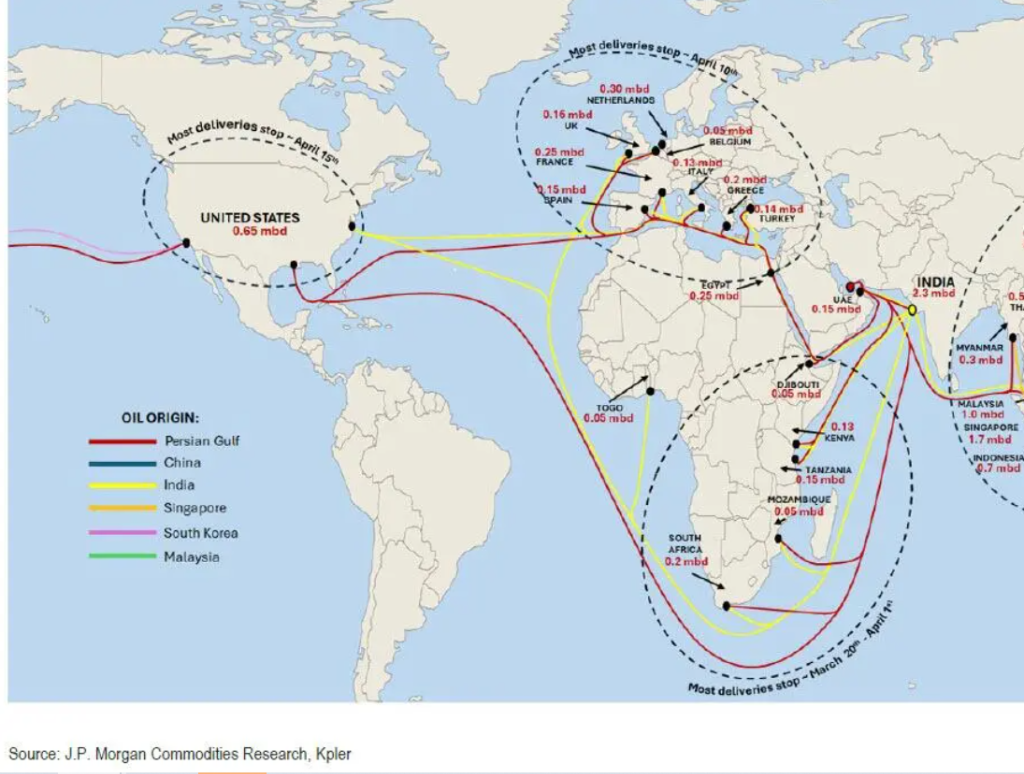
Iraq notified buyers to pick up their goods themselves, stating that its crude oil could be transported via the Strait of Hormuz.
Wall Street CN
9h ago
Ai Focus
After a 97% plunge in exports in March, Iraqi crude oil has finally seen a glimmer of hope with an "exemption"! The authorities have urgently notified Asian buyers to resume taking delivery of goods through the Strait of Hormuz. However, the details of the exemption are vague, and buyers must face the risks of transit. The Asian market is generally cautious and awaits further security guarantees from Iraq. The full recovery of the Strait remains highly uncertain.
Helpful
No.Help

Author:Wall Street CN

Iraq has issued delivery notices to Asian buyers, stating that its crude oil has been exempted by Iran and can transit through the Strait of Hormuz, but buyers are generally cautious and the scope of the exemption remains unclear.

The Iraqi National Oil Marketing Organization (SOMO) issued a notice on Sunday informing buyers that Iraqi oil shipments are now "exempt from any potential restrictions," requiring buyers to submit a delivery plan within 24 hours, including vessel information and requested loading volume, and emphasizing that all loading terminals, including Basra, are "operating normally."This marks the first sign of resumption of Iraqi crude oil exports after a de facto closure of the Strait of Hormuz for approximately one month.

However, according to Bloomberg, several Asian buyers said they are seeking further clarification, including whether the exemption applies to all Iraqi oil and whether Iraq will provide its own tankers to enhance transit security.

The lack of clarity regarding exemption details has cast doubt on buyer confidence.

Iran announced over the weekend that ships from neighboring Iraq were permitted to use the Strait of Hormuz, but an Iranian military spokesman did not specify which oil tankers or cargoes were protected. On Sunday, the tanker Ocean Thunder, carrying 1 million barrels of Iraqi crude oil, completed its transit through the strait, marking the first concrete case since the exemption arrangement took effect.

According to Bloomberg, Asian buyers are cautious about the arrangement, demanding clear exemption conditions, particularly regarding Iraq's willingness to provide its own tankers for transport, thus offering additional security for transit. Iraqi crude oil is typically sold on an FOB (Free On Board) basis, meaning the buyer arranges the transportation themselves and bears the transit risks.

Exports plummet, alternative channels are limited

The de facto closure of the Strait of Hormuz has severely impacted Iraq's oil exports. Data shows that Iraq's average daily crude oil exports plummeted by about 97% in March to approximately 99,000 barrels, a significant decrease compared to the previous month.

Iraq has very limited alternatives to bypassing the Strait of Hormuz; currently, only one pipeline system through Turkey is available, which is insufficient to handle large-scale export demand. This makes the Hormuz exemption arrangement crucial for the recovery of Iraqi exports.

According to Bloomberg, tanker traffic in the Strait of Hormuz has rebounded somewhat over the past week, with the seven-day rolling average reaching its highest level since the outbreak of hostilities as of last Saturday. However, overall traffic volume remains low compared to pre-war levels, and the market remains highly concerned about the sustainability of the strait's openness.

Tip
$0
Like
0
Save
0
Views 374
CoinMeta reminds readers to view blockchain rationally, stay aware of risks, and beware of virtual token issuance and speculation. All content on this site represents market information or related viewpoints only and does not constitute any form of investment advice. If you find sensitive content, please click“Report”,and we will handle it promptly。
Submit
Comment 0
Hot
Latest
No comments yet. Be the first!
Related
Goldman Sachs issues warning about the situation in the Strait of Hormuz: Several countries face the risk of an "oil shortage"!
Goldman Sachs analysts point out that although global oil has not run out, there are increasing signs that pressure is being transmitted, and in the worst-case scenario, localized oil shortages and soaring prices are bound to intensify.
Jin10 Data
·2026-04-06 22:00:11
81
US intelligence agencies assess that the Strait of Hormuz is unlikely to be "opened up" in the short term.
A recent US intelligence assessment warns that Iran will not easily relinquish its key bargaining chip, the Strait of Hormuz. A former CIA director stated bluntly that Tehran understands that controlling the Strait is "more powerful than nuclear weapons," making negotiations extremely difficult. Furthermore, a US military effort to force access would be costly, and there is a significant discrepancy between Trump's optimistic statements and intelligence conclusions.
Wall Street CN
·2026-04-04 18:25:42
908
Crude Oil Prices: USOIL Hits $140 as Trump Threatens to “Blow Everything Up” in Iran
USOIL traded at $140.35 as Trump’s Iran timeline shifted to Tuesday and Strait of Hormuz closure risks stayed in focus.
Coinpaper
·2026-04-06 03:12:51
325
When will global crude oil inventories "bottom out"? This is a "timetable for shutdown."
JPMorgan analysts estimate that the Strait of Hormuz blockade has resulted in a daily loss of approximately 14 million barrels of effective global supply. OECD commercial crude oil inventories will reach an "operating minimum" of 842 million barrels after depleting 166 million barrels in April and another 67 million barrels in early May—at which point price will replace inventory as the primary balancing mechanism in the market. Even if the Strait reopens, supply recovery will require three phases and approximately four months.
Wall Street CN
·2026-04-04 10:04:53
709
Data Research: How Big is the Difference Between Hyperliquid and CME Crude Oil Liquidity?
Hyperliquid has already touched the threshold of oil pricing power.
Odaily
·2026-04-06 10:47:15
242