

Author:Currency Explorer
The French central bank found a clever way to both remove its gold from US custody and avoid diplomatic disputes: sell it at a high price in New York and then buy it back in Europe.
As part of its 2025 fiscal year announcement, the central bank disclosed a "special project" that enabled it to turn a €2.9 billion loss into an annual profit of €8.1 billion.
In a press release dated March 25, the central bank stated, "With total gold reserves remaining unchanged in 2025 and early 2026, the Bank of France had to adjust the remaining portion (5%) according to technical guidance, thereby realizing significant realized foreign exchange gains. In 2025..."This special foreign exchange income totaled 11 billion euros..
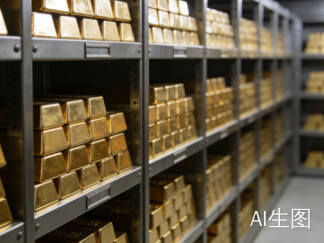
This move was both shrewd and profitable.Unlike Germany, which faces ongoing difficulties with its large gold reserves held in the United States, the French central bank has not attempted to withdraw or transfer its gold. Instead, it simply took advantage of record-high gold prices to sell older, lower-purity gold bars in New York at dollar value, pocketing the cash. Then, when prices happened to fall, it bought back gold bars in Europe that met its latest weight and purity standards. Germany's gold, however, remains in the vaults of the Federal Reserve Bank of New York, much to the dissatisfaction of many German politicians.
This is a significant sum for the French central bank."Win-win-win"The deal: at a time when US-EU relations were strained by tariffs, Greenland, Ukraine, and now Iran, it did not provoke any diplomatic backlash from the US government; it did not incur transatlantic shipping and security costs; and the deal itself generated substantial profits, boosting the bank's overall financial position.
“The Bank of France’s net assets—comprising its own funds plus unrealized capital gains from asset holdings—are now at €283.4 billion, extremely solid, up from €202.7 billion in 2024,” they noted. “The Bank of France’s net assets include €11.4 billion in revaluation reserves of national gold and foreign exchange reserves to cover future monetary expenditures.”
French central bank governor Francois Villeroy de Galhau told reporters that the decision to store the new gold bars in Paris rather than New York was "not politically motivated."
After these transactionsFrance's total gold holdings remained unchanged at approximately 2,437 tons.The country’s entire gold reserves are now stored in the underground vault of the French central bank in La Saute-Laine.