


Author:Wall Street CN
As the threat of blocking the Strait of Hormuz continues to escalate, the fate of oil wealth among Middle Eastern oil-producing countries has become sharply divergent.
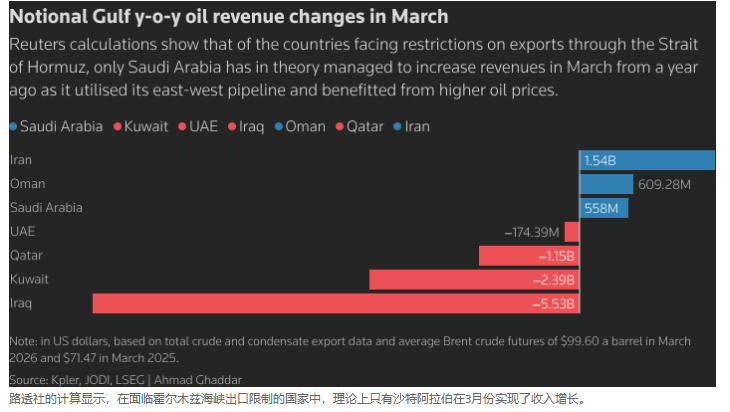
According to Reuters, Saudi Arabia's oil revenue bucked the trend in March, growing by 4.3% thanks to its geographical advantage of bypassing pipelines; Iran's oil revenue surged by 37% driven by soaring oil prices; while Iraq, heavily reliant on the Hormuz Corridor, suffered the most severe revenue decline among major Middle Eastern oil-producing countries during the crisis.
Geographical location is the core variable determining the trajectory of oil and gas revenues for various countries during this crisis. Saudi Arabia possesses an east-west oil pipeline built during the Iran-Iraq War, enabling it to bypass the Strait of Hormuz and export directly, thus gaining higher royalties and taxes from rising oil prices. Meanwhile, the geopolitical premium triggered by the risk of blockade has pushed up the central oil price, unexpectedly benefiting Iran as well.
Geographical location determines the divergence of fate
The essence of this Hormuz blockade threat is a redistribution of oil wealth centered around geopolitical location.
The varying degrees of dependence of major Middle Eastern oil-producing countries on this crucial shipping route have led to vastly different fiscal performances in March. According to Reuters, geographical factors are considered the primary variable determining the trajectory of oil revenues for producing nations during this crisis.
Saudi Arabia's oil revenues rose 4.3% in March, supported by two factors: the smooth flow of alternative export channels and higher fiscal returns from rising oil prices.
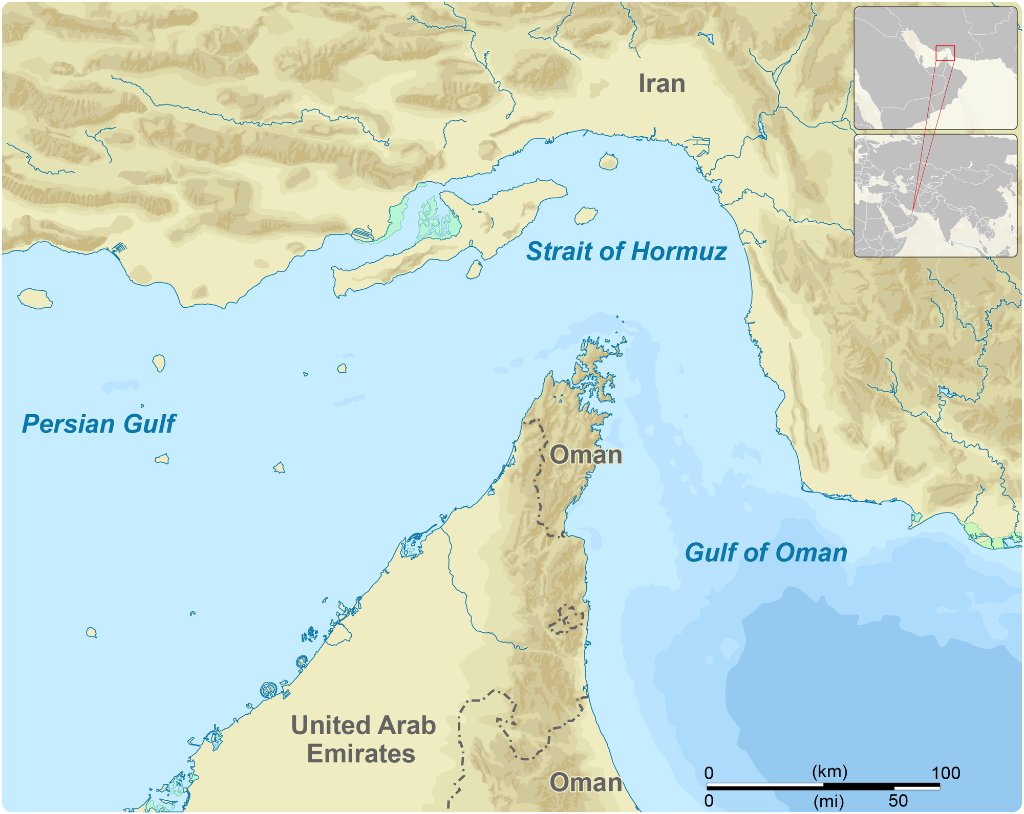
According to Reuters, Saudi Arabia's east-west pipeline was built during the Iran-Iraq War and was specifically designed to bypass the Strait of Hormuz. As the risk of blockade continues to rise, the pipeline's strategic value has become increasingly apparent, ensuring that Saudi oil exports are not disrupted by the situation in the Strait. At the same time, crisis-driven risk premiums have pushed up oil prices, further amplifying Saudi Arabia's royalties and tax revenues.
Iran's revenue surged 37% thanks to soaring oil prices.
Despite being at the heart of the dispute, Iran's oil revenues still recorded a significant increase of 37% in March, the most notable increase among major oil-producing countries in the Middle East.
The oil price surge triggered by the crisis had a significant offsetting effect on the fiscal level, making Iran one of the biggest beneficiaries of revenue growth during this period.
Among the major oil-producing countries in the Middle East, Iraq has been hit the most directly and severely. As one of the countries most dependent on exports through the Strait of Hormuz, Iraq recorded its largest drop in oil revenue in March, highlighting the direct fiscal costs of its geographical disadvantages under extreme geopolitical circumstances.
The negative impact of tensions in the Strait of Hormuz has extended to Asian capital markets. According to Reuters, Indian financial stocks recorded a record monthly net outflow of foreign capital in March. Growing concerns among overseas investors about the impact of the war with Iran on India's economic growth and corporate profit prospects have further exacerbated downward pressure on the Indian stock market and continued to weigh on the rupee exchange rate.











![When copper prices rise, who is buying, who is pushing up prices, and who is buying on dips? [Peifengke Master Class 3.1]](http://img.528btc.com.cn/pro/2026-04-07/img/1775556730039cc9499b27xjjh6h6ba865524b31x86h8.jpg)