

After Bitcoin fell back to around $62,000, market discussion has shifted back to the availability of new funds. CryptoQuant CEO Ki Young Ju believes that the greater risk at present is not a sharp drop, but rather a prolonged lack of price direction, which could gradually erode investor confidence and new funds.
It's harder to maintain momentum when prices are trading sideways for an extended period.
In his X post on June 19, Ju stated that markets can typically withstand sharp pullbacks as long as investors still expect prices to recover. However, if Bitcoin remains range-bound for years, market sentiment will be continuously depleted, and the narratives that supported the bull market in the past will gradually lose their appeal.
He also mentioned that Michael Saylor's continued buying of Bitcoin does not replace a new market narrative. According to him, the real issue is not continuing to accumulate, but whether the market has new reasons to attract the next wave of funds.
STRC's drop below par value draws attention.
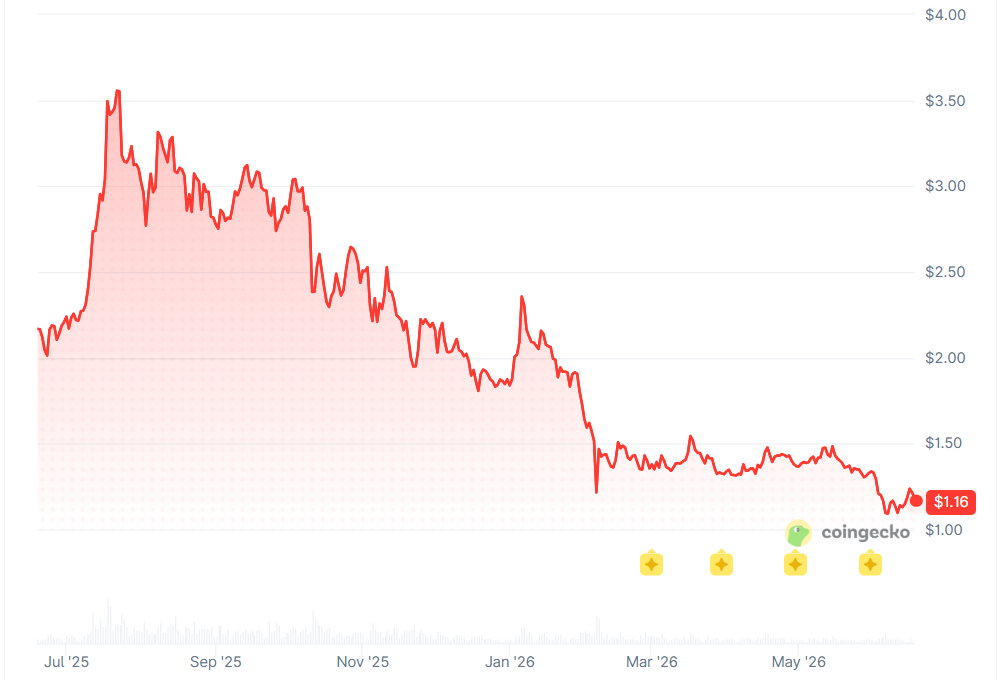
Concerns are also rising regarding Strategy's financing structure. The company's preferred stock, STRC, recently fell to around $82, significantly below its $100 par value, raising questions about whether demand for such securities will be sufficient to support subsequent financing.
Ju believes that if Bitcoin stagnates for an extended period, tools like STRC will become more vulnerable. As investment interest weakens, it may become more difficult for Strategies to continue raising funds through securities.
- STRC recently fell to around $82
- The face value of the ticket is $100.
- QCP estimates the dividend buffer period to be approximately 7.5 months.
Market maker QCP recently estimated that, based on current liquidity conditions, Strategy has approximately seven and a half months of dividend payment buffer. QCP also mentioned that the company has repurchased nearly $1.5 billion of convertible bonds maturing in 2029 and raised approximately $200 million through the sale of MSTR shares.
QCP believes that selling some of its Bitcoin holdings could be an option if the company wants to maintain dividend payments while continuing its Bitcoin treasury strategy. Peter Schiff, a long-time Bitcoin bear, also stated that Strategy's subsequent financing costs could rise further if new investors demand higher returns.
The market awaits a new story after ETFs.
Ju also stated that Bitcoin needs a new narrative to attract the next wave of capital inflows. He mentioned that the approval of a spot Bitcoin ETF and the increasing political support for Bitcoin in the United States were positive factors that the market had long anticipated, but most of them have now been priced in.
Meanwhile, the macroeconomic environment remains tight. The report noted that the Federal Reserve kept interest rates between 3.50% and 3.75% this week, stating that inflation remains above target. Higher funding costs continue to weigh on risk assets, putting further pressure on Bitcoin in the absence of new catalysts.
However, Saylor maintains his long-term optimistic outlook. At BTC Prague 2026, he stated that Bitcoin could potentially reach $7 million per coin, with the total network value expected to reach $100 trillion. This assessment contrasts sharply with current market concerns about prolonged stagnation.