The EU has issued a serious warning: it is preparing for a prolonged energy shock, with fuel rationing and stockpiling under consideration.
Jin10 Data
11h ago
Ai Focus
The EU's energy commissioner warned that the Middle East energy shock will be prolonged, and the supply of some energy products is expected to become more severe in the coming weeks. The commission is assessing all measures, including fuel rationing and releasing oil reserves, and is preparing for the worst while not yet facing a crisis.
Helpful
No.Help

Author:Currency Explorer

AI Podcast: A New Way to Listen to the News Download MP3

Audio is generated from button space.

The EU Energy Commissioner stated that the EU is assessing all possible responses, includingImplement fuel rationing and further release emergency oil reserves.In response to the Middle East war"Long-term" energy shock.

“This crisis will last a long time…energy prices will remain high for a considerable period,” Dan Jørgensen warned the Financial Times, adding that the supply situation for some “critical energy products” is expected to “become more severe” in the coming weeks.

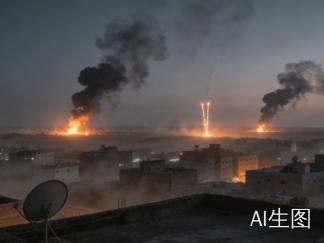
The near-blockade of the Strait of Hormuz and attacks on energy infrastructure in the Gulf region have plunged energy markets into chaos, caused oil prices to soar, and triggered a prolonged supply panic.

“The wording and statements we are using now are more serious than at the beginning of the crisis,” Jorgensen said. “Our analysis clearly shows that the situation will be protracted and countries must ensure they have the energy they need.”

He pointed out that although the EU has not yet fallen into a supply security crisis,Brussels is already developing contingency plans to address the "structural and long-term impacts" of this conflict..

As the EU issues its warning, the energy shock has already swept the globe, pushing up inflation expectations, dragging down economic growth, forcing many governments to introduce consumer support plans, and some countries even restarting coal-fired power generation.

Jorgensen stated that the EU is "preparing for the worst," even though it hasn't yet reached the point of rationing key energy sources like jet fuel and diesel. "I would say it's always better to be prepared than to regret it later."

Concerns about jet fuel supply are particularly prominent in the aviation industry.

When asked whether the EU would relax its jet fuel standards to expand US imports or allow for increased ethanol blending in vehicle fuels, Jorgensen said, "We have not revised or changed any existing regulations at present."

But he added, "We are exploring all possibilities. The more serious the situation becomes, the more we will naturally need to consider using legislative tools."

There are differences in the standards for jet fuel between the EU and the US: the EU requires jet fuel to have a pour point of -47°C, while the US requires it to be -40°C.

Jorgensen also stated that he "would not rule out" releasing strategic energy reserves again if the situation worsens. Last month, the EU participated in the largest release of strategic oil reserves in history in an attempt to stabilize soaring oil prices.

Jorgensen declined to reveal the EU’s “specific analysis” on when a new round of reserve easing would be needed, but emphasized that “we take this very seriously and are ready to act if necessary.”

“We need to keep all options in mind, and as I judge, if this is indeed a long-term crisis, we will need to use these tools in the later stages,” he added. “The action must be timely and moderate in scale.”

Jorgensen also reiterated his position:This year, EU legislation will not be amended to stop imports of Russian liquefied natural gas.He said,It is feasible to rely on the United States and other partners to increase supply, since these suppliers operate within a "free market" framework.

Tip
$0
Like
0
Save
0
Views 533
CoinMeta reminds readers to view blockchain rationally, stay aware of risks, and beware of virtual token issuance and speculation. All content on this site represents market information or related viewpoints only and does not constitute any form of investment advice. If you find sensitive content, please click“Report”,and we will handle it promptly。
Submit
Comment 0
Hot
Latest
No comments yet. Be the first!
Related
Europe is preparing for the worst: energy shortages may be real.
The EU's energy commissioner warned that the situation in the Middle East is triggering a prolonged energy crisis, and that "the situation is expected to worsen further in the coming weeks." The EU has activated its contingency plan and is assessing extreme options such as limiting fuel supplies and reusing strategic reserves. Although regulations have not yet been amended, Brussels is addressing the structural shocks in the global energy market by securing supplies through multiple channels.
Wall Street CN
·2026-04-03 14:44:43
261
ST Xifa issued a late-night announcement: Chairman missing! The company is in a critical period of pre-restructuring, and its stock price has hit the daily limit down for three consecutive days.
ST Xifa announced that its actual controller and chairman, Luo Xi, has gone missing, and vice chairman Liao Chuan is temporarily assuming his duties. The company is currently in a critical stage of pre-restructuring, and there is uncertainty as to whether it can successfully enter the restructuring process, facing the risk of bankruptcy. Currently, the company's control remains unchanged, and daily operations and restructuring work are still underway.
Wall Street CN
·2026-04-03 15:35:43
884
Bybit EU and Fourthline: A Strategic Partnership for Compliance in the Crypto Sector
The Cryptonomist
·2026-04-02 15:00:00
409
With prices rising across the entire energy storage industry chain, what impact will this have on the sector?
The entire energy storage supply chain saw price increases in the first quarter, with significant rises in the prices of lithium carbonate, copper, lithium hexafluorophosphate, and 314Ah battery cells. Unlike previous instances, the industry's "silent acceptance" of these price increases reflects policy affirmation of the value of energy storage capacity, sound demand calculations, and a shift in the industry from price wars to value-based competition. Profit margins after the price increases exhibit a K-shaped divergence, with leading mining companies and material manufacturers benefiting the most. This tight supply-demand balance is expected to continue until the fourth quarter of 2026.
Wall Street CN
·2026-04-03 20:54:19
239
Trump's verbal attempts to ease tensions have failed, a "spot shock" to crude oil prices is looming, and US stocks are truly panicking!
Trump's three verbal interventions have all failed, and the impact of the pandemic on crude oil prices is now being transmitted from futures prices to physical supply. Asian inventories are nearing their limits, while Africa and Europe are facing increasing pressure in early April and mid-April, respectively. Brent crude closed at $112.57 a barrel on Friday, its highest closing price since July 2022. The S&P 500 fell for the fifth consecutive week, and the Nasdaq dropped more than 10%. Analysts bluntly stated that the peak of the panic has not yet arrived.
Wall Street CN
·2026-03-28 14:00:37
223