

Author:Wall Street CN
According to a Xinhua News Agency report citing Iranian media on the 5th, an Iranian military spokesperson stated that the US military's mission to rescue the pilot "failed," and that two of its Black Hawk helicopters and a C-130 transport plane were shot down.
According to @CCTV International News, the Central Command of the Iranian Armed Forces, Hatem Anbia, announced today (April 5) that in response to the US actions to rescue its downed fighter pilot, Revolutionary Guard fighters, in conjunction with the Basij militia and with the cooperation of the law enforcement command's commando unit, shot down and destroyed an enemy aircraft south of Isfahan. The Iranian Islamic Revolutionary Guard Corps also stated that day that multiple departments of the Iranian armed forces, in a joint operation, destroyed the enemy aircraft during the US pilot rescue mission. This news has not yet been confirmed by the US.
On the same day, according to a report on the website of The New York Times, two U.S. military transport planes were "stranded" due to malfunctions while carrying out a pilot rescue mission in Iran. The U.S. military subsequently dispatched three new aircraft to continue the rescue mission and destroyed the two malfunctioning transport planes.

According to Xinhua News Agency, U.S. President Trump posted on social media on the evening of April 4 local time, saying that the U.S. military had carried out "one of the boldest search and rescue operations in U.S. history" and that the second missing U.S. pilot was "safe and sound."
According to a report by The New York Times on May 5, the second pilot of the downed US F-15E fighter jet has been transported to Kuwait for medical treatment. During the rescue operation, the US military destroyed two "stranded" US transport planes that were on a rescue mission.
The report states that the pilot evaded Iranian searches in the mountainous region for over 24 hours, carrying only a pistol. The U.S. military deployed hundreds of special operations personnel to complete the rescue, during which a firefight occurred with Iranian forces.
The report stated that two U.S. military transport planes were "stranded" due to malfunctions while carrying out a pilot rescue mission in Iran. The U.S. military subsequently dispatched three new aircraft to continue the rescue mission and destroyed the two malfunctioning transport planes.
According to Iran's Tasnim News Agency on the 5th, the public relations department of the Iranian Islamic Revolutionary Guard Corps said that a US military aircraft searching for a missing pilot was shot down in Isfahan province. Iran's Mehr News Agency also reported that a US military C-130 transport plane was shot down on the 5th.
According to Red Star News, the Zagros Mountains have been known as the "Gateway to Persia" since ancient times, a classic example of a strategically important and easily defensible location. The ancient Persian people once repelled the invasion of Alexander the Great here. The local Lur and Bakhtiari peoples are semi-nomadic tribes skilled in archery and possess an intimate knowledge of the terrain. Some analysts suggest that a slight misstep by the US military here could potentially lead to a repeat of the devastating "Black Hawk Down" incident in Mogadishu.
Currently, Iran's search efforts are concentrated in the provinces of Kojiluye and Virahmad, located in the Zagros Mountains in southwestern Iran. This mountainous region, bordering the provinces of Fars, Isfahan, Khuzestan, and Bouchahher, is renowned for its lush greenery and wild ecosystems, making it difficult for US search and rescue forces to visually locate targets from the air. The region also possesses some of Iran's richest oil resources, accounting for approximately 35% of its total oil and gas reserves.
The Zagros Mountains stretch from northwestern Iran to the Strait of Hormuz, with a total length of approximately 1,600 kilometers. The highest peak in the mountain range is Mount Dena, at about 4,409 meters. Several other peaks, such as Zard-Kuh, exceed 4,200 meters in altitude. The region is known for its parallel limestone ridges and extremely deep valleys.
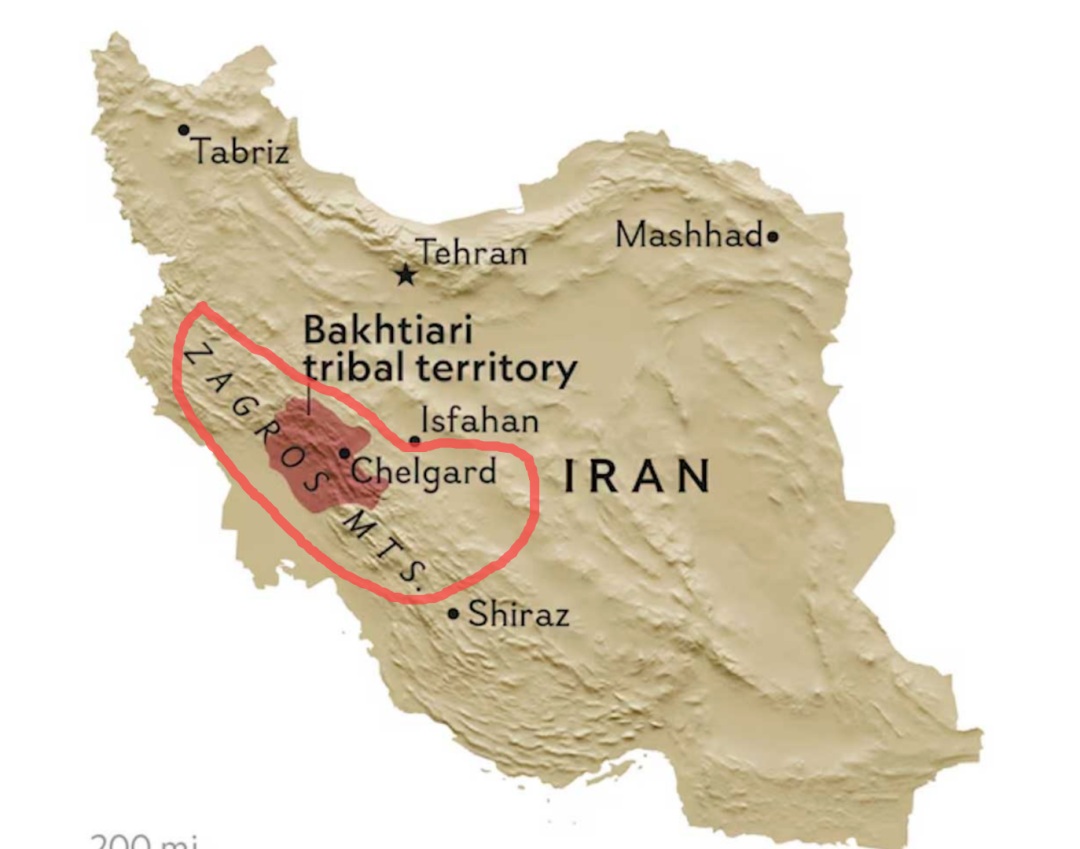
Historically, this area was the site of the famous "Gateway to Persia," where Alexander the Great encountered fierce resistance from the Persian army during his eastward campaign. In ancient times, this terrain served as a "natural fortress" militarily; a small number of guards at the pass could halt an entire enemy army's advance. In modern warfare, it is naturally suited for air defense deployment. The numerous "folds" in the valley create radar blind spots for fighter jets and provide hiding places for small groups of ground-based air defense units. A small number of personnel equipped with surface-to-air weapons (such as portable shoulder-fired missiles) can pose a lethal threat to an entire air formation. The indigenous people of this mountainous region are primarily the Bakhtiari and Lur people, known for their fierce fighting spirit, exceptional marksmanship, and widespread civilian gun ownership.
This article is sourced from: