

Author:Currency Explorer
Ruchir Sharma, Chairman of Rockefeller International, the global investment strategy arm of Rockefeller Capital Management, stated that...The world is facing an unprecedented crisis, and global debt has reached a historical peak, making even the United States, the world's largest oil producer, appear particularly vulnerable.
In his op-ed in the Financial Times on Sunday, he warned that the extreme lack of fiscal space leaves heavily indebted governments with little room to cope with the energy shock caused by Trump’s war on Iran.
Sharma points out that historical experience shows that...Such crises often lead to the collapse of fiscal budgets.The oil crisis of the 1970s was a turning point, after which governments shifted from occasional deficits to long-term, persistent deficits.
Today, the average government debt ratio of the G7 countries has soared from just 20% of GDP to over 100%. Global debt grew at its fastest pace since the pandemic last year, reaching a record high of $348 trillion, more than three times the global GDP.
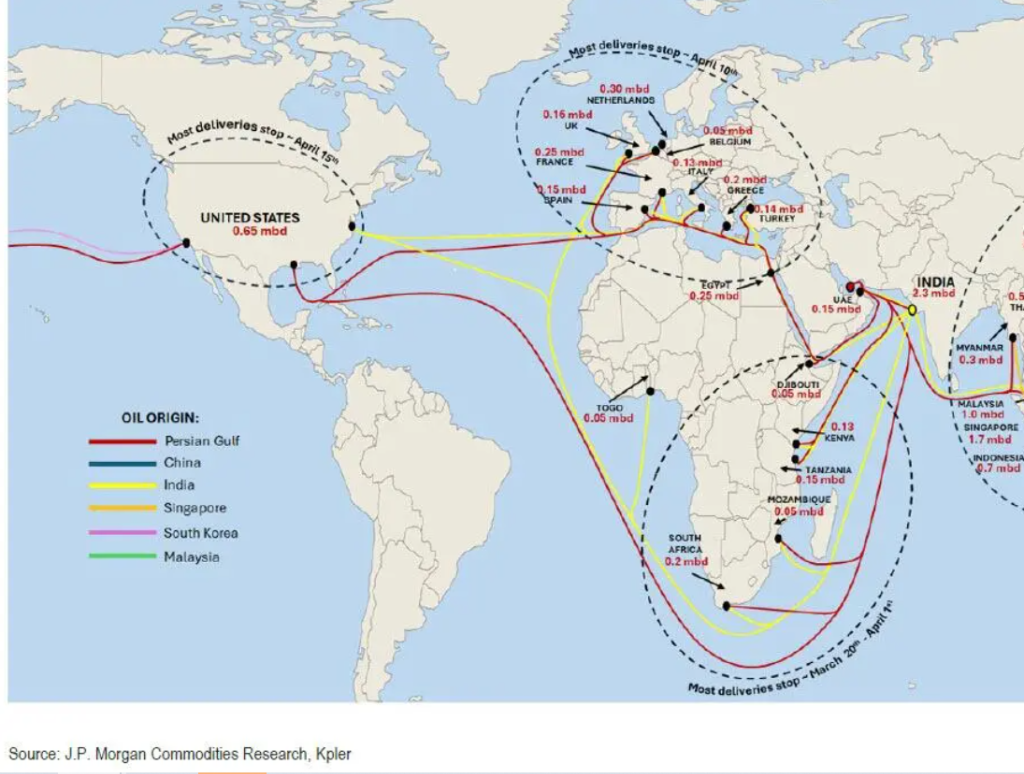
With one-fifth of the world's oil and liquefied natural gas supplies tied up in the Persian Gulf, governments are scrambling to implement price controls, rationing, and subsidies. But...Many governments have run out of fiscal resources, and bond investors are ready to punish any excessive spending.
"Long-term inflation expectations appear stable, but market concerns that the Iranian oil shock will further increase government spending on top of rapidly expanding deficits and debt have led to a rise in bond term premiums," Sharma wrote.
This trend has already emerged in the United States: recent weak demand at U.S. Treasury auctions has forced yields higher than expected, highlighting investors' concerns that the war with Iran will exacerbate deficits and debt.
at the same time,Central banks around the world are also constrained and find it difficult to effectively curb inflation.The Federal Reserve has failed to bring U.S. inflation back to its 2% target level for five consecutive years, which has weakened its ability to offset the economic slowdown caused by the oil shock through interest rate cuts.
“The most vulnerable countries are those with high levels of government debt and deficits, and whose central banks are unable to achieve their inflation targets. Among developed economies, the United States and the United Kingdom face the most significant risks; among emerging markets, Brazil, Egypt, and Indonesia are at the forefront."Sharma said."
He added that although the United States is the world’s largest oil producer, it cannot remain unscathed in a protracted war, given that its annual budget deficit of nearly 6% last year was the highest among developed countries.
Trump plans to increase annual defense spending by 50% to $1.5 trillion, which could further worsen the outlook for U.S. debt.—Currently, US debt interest payments exceed $1 trillion annually. Sharma estimates that, coupled with recent tax cuts, the US deficit rate may rise to 7% of GDP this year.
Trump had predicted the war with Iran would last four to six weeks. Now the conflict has entered its sixth week, and there are few signs that it will end quickly.
In fact, all signs point to an escalation and protracted war: thousands of U.S. troops are being deployed to the Middle East; a third aircraft carrier is en route; and the Pentagon has deployed almost all of its JASSM-ER stealth cruise missiles to the Middle East battlefield.
All of this comes at a high cost. Reports indicate that after massive expenditures of expensive ammunition and damage to U.S. warplanes, radar systems, and bases from Iranian attacks, the Pentagon is seeking $200 billion in congressional funding for the war effort.
RSM Chief Economist Joseph Brusuelas noted in a report late last month: "Additional war spending will exacerbate U.S. debt, triggering a bond market sell-off as investors demand higher premiums to offset potential losses. Long-term interest rates, such as the 30-year mortgage rate, are partly based on the yield on the 10-year U.S. Treasury bond. Most importantly:"The bond market has never lost.”