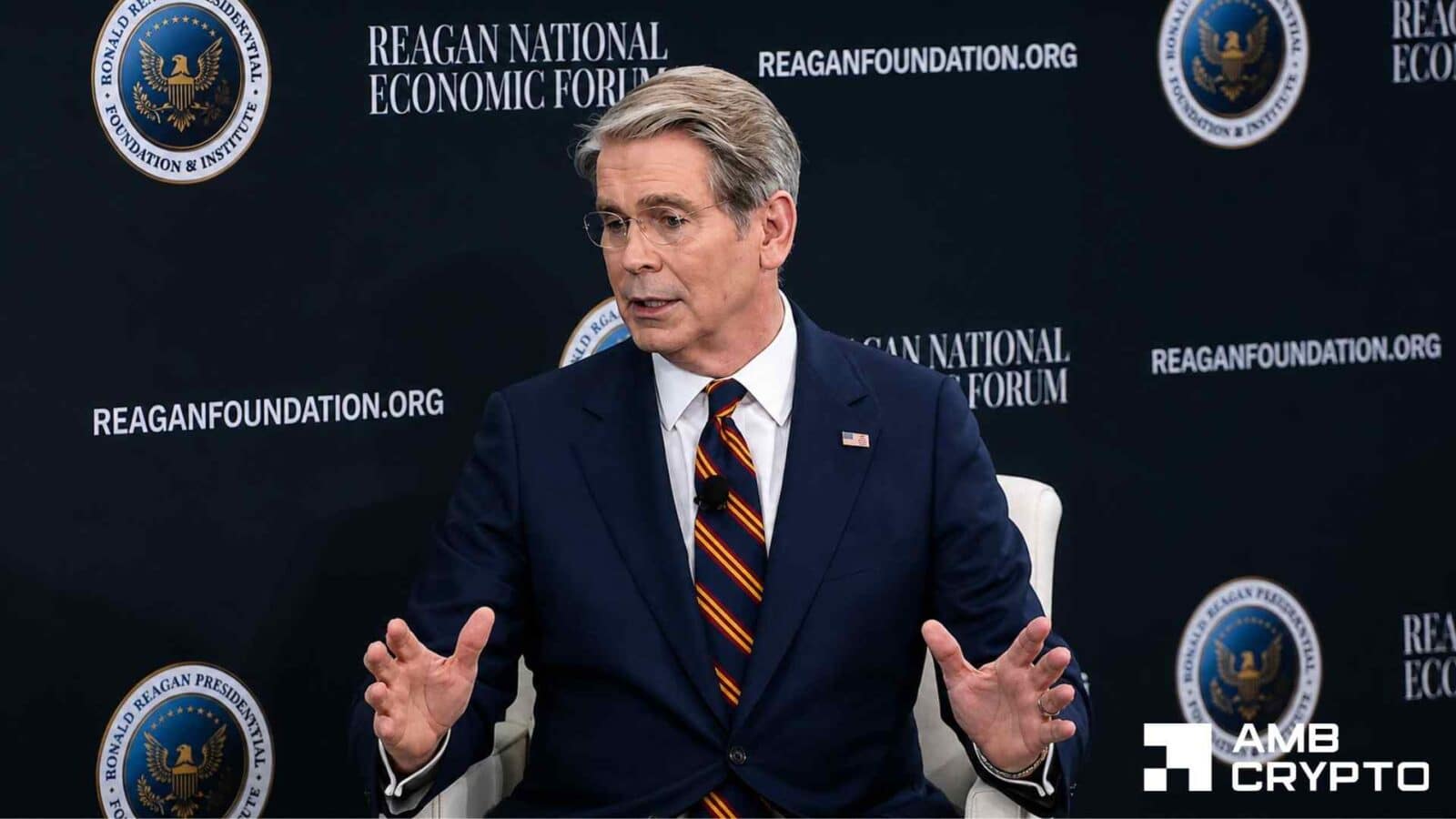
U.S. Treasury Secretary Scott Bessant recently stated that the Trump administration will not proceed with a central bank digital currency (CBDC) issued by the Federal Reserve, and will instead focus its policy efforts on stablecoin legislation and the regulatory framework for the crypto industry. This statement aligns with the recent Senate-passed ban, indicating a further tightening of federal policy towards a digital dollar.
The Senate has passed the restriction bill.
At a press conference, Bessant said the government's position on the issue was "very clear": it would not launch a central bank digital currency. He described CBDCs as tools that could bring tracking and monitoring risks, saying that this option had been ruled out.
The Senate has previously passed a bill to ban the development of CBDCs by 2030. Supporters of the ban argue that if a digital dollar were directly issued and managed by the state, it could increase government visibility into payments and fund flows, thus raising privacy concerns.
Stablecoin legislation becomes a policy focus
Bessant also stated that the government is currently more focused on the Stablecoin Act and the Clarity Act, hoping to use them to encourage the return of crypto investment to the United States. Unlike CBDCs, stablecoins are typically issued by private institutions, with major examples in the market including USDC issued by Circle and USDT issued by Tether.
From a policy perspective, the US government is treating "government-issued digital currencies" and "regulation of private stablecoins" separately. The former faces explicit opposition in the current political climate, while the latter is seen as a more realistic direction for advancement.
The exploration of global CBDCs continues
Despite the increasingly conservative stance in the United States, most central banks globally are still researching CBDCs. The article cites data from CBDC Tracker, stating that as of the end of 2025, approximately 91% of central banks will still be evaluating or testing related projects at some stage.
Currently, only a few countries have actually launched their CBDCs. Those that have officially launched include Nigeria, Kazakhstan, Jamaica, and the Bahamas. Many more economies remain in the research or pilot stages, such as China's digital yuan and India's digital rupee.
In terms of applications, market discussions have gradually shifted from retail CBDCs targeting the public to wholesale CBDCs serving high-value settlements between governments and large financial institutions. Project Agora, supported by the Bank for International Settlements, is one of the representative projects in this direction.
Many countries have suspended or canceled their plans.
Besides the United States, countries such as Kenya, the Philippines, Canada, Denmark, Norway, and Finland have also canceled or suspended their existing CBDC plans. This means that while central banks worldwide are still researching digital currencies, the number of projects that have actually entered the implementation stage remains limited.

Overall, the signals being sent by the United States are very clear: during the Trump administration, the digital dollar will not be a policy focus, and stablecoin regulation and legislation will be the higher priority.