

Author:Wall Street CN
The people who made the most money during the gold rush were never the gold miners, but the shovel sellers.
This old adage proved true once again in the tech industry in 2026. Only this time, the company selling shovels wasn't Nvidia—which has been discussed far too many times—but a company most people wouldn't immediately associate with "AI": Samsung Electronics.
On April 7, Samsung released its earnings forecast for the first quarter of 2026:Operating profit was 57.2 trillion won, equivalent to approximately US$37.9 billion. This figure is more than eight times that of the same period last year, nearly three times Samsung's historical single-quarter profit record, and even higher than Samsung's total profit for the entire year of 2025.
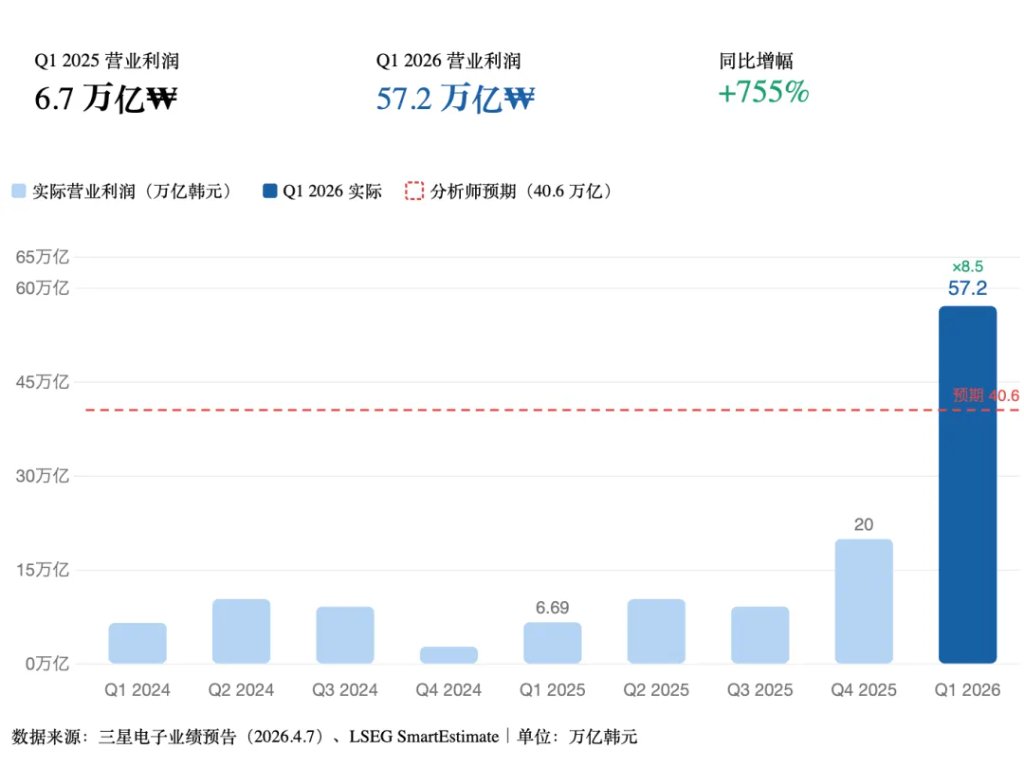
Illustration: GeekPark
As is well known, Samsung doesn't train large models, develop AI applications, or create chatbots. What it does is much simpler—produce the memory chips that are most in short supply for everyone doing these things.
In a way, this is strangely symmetrical to Apple's story: Apple has never released any large-scale AI models, but thanks to its Mac mini, which can efficiently run local models, it has quietly become the standard tool for AI developers, making Apple the most comfortable "easy winner" in the AI wave. Samsung takes a different path: it doesn't make AI products, but every step the AI industry takes to expand requires buying more chips from Samsung.
Not developing AI, yet achieving the strongest financial report in history thanks to AI. This is probably the ideal scenario for the "shovel seller".
But everyone has the same question in their mind: how long can the price of memory chips double every quarter?
01 It's all because of the shortage.
So why are shovels suddenly so valuable?
The answer is straightforward: there aren't enough memory chips to go around.
The construction frenzy surrounding AI data centers is devouring global memory chip production capacity in an almost "violent" manner. It's not just high-bandwidth memory (HBM) used for AI training and inference that's in short supply—what's truly unexpected is that even ordinary DRAM chips used in smartphones, PCs, and game consoles are being dragged into shortage by the AI's siphon effect.
When storage manufacturers prioritize AI customers with almost all their production capacity, there are naturally not enough chips left for consumer electronics.This is a classic example of a "crowding-out effect," which directly drives up contract prices for all types of memory chips.
TrendForce data shows that DRAM contract prices nearly doubled in the first quarter of this year. And the upward trend is not over yet—it is expected to rise by more than 50% in the second quarter.
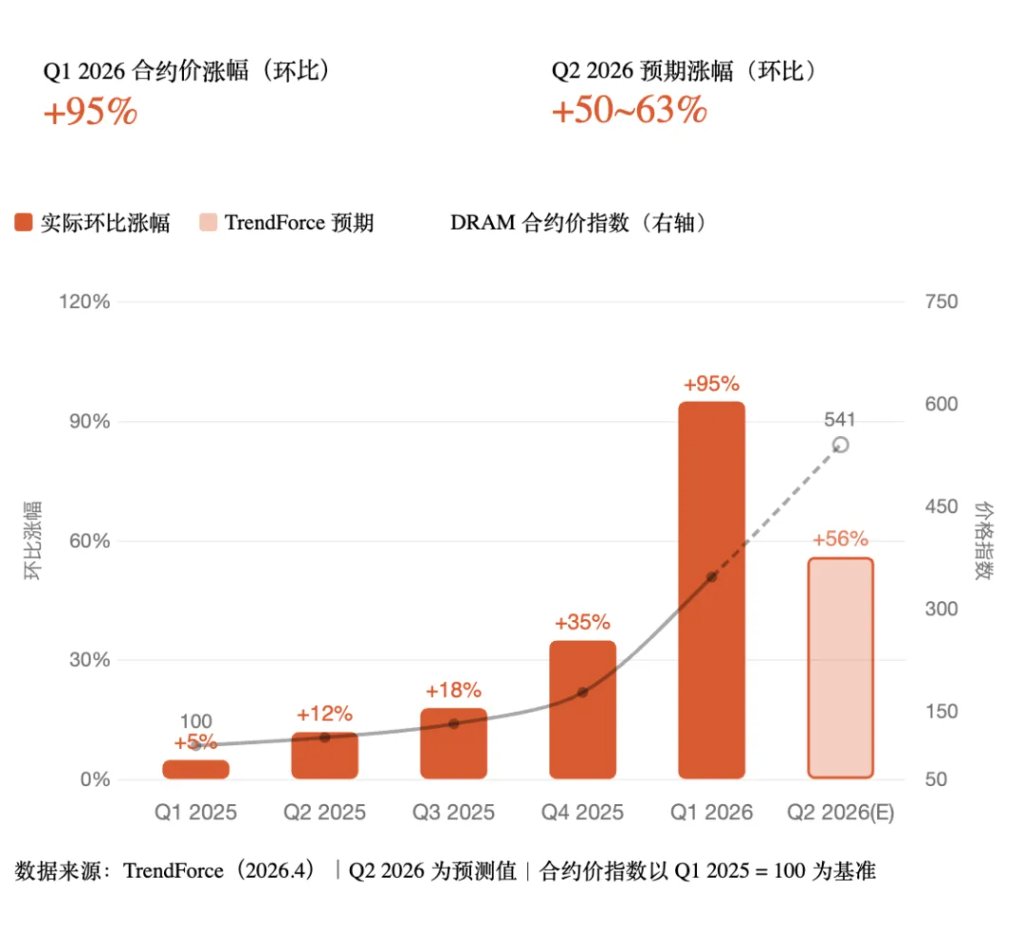
Illustration: GeekPark
Meritz Securities senior analyst Kim Sunwoo's explanation is straightforward: clients expect prices to continue rising, so the actual contract prices signed are higher than expected.Panic buying and stockpiling in advance, in turn, accelerated the price increase.This cycle is not uncommon in the semiconductor industry's upward cycle, but the strength of this round is still surprising.
Samsung's performance structure reveals the clues: the chip division contributed approximately 54 trillion won in operating profit, accounting for 95% of total profit. The mobile phone business also contributed approximately 4 trillion won in profit.
However, analysts point out that this is mainly due to the use of previously stockpiled components at low prices. In the second quarter, with rising costs of memory chips and other raw materials, the profit margins of the mobile phone business will likely be squeezed.
In other words, Samsung this quarter was almost a pure "memory chip company".
02 From "Apology" to "Samsung is back"
If we turn back the clock a year, Samsung's story would be a completely different one.
About a year ago, Samsung's CEO made a rare public apology for the company's disappointing performance and stock price.
The context was that in the core field of AI—high-bandwidth memory (HBM) chips—Samsung was far behind its local rival SK Hynix. Nvidia's AI chips required a large amount of HBM, and SK Hynix was the main supplier, while Samsung barely qualified to even be a part of the competition.
Data from the third quarter of 2025 shows that SK Hynix held a 53% share of the HBM market, while Samsung only held 35%.
But things changed over the past year. Samsung bet on its latest generation HBM4 chip, officially starting mass production in February 2026. In his New Year's address at the beginning of the year, Samsung Semiconductor head Jeon Young-hyun said something the industry will remember: "Regarding HBM4, customers have even said—Samsung is back."
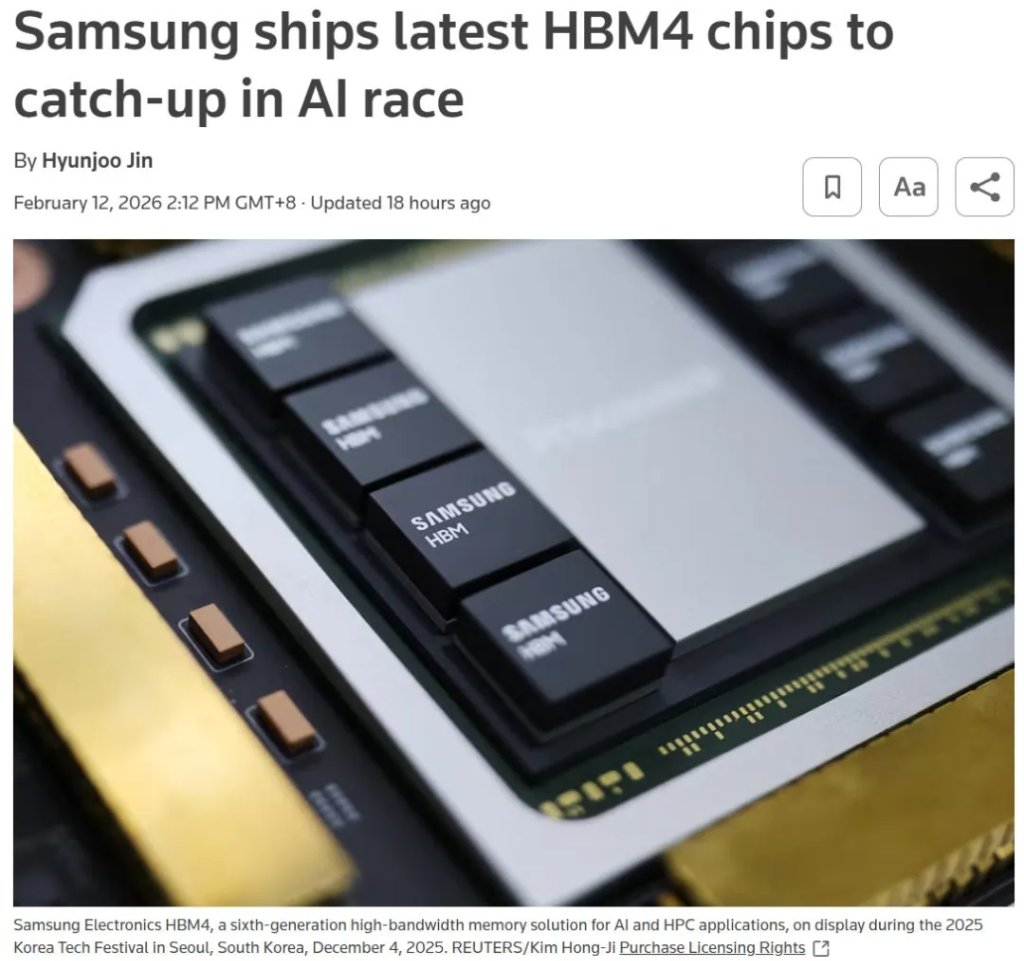
This is not just empty talk. Reports indicate that Samsung's HBM4 samples have passed Broadcom's testing and are currently in final supply negotiations with Nvidia.Samsung has not caught up with SK Hynix in the HBM race, but the gap is narrowing significantly.More importantly, Samsung has also found growth in another direction – the demand for AI inference has driven a rebound in traditional DRAM, which is precisely where Samsung has the most abundant production capacity.
Last month, Micron Technology, the US memory chip company, also confirmed the same story: it achieved record revenue in the second quarter and gave guidance for the third quarter that exceeded Wall Street's expectations. The fact that three memory giants simultaneously reported strong results indicates that this is not just good luck for one company, but rather that the entire industry is experiencing a structural supply-demand imbalance.
03 Three Dark Clouds Behind the Financial Report
But now that the story of making money has come to this point, it's time to talk about the unsettling part.
The first dark cloud was the Middle East war.
Since the US-Israel war on Iran began on February 28, energy prices have soared, and the Strait of Hormuz was once on the verge of closure. This 21-mile-wide waterway carries 20% of the world's oil shipments, and Qatar—one of the world's largest suppliers of helium—is also on this route. Helium is an irreplaceable cooling material in the chip manufacturing process.
The direct impact of war is rising energy costs and uncertainty surrounding the supply of critical materials. For operators of AI data centers, electricity costs are already one of the largest expenses, and if energy prices continue to rise, they may reduce capital expenditures—which is precisely the source of demand for memory chips.
Since the start of the war, Samsung's stock price has fallen by 11%. SK Hynix's decline has been even greater. The two companies have collectively lost over $200 billion in market capitalization.
The second cloud comes from Google.
In late March, Google Research released a technology called TurboQuant. Simply put, it can compress the "working memory" (key-value cache) in AI inference to one-sixth of its original size, with almost no impact on the model's output quality. Following the news, memory chip stocks collectively fell—Samsung dropped nearly 5%, SK Hynix fell 6%, and Micron and Western Digital were also affected.
Some people on the internet have even compared TurboQuant to Pied Piper from Silicon Valley—the fictional company that changed the world with its compression algorithms.
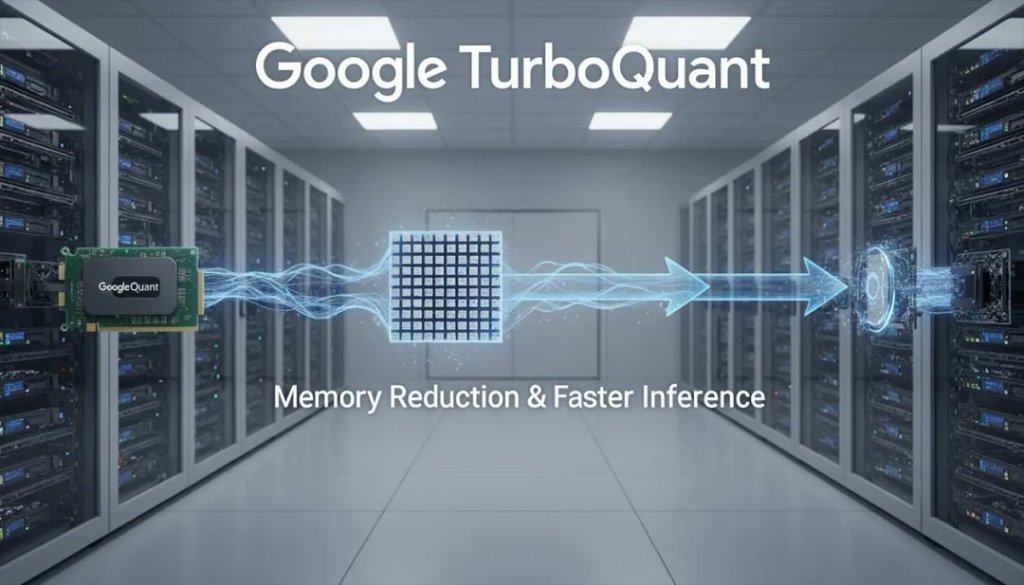
However, upon closer examination, TurboQuant is currently only a laboratory achievement, addressing memory consumption only during inference and having no effect on the training phase. Ben Barringer, Head of Technical Research at Quilter Cheviot, aptly stated:This technology is "evolutionary rather than revolutionary" and will not change the long-term demand pattern of the industry.But it does remind the market of one thing: software-level efficiency optimizations will sooner or later affect the demand curve for hardware.
The third dark cloud is the cycle itself.
Ryu Young-ho, a senior analyst at NH Investment & Securities, pointed out that market concerns are growing that memory chip prices have peaked. "We may have passed the initial stage of this upward cycle and entered the second half."
One noteworthy signal is that DRAM spot prices softened last week. TrendForce Senior Vice President Avril Wu interprets this as end-user demand struggling to absorb the continuously rising prices.
Spot prices are the most sensitive thermometer of market sentiment. They reflect changes in supply and demand earlier than contract prices. If spot prices continue to weaken, the upward momentum of contract prices will also diminish.
Returning to the initial question: How will the memory price surge end?
Historical memory chip cycles have provided the answer—every narrative of "price increases forever" eventually ends when supply catches up with demand. But the variable this time is AI. If the pace of data center construction doesn't slow down, and if models' demand for memory continues to expand, then that moment of "catching up" may come later than ever before.
NH Investment & Securities analyst Ryu Young-ho offers a more pragmatic perspective:The key issue is not whether prices will continue to rise, but whether Samsung can lock in the short-term price increase benefits into long-term contracts.
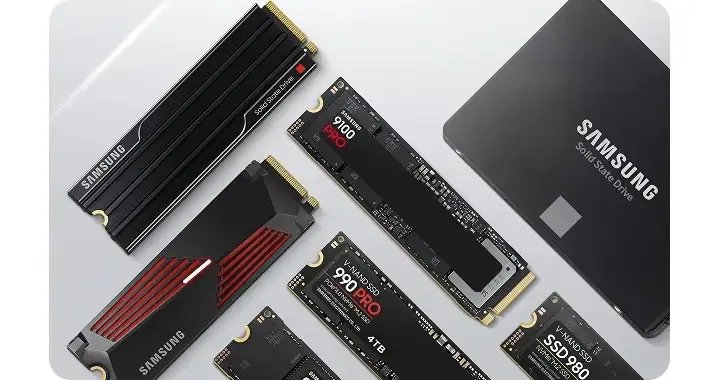
The 57.2 trillion won was the most glorious quarter for the shovel sellers. But the outcome of the gold rush was never determined by the shovel sellers—it depended on how much gold was left in the mine and when the influx of people started to tally up their profits.
This article is sourced from: